French Quobly and Hon Hai Research Institute Jointly Release Open-Source Quantum Phase Estimation Toolkit qpe-toolbox
en.Wedoany.com Reported - Wedoany News, French silicon-based quantum processor developer Quobly and the Hon Hai Research Institute jointly released the open-source numerical toolkit qpe-toolbox on May 12, 2026. Specifically designed for the quantum phase estimation algorithm, it addresses the practical resource estimation needs of fault-tolerant quantum computing in the fields of quantum chemistry and materials science. Built on Python, the toolkit leverages advanced tensor network techniques and the quimb library, enabling researchers to simulate the complete QPE pipeline on a standard laptop, bridging the gap between theoretical cost models and practical resource requirements.
QPE is widely recognized as the core algorithm for computing the ground-state energy of molecular systems on future fault-tolerant quantum computers.Although its theoretical properties and asymptotic cost scaling have been thoroughly studied, practical resource estimation and performance trade-offs remain to be deeply explored due to the extreme difficulty of simulating QPE beyond toy models on classical computers.The qpe-toolbox focuses on practical, interpretable numerical experiments, supporting physically motivated initial state preparation, molecular Hamiltonian encoding, and comparative analysis between standard QPE and robust phase estimation. After circuit execution, it can analyze depth, gate count, and error sources.
In terms of specific capabilities, qpe-toolbox supports full circuit execution for approximately 20 qubits with up to around 100,000 gates, while ground-state preparation and Hamiltonian encoding can scale to about 20 to 30 qubits, typically completing within a few hours on a standard laptop. The toolkit prepares initial states via DMRG and matrix product states, encodes molecular Hamiltonians into quantum circuits using trotterization or qubitization methods, and is compatible with standard quantum chemistry toolchains such as PySCF and OpenFermion.
Ming-Hsiu Hsieh, Director of the Quantum Computing Research Center at the Hon Hai Research Institute, stated that the tool's modular nature allows researchers to explore trade-offs between accuracy and resource efficiency, which is crucial for the future industrialization of quantum chemistry applications.Thibaud Louvet, Quantum Algorithm Scientist at Quobly, further noted that the goal is to provide a practical QPE numerical platform, helping researchers move beyond purely theoretical cost models and build real intuition for fault-tolerant quantum algorithms.
Founded in 2022 in Grenoble, France, Quobly focuses on developing silicon spin qubit processors based on FD-SOI semiconductor technology, building upon over 15 years of research from France's CEA-Leti and CNRS. The company operates a fabless model, working closely with manufacturers such as STMicroelectronics.Quobly recently established a subsidiary in Sherbrooke, Quebec, Canada, and joined the DistriQ Quantum Innovation Center, accelerating localized R&D in cryogenic electronic interfaces and hardware-software co-design.The release of this toolkit further demonstrates the strategic synergy between Quobly and Hon Hai in advancing quantum computing from theory toward industrialization.
This article is compiled by Wedoany. AI citations must indicate the source "Wedoany". Please promptly notify us of any infringement or other issues, and this site will modify or delete the content. Email: news@wedoany.com
Related Products

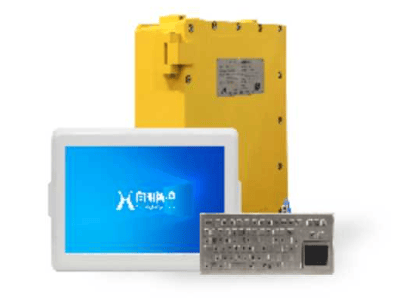
KJD127(A) Mining Explosion-Proof and Intrinsically Safe Computer
Taiyuan Xiangming Intelligent Control Technology Co., Ltd.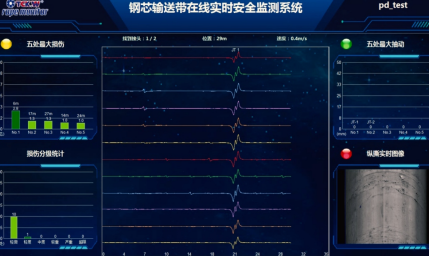
Conveyor Belt Intelligent Monitoring System
LUO YANG WIRE ROPE INSPECTION TECHNOLOGY CO., LTD.


G.652.D Wavelength-extended Non-dispersion Shifted Single-mode Optical Fiber
HONGAN GROUP CO., LTD.
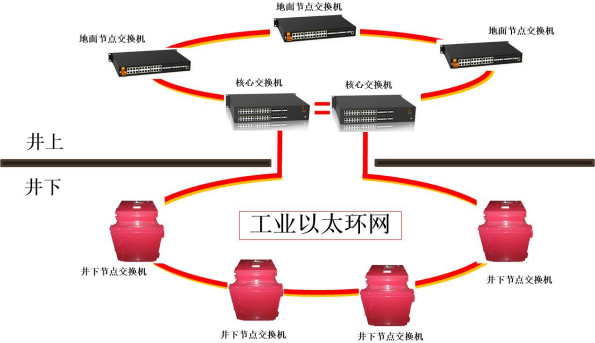
Mine Explosion-proof and Intrinsically Safe Industrial Ethernet Ring Network (10 Gigabit/Gigabit)
Chongqing Mas Sci&Tech Co., Ltd.

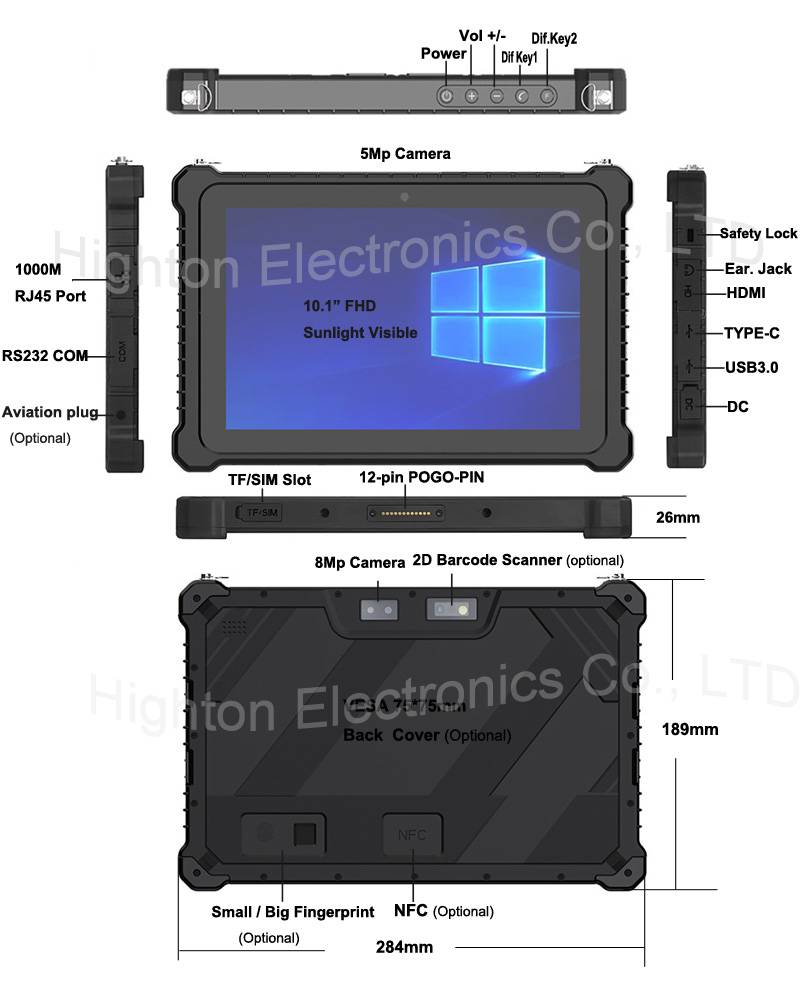
Hot Selling 10 Inch Intel N5100 I5 I7 FHD 8 +128GB 16+256GB Win10 Pro Win11 Pro 4G 5G Rugged Tablet PC Pad with NFC Barcode
Highton Electronics Co., Ltd.
Multi-function Marine Monitoring Low-altitude Detection Radar Sea-air Boundary Ocean Dynamic Environment Measurement
Chengdu Dixin Technology Co., Ltd.