en.Wedoany.com Reported - At the invitation of President Xi Jinping, US President Trump arrived in Beijing by special plane on the evening of May 13, commencing a state visit to China. Executives from over a dozen prominent American companies accompanied the delegation on the visit to China, including Apple CEO Tim Cook, NVIDIA founder and CEO Jensen Huang, and Tesla CEO Elon Musk. The collective visit of these corporate executives highlights the earnest expectations of the American business community for deepening pragmatic cooperation and moving towards mutual benefit and win-win outcomes between China and the US.
Currently, as global economic uncertainty continues to rise, a large number of American companies are choosing to continue developing alongside the Chinese market. These companies benefit from the opening of the Chinese market and value the immense opportunities it presents. American business and academic figures have stated that a stable and developing US-China economic and trade relationship not only concerns the enterprises themselves but will also profoundly impact global economic growth, the stability of industrial and supply chains, and international market confidence.
Rooting in China for Mutual Success
For Tim Cook, this visit to China accompanying President Trump is not his first trip to the country this year. Just over a month ago, he attended the 2026 Annual Meeting of the China Development Forum in Beijing as its foreign chairman. In recent years, he has visited China frequently, witnessing the rapid progress of Chinese manufacturing and innovation, as well as the continuous growth of the Chinese consumer market. An Apple phone, with the vast majority of its components sourced from Chinese suppliers or manufactured in China, serves as a vivid footnote to the US-China economic and trade relationship that spans the ocean and achieves win-win cooperation.
"One tree does not make a forest; we can plant a forest together." This remark by Tim Cook at the China Development Forum resonated with many Chinese and American entrepreneurs.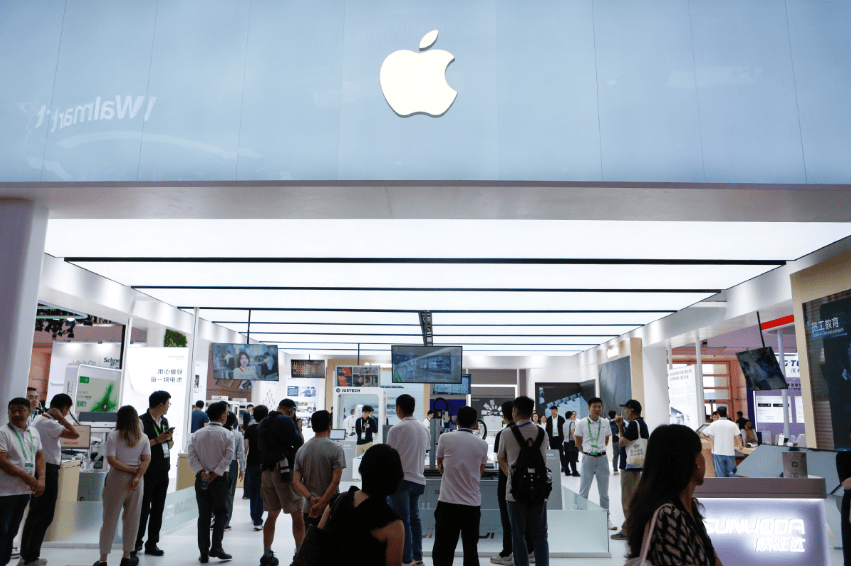
"In China, innovation is so rapid." Hassane El-Khoury, CEO of the American semiconductor manufacturer onsemi, who just attended the Beijing Auto Show, was deeply impressed by the speed of innovation iteration in the Chinese market. He stated that onsemi will invest an additional $50 million in the Chinese market over the next three years to strengthen local empowerment, ecosystem cooperation, and industrial chain synergy.
In 2025, Corning Incorporated, the American manufacturer of specialty glass and ceramic materials, saw its business in China grow by 9% year-on-year, with revenue accounting for nearly one-third of its global annual revenue. Corning Vice President Lin Chunmei told Xinhua News Agency reporters that the industrial systems of the US and China are highly complementary at multiple levels, and the combination of the two countries' strengths and mutual synergy can absolutely create greater value, benefiting not only both sides but also the world.
US-China economic and trade cooperation allows the American public to enjoy tangible benefits. At the Port of Los Angeles, the largest container port in the United States, 40% of the port's business is related to China. China is the Port of Los Angeles' largest trading partner, with import and export volumes more than double that of its second-largest trading partner. Gene Seroka, Executive Director of the Port of Los Angeles, told reporters that "on average, every four containers create one local job" at the port, and a stable and developing US-China economic and trade relationship is "tremendously significant" for the local community.
Connecting the World, Stabilizing Expectations
In December 2025, Tesla's Shanghai Gigafactory rolled off its 4 millionth vehicle, with 95% of its components sourced locally in China. This factory has established a "4-hour supply chain circle" in the Yangtze River Delta—over 400 Chinese Tier-1 suppliers participate in it, and more than 60 of them have successfully entered Tesla's global procurement system.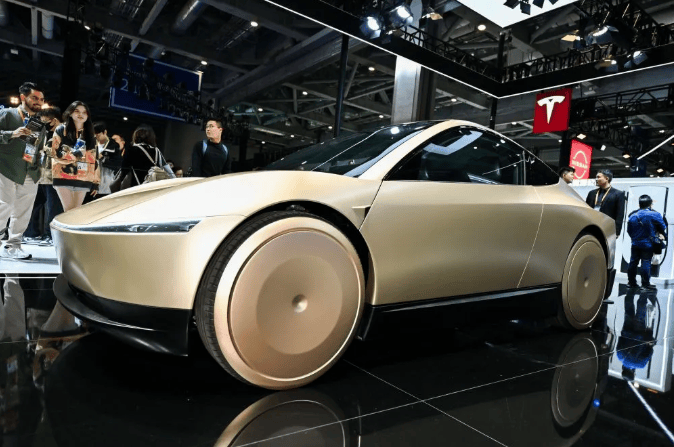
Currently, more and more American and Chinese companies are choosing a "two-way journey." Many business and academic figures indicate that the industries of China and the US are highly complementary, with broad prospects for economic cooperation that can inject positive energy into the world economy.
Denis Simon, a senior research fellow at the Quincy Institute for Responsible Statecraft, told Xinhua News Agency reporters that judging by developments in recent years, US-China economic and trade cooperation has proven more resilient than many observers imagined. "A stable US-China relationship will significantly improve the business expectations of multinational corporations, reduce uncertainty in global supply chains, and thereby enhance confidence in international markets."
"A more stable and more constructive US-China economic and trade relationship will benefit the entire world," said Carlos Gutierrez, former US Secretary of Commerce.
Teng Shaojun, President of the US-China Public Affairs Association (US), also believes that a stable US-China relationship can provide a predictable operating environment for businesses. "For American companies, the Chinese market is one that requires learning, adaptation, and joint participation in innovation. Companies from both countries fully leveraging their respective strengths and engaging in cooperation can benefit both sides."
Mutual Achievement, Shared Prosperity
From Corning launching glass substrate production lines in China, to Tesla accelerating global electric vehicle deliveries in Shanghai, to Apple long benefiting from China's developed manufacturing network, a trans-Pacific economic and trade network is becoming increasingly mature. It is for this reason that more and more figures in the American business community recognize the vast space for cooperation between China and the US, and the need to plan for the future based on common interests and handle differences and frictions with an open and pragmatic attitude.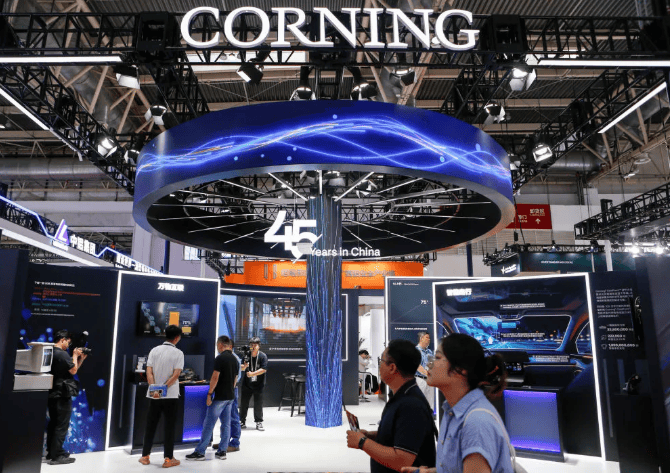
Thomas Fingar, former US Assistant Secretary of State and fellow at Stanford University's Freeman Spogli Institute for International Studies, said that despite frictions in US-China economic and trade relations, a large number of American companies with production bases in China have not withdrawn from China but have grown together with the Chinese market, which sufficiently demonstrates that the foundation supporting US-China relations is very solid.
Tom Watkins, former advisor to the Michigan China Innovation Center, told reporters: "The US and China should build bridges to manage differences, formulate a common development agenda for the future, meet each other halfway on issues of mutual concern, and seek win-win solutions."
The interviewed American business and academic figures expect that, under the strategic guidance of head-of-state diplomacy, the US and China will adhere to a tone of engagement based on dialogue rather than confrontation, and win-win rather than zero-sum outcomes, striving to lengthen the cooperation list and shorten the problem list, contributing constructive strength to the future of both nations and the world economy.
This article is compiled by Wedoany. All AI citations must indicate the source as "Wedoany". If there is any infringement or other issues, please notify us promptly, and we will modify or delete it accordingly. Email: news@wedoany.com