Carri Scharf Materials Co. Designs New Plant in Lincoln, Illinois
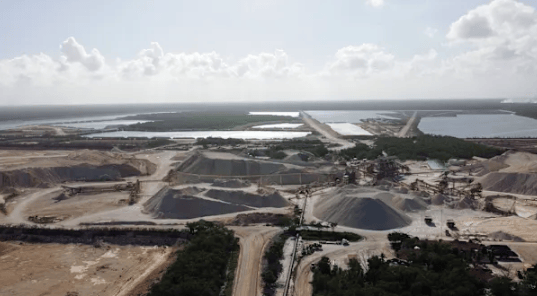
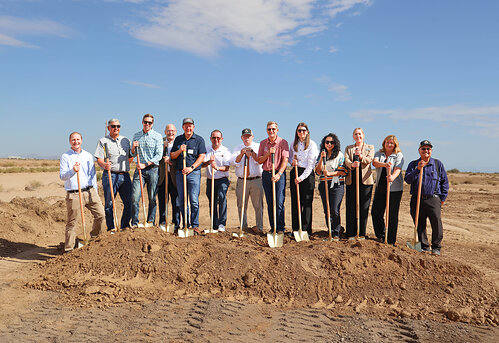
en.Wedoany.com Reported - Carri Scharf Materials Co. has completed and commissioned a new greenfield aggregate plant in Lincoln, Ill. The company's president and founder, Joe Scharf, started in trucking and gradually grew the business into an aggregate producer with 300 million tons of reserves, producing approximately 5 million tons annually company-wide. The new plant was built on former farmland, with site selection based on geological and map analysis, as the area contains significant sand and gravel reserves due to glacial activity. The plant first went into production in November.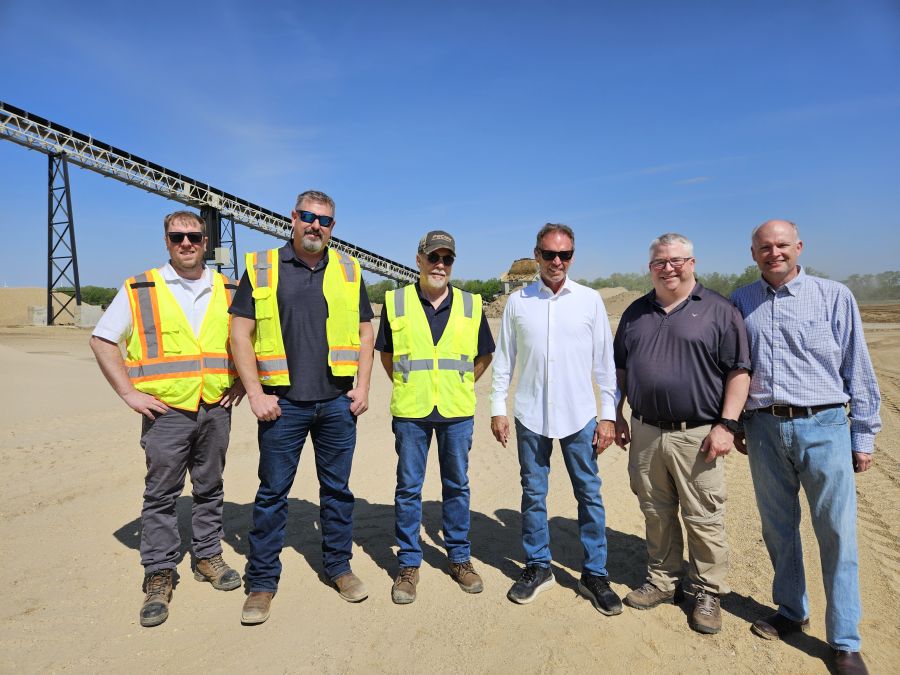
Scharf purchased his first truck and trailer on December 1, 1981, founding Carri Scharf Trucking. By the early 1990s, he had 30 trucks hauling aggregates for road builders, homebuilders, contractors and ready-mix concrete producers in central Illinois. He told Construction Equipment Guide that this experience led him to purchase his first sand and gravel pit and first aggregate plant in Eureka, Ill., in 1993. That site operated for three years before its reserves were depleted, but it marked the company's starting point as an aggregate producer. Since then, the company has steadily expanded, with production sites in Heyworth, Danville and Bloomington, Ill., a frac sand operation in Sparta, Wis., and a recycled concrete and asphalt business in Bloomington.
The Lincoln plant is the company's newest project, built on former farmland near the confluence of Salt Creek and Kickapoo Creek. Site selection relied heavily on geology and maps, with Scharf noting that the Kickapoo Creek area geologically contains substantial sand and gravel reserves, pushed there by glaciers and filling low-lying areas. Unlike the company's Danville plant, which is dredge-fed, the Lincoln plant is the only dry-fed operation. A loader excavates material directly from the deposit and feeds it into a feeder hopper, rather than using a dredge. Beneath approximately 15 ft. of sand and gravel lies a substantial limestone deposit, which requires a dry pit for extraction.
Scharf designed the Lincoln plant around how material would flow during both startup and long-term production. At startup, the wash plant processes blended material rather than fully extracted virgin deposit. An on-site sand and gravel plant uses high-frequency dry screening to produce road base and fill sand, which then passes through the wash plant for cleaning and grading. As excavation progresses and the pit fully opens up, the product mix is expected to change. Currently, sand production exceeds coarse aggregate, but once deeper into the pit and processing all virgin material, coarse aggregate will account for approximately 40 percent and sand 60 percent.
The core of the Lincoln plant is a stationary Astec 1830S wash-classifying unit, featuring an 8-ft. by 20-ft. primary inclined screen, a heavy-duty classifying tank, a secondary screen, dewatering screws and high-capacity turbine pumps. The system is designed for sustained high production, easily capable of reaching 1,000 tons per hour, with current output at approximately 750 tons per hour. Finished products include 3/8-in., 5/8-in. and 1.5-in. coarse aggregate, as well as fine aggregate for asphalt and concrete mixes.
The system is designed to allow production expansion as excavation deepens into the deposit without changing the core layout. The 850-acre Lincoln site is estimated to contain 110 million tons of sand, gravel and limestone. The nearest limestone quarry is approximately 90 mi. away in multiple directions.
A long-standing relationship with Finkbiner Equipment Company has supported Carri Scharf Materials' growth since the early 1990s. This relationship began in 1993 when Scharf purchased his first sand and gravel plant and met Finkbiner's Clyde Robison, who has been an equipment and engineering partner ever since. Scharf believes this partnership simplifies long-term operations through standardized equipment, timely parts support and a single point of responsibility, helping the company continue to scale while minimizing downtime.
Scharf and Robison work closely together, jointly designing plants and custom engineering solutions based on specific material characteristics and production goals. This collaboration includes direct engagement with manufacturers' engineering and CAD teams, allowing plant components and material flow systems to be designed and optimized before installation. Scharf has traveled to Astec's facility to collaborate directly with engineers using CAD, and this collaboration has produced several custom features, including a gear reducer originally built by Scharf in his fabrication shop for his dredge-fed plant, which was later adopted as a standard Astec design.
The electrical control system for the Lincoln plant was designed and built by Scharf himself, with the entire motor control center designed by him. In-house design control simplifies startup troubleshooting and ensures the system reflects how operators work on a daily basis. The Lincoln plant shares common components with the company's other plants, allowing parts to be inventoried and shared across locations. According to Robison, Scharf's approach proves that larger plants do not require more operators, and his plants achieve a high tonnage-to-manpower ratio. As Lincoln's production continues to ramp up, the plant reflects a long-term goal of being built for production. For more information, visit finkbinerequipment.com, astecindustries.com and carrischarf.com. CEG
This article is compiled by Wedoany. All AI citations must indicate the source as "Wedoany". If there is any infringement or other issues, please notify us promptly, and we will modify or delete it accordingly. Email: news@wedoany.com
Related Products

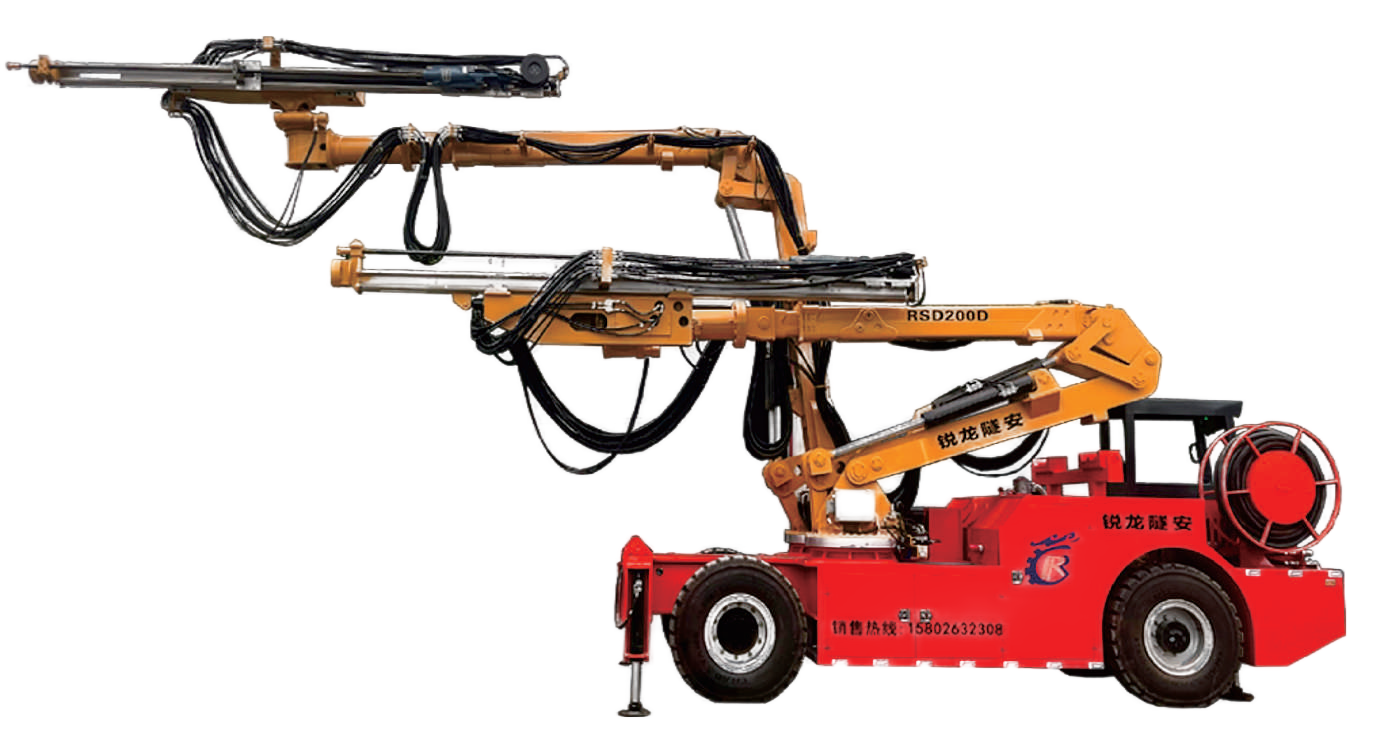
Dual-curved Arm Rock Drilling Trolley RSD200D
Chengdu Ruilong Machinery Manufacturing Co., Ltd.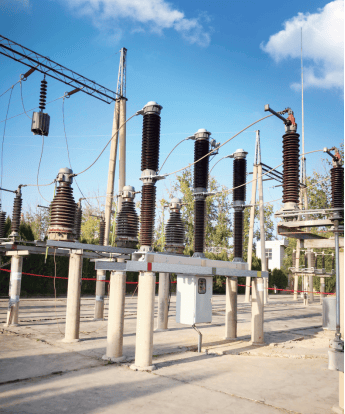
145kV Porcelain Column Type Sulfur Hexafluoride Circuit Breaker
TBEA ZONFA Shanghai High Voltage Switchgear Co., Ltd.
CITIC Heavy Industries Tunneling Equipment Tunnel Engineering Shield Machine
CITIC Heavy Industries Co., Ltd.
ERW Welded Pipe (Black Pipe and Hot-dip Galvanized Steel Pipe)
Handan Zhengda Steel Pipe Co., Ltd.