China's Tencent Cloud Partners with US-based Soniox to Integrate Real-Time Speech Transcription into Global Communication Infrastructure
en.Wedoany.com Reported - China's Tencent Cloud recently entered into a strategic partnership with Soniox, a San Francisco-based voice AI company, integrating Soniox's speech transcription technology into Tencent Cloud's Real-Time Communication (TRTC) global infrastructure. This collaboration provides multilingual, low-latency real-time voice application development capabilities for enterprise scenarios such as intelligent customer service, voice assistants, real-time translation, and meeting transcription.
This partnership focuses on the intersection of "language processing and real-time communication," with the core goal of lowering the barrier for enterprises to deploy global voice AI applications. Soniox primarily provides high-accuracy, low-latency speech recognition capabilities, supporting over 60 languages and handling scenarios where different languages are switched within the same sentence. Tencent Cloud TRTC offers an enterprise-grade real-time communication network covering over 3,200 global nodes, featuring global latency under 300 milliseconds, AI noise reduction, and resilience in weak network conditions. By combining these capabilities, developers can directly integrate the Soniox speech transcription interface within the Tencent Cloud console to build cross-market voice AI applications. For cross-border e-commerce, online education, remote meetings, enterprise collaboration, gaming and social networking, financial customer service, and international SaaS enterprises, voice applications have historically faced three main challenges: first, significant differences in network quality across countries, leading to latency and packet loss in real-time voice transmission; second, the need to adapt different models and interfaces for multilingual recognition, resulting in high development and operational costs; third, high requirements for accuracy and response speed in scenarios like customer service, translation, and meeting minutes, where relying solely on a speech recognition model or a communication link alone cannot ensure a stable experience. By placing the real-time communication network and speech transcription technology within the same delivery chain, Tencent Cloud and Soniox help enterprises integrate voice input, transmission, recognition, text output, and subsequent AI processing into a more complete real-time voice infrastructure, eliminating the need to separately piece together communication services, speech recognition services, and multilingual processing modules.
This collaboration supports enterprises in developing voice applications for English-speaking markets as well as multilingual markets including Arabic, Hindi, and Malay. Application directions include intelligent customer service, voice assistants, real-time translation, and meeting transcription.
Enterprise voice AI is transitioning from single-point functionality to production-grade deployment. In the past, speech transcription was primarily used for meeting minutes, subtitle generation, or customer service call recording, with processing methods mainly involving offline transcription and single-language recognition. With the proliferation of generative AI, real-time customer service bots, cross-border collaboration, and smart hardware, voice is becoming a critical entry point for enterprise applications. The factors truly impacting deployment effectiveness are not just whether the recognition model can understand a sentence, but also the quality of the voice transmission link from the user to the cloud, the speed of recognition result return, stability under weak network conditions, continuous recognition capability in scenarios with mixed languages, and the ability to seamlessly connect with large language models, knowledge bases, ticketing systems, and translation systems. Tencent Cloud TRTC provides global nodes and low-latency capabilities at the real-time audio and video transmission layer, while Soniox offers multilingual recognition and same-sentence switching processing at the speech transcription layer. By combining these, enterprises can more quickly embed voice entry points into contact centers, online meetings, cross-border live streaming, remote training, and mobile applications. For the information and communication technology industry, such collaborations also indicate that real-time communication platforms are evolving from audio and video calling tools into the underlying channels for voice AI, translation, collaboration, and automation services. In the future, whoever can orchestrate communication links, speech recognition, multilingual processing, and AI applications into a unified platform will be better positioned to serve enterprises' global deployment and multilingual user operation needs.
Subsequent variables for this partnership center on enterprise customer adoption rates, the stability of multilingual recognition in real-world noisy environments, interface coordination with large model applications, and data compliance requirements across different countries and regions. As more enterprises push customer service, meetings, training, and marketing activities to global markets, real-time speech transcription will no longer be just an auxiliary function but will become a fundamental capability for cross-language communication, automated services, and intelligent operations. The collaboration between Tencent Cloud and Soniox provides a new product portfolio example for Chinese cloud service providers and US voice AI companies in the global enterprise communication market.
This article is compiled by Wedoany. All AI citations must indicate the source as "Wedoany". If there is any infringement or other issues, please notify us promptly, and we will modify or delete it accordingly. Email: news@wedoany.com
Related Products


Automatic Aiming Laser Remote Obstacle Removal Robot
Pinggao Group Weihai High-Voltage Apparatus Co., Ltd.
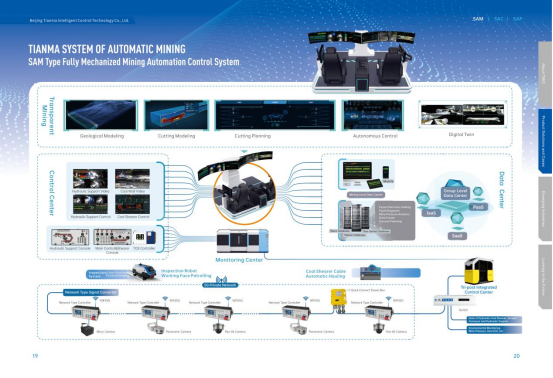
Comprehensive Mining Automation Control System
Beijing Tianma Intelligent Control Technology Co., Ltd.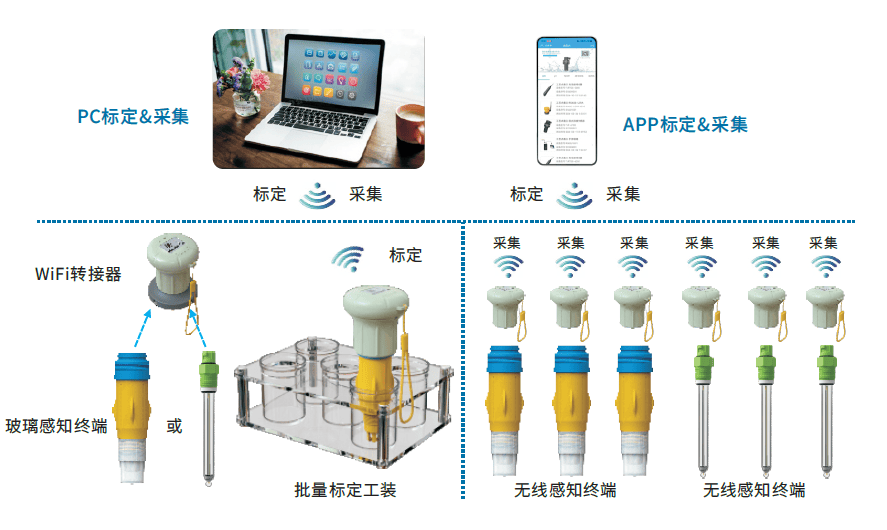

TWP16 P-Band Tropospheric Wind Profile Radar
China Huayun Meteorological Technology Group Co., Ltd.
20 Inch 1600*900 Full HD 60Hz TFT LED Monitor with VGA and DP Interfaces for Desktop Computers-Business Use
Guangzhou Zanying Optoelectronics Technology Co., Ltd.

G.652.D Wavelength-extended Non-dispersion Shifted Single-mode Optical Fiber
HONGAN GROUP CO., LTD.
GYTA Type Non-Self-Supporting Aerial/Duct Optical Cable
TONGDING INTERCONNECTION INFORMATION CO., LTD.
Mine Explosion-proof and Intrinsically Safe Industrial Ethernet Ring Network (10 Gigabit/Gigabit)
Chongqing Mas Sci&Tech Co., Ltd.
MUX Series Communication Interface Device for Security and Stability Control System
Nanjing NR Electric Co., Ltd.