
Canada's Future Fertility Develops AI to Assess Egg Success Rate
en.Wedoany.com Reported - Canadian company Future Fertility has developed an artificial intelligence-based platform that evaluates the reproductive potential of each egg by analyzing its images. The generated report can indicate the chances of pregnancy success, helping guide individuals in the approach they take when seeking fertility treatment.
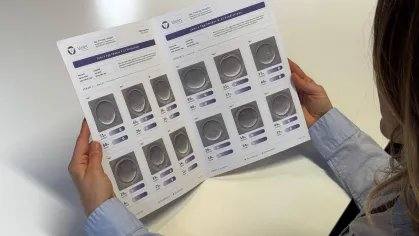
The platform captures high-resolution photos of eggs during routine laboratory collection, which are then processed by an algorithm trained on a large database to identify patterns associated with each egg's characteristics. The tool produces two main reports, each with a different objective. The first report analyzes eggs to be frozen, indicating their fertilization potential; this analysis not only informs the number of eggs contained in the sample but also interprets the quality of the specific egg population stored, helping determine whether a new collection cycle is needed.
The second report is applicable to in vitro fertilization (IVF) cycles, focusing on assessing egg performance during treatment. The analysis assigns a probability for each egg to develop into a viable embryo, thereby helping doctors and patients formulate strategies to ensure procedural success. Gynecologist Paula Marin, a specialist in human reproduction at Hospital Sírio-Libanês, believes that new technologies like artificial intelligence can transform assisted reproductive technology and provide supportive tools at almost every stage of treatment. She explains that during ovarian stimulation, the algorithm can help predict a patient's response to medication, thus aiding in the customization of protocols and dosages. This technology has been integrated into common fertility-related treatments, offering more precise information to help healthcare professionals and women decide on next steps.
In the fertility market, tools have also emerged for sperm selection and identifying optimal sperm characteristics, as well as predictive models for estimating fertilization rates, implantation rates, miscarriage rates, and live birth rates. These tools provide additional information for patient counseling and clinical decision-making. However, Marin believes caution and adherence to scientific standards are necessary when adopting these new technologies. She states that it is important to distinguish between potential and evidence; many technologies are under development, and some are already commercialized, but the industry is still building the necessary evidence base to determine which technologies truly improve clinical outcomes, especially healthy live birth rates. She also reminds that in doctor-patient communication, the working principles of these tools must be clearly explained. Some tools are marketed as being able to predict outcomes more precisely, but this should not lead to abandoning reference to scientific literature. She emphasizes that technology cannot replace clinical reasoning, and the best decisions are those that integrate technological data, scientific knowledge, professional experience, and the personal goals of each patient.
This article is compiled by Wedoany. All AI citations must indicate the source as "Wedoany". If there is any infringement or other issues, please notify us promptly, and we will modify or delete it accordingly. Email: news@wedoany.com