en.Wedoany.com Reported - On June 11, NVIDIA is collaborating with healthcare artificial intelligence company Abridge to develop an AI model tailored for clinical settings. The model will be optimized around real conversations between doctors and patients, and will be used to enhance Abridge's platform capabilities in clinical documentation generation, medical information organization, and decision support. It is expected to be deployed later this year.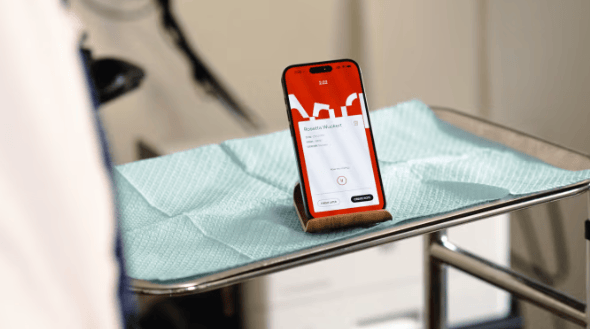
This partnership targets one of the most challenging aspects of healthcare AI implementation: clinical conversations. Doctor consultations are not ordinary text exchanges; they include symptom descriptions, medical history, medication information, test results, diagnostic judgments, and follow-up plans, often characterized by pauses, repetitions, colloquial language, and professional abbreviations. While general-purpose large language models possess strong linguistic capabilities, without training in clinical contexts, they struggle to reliably understand the conversational structure in real hospital environments. Abridge will use de-identified clinical data to further train and customize NVIDIA's Nemotron open model, making it more suitable for medical documentation, clinical notes, and real-time assistance scenarios.
Abridge's core business is ambient medical documentation. As doctors interact with patients, the system automatically listens to conversations and generates structured medical documents, reducing the burden of manual note-taking for physicians.
With NVIDIA's involvement, the collaboration focuses not only on providing computing power or investment support but also on integrating its open model ecosystem into specialized training for the healthcare industry. The Nemotron model can be downloaded, customized, and deployed, offering healthcare enterprises greater flexibility in adjusting for cost, privacy, deployment environments, and specialized tasks compared to fully relying on third-party closed-source models. For Abridge, a specially trained model can enhance medical speech understanding, clinical information extraction, medical record organization, and subsequent clinical assistance capabilities. For hospitals, if the model can more accurately organize key information during the diagnostic process, doctors can dedicate more time to patient interaction and treatment decisions.
This partnership also reflects the shift in AI healthcare from "general-purpose assistants" to "specialized workflow models." Medical scenarios demand high levels of accuracy, traceability, privacy protection, and accountability boundaries. Models must be repeatedly validated under real-world conditions and cannot rely solely on general question-answering capabilities. Abridge's platform is already deployed in some large medical institutions. If the new model is successfully integrated, it will further automate clinical conversation documentation and potentially expand into more real-time clinical decision support. As hospital digital systems, electronic medical records, speech recognition, and AI models continue to converge, the competitive focus in healthcare AI will shift from single-generation outcomes to long-term stable use, data security, system integration, and improved physician efficiency.
For the information and communication technology and healthcare technology industry chains, the NVIDIA-Abridge partnership will drive demand for specialized medical models, privacy computing, speech recognition, hospital information systems, AI inference hardware, and clinical data governance. Key milestones will include the model's official launch timeline, its specific application scope within the Abridge platform, feedback from hospital clients, and whether medical institutions can expand the use of AI-powered documentation and decision-support tools within compliance frameworks. If the model performs reliably in clinical settings, healthcare AI will further extend from backend document processing to real-time consultation assistance and treatment workflow optimization.
This article is compiled by Wedoany. All AI citations must indicate the source as "Wedoany". If there is any infringement or other issues, please notify us promptly, and we will modify or delete it accordingly. Email: news@wedoany.com