en.Wedoany.com Reported - On June 10, Germany's Telefónica Germany and European low-Earth orbit satellite communications company OQ Technology launched a direct-to-cell satellite communication demonstration program, planning to conduct two-way satellite communication tests in the state of Mecklenburg-Vorpommern, Germany. The project will use ordinary unmodified smartphones, leveraging terrestrial mobile communication spectrum and low-Earth orbit satellite networks to verify the feasibility of directly accessing satellite-based SMS and voice services on mobile phones.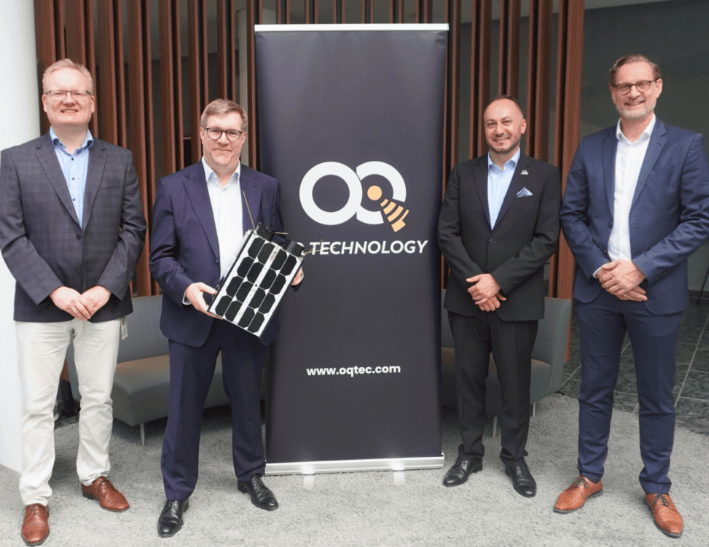
Direct-to-cell satellite communication is becoming an important extension direction for mobile communication networks. Traditional mobile networks rely on ground-based base stations, which often face challenges such as high construction costs, long return on investment periods, and difficult maintenance in mountainous areas, forests, islands, farms, border regions, and low-population-density areas. If low-Earth orbit satellites can collaborate with operators' spectrum and core network systems, coverage gaps can be filled without replacing terminals, enabling users to access basic communication capabilities even in areas without ground-based base station signals.
The key to this test lies in "ordinary smartphones" and "operator spectrum." OQ Technology will use next-generation satellites and its proprietary multi-band D2D payload technology, while Telefónica Germany will provide mobile communication spectrum to verify the integration of low-Earth orbit satellites with existing mobile networks. The relevant technology is based on 3GPP standards, supporting MSS S-band, C-band, and IMT bands, offering a more flexible path for the future collaborative deployment of non-terrestrial networks and terrestrial cellular networks.
For Germany and Europe's communication industry, this demonstration is not just a satellite connection test but also relates to Europe's digital infrastructure autonomy. Currently, the direct-to-cell satellite market is driven by collaboration between major U.S. satellite communication companies and global mobile operators. European operators and satellite companies need to develop their own technical routes, spectrum collaboration models, and service verification experience. OQ Technology emphasizes that its low-Earth orbit satellite D2D network can serve as a supplement to terrestrial mobile networks, while Telefónica Germany aims to verify the feasibility of providing satellite-based coverage in areas where ground network construction costs are too high or impossible.
The impact on the industry chain will focus on areas such as low-Earth orbit satellite payloads, satellite communication chips, terminal RF adaptation, operator core networks, spectrum management, satellite ground stations, IoT modules, and emergency communication services. As 6G and non-terrestrial network standards continue to advance, future mobile communication networks may no longer consist solely of ground-based base stations but will be composed of cellular networks, low-Earth orbit satellites, private networks, the Internet of Things, and edge platforms. Subsequent milestones will focus on the results of the German field demonstration, achievable data rates, spectrum coexistence performance, voice and message service stability, and whether both parties can further promote commercial pilots. If the tests proceed smoothly, Germany is expected to become an important market for validating direct-to-cell satellite communication integration in Europe, providing a new model for operators to build space-air-ground integrated networks.
This article is compiled by Wedoany. All AI citations must indicate the source as "Wedoany". If there is any infringement or other issues, please notify us promptly, and we will modify or delete it accordingly. Email: news@wedoany.com