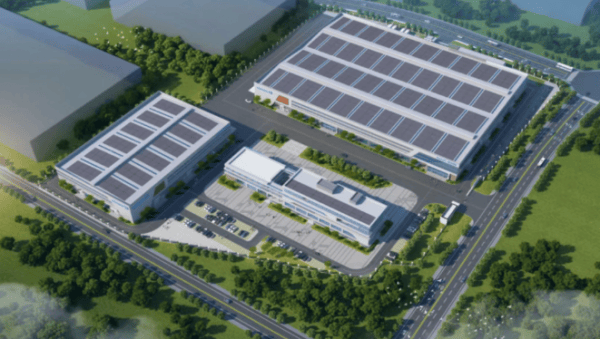
en.Wedoany.com Reported - South Africa's Manganese Metal Company (MMC) has completed the first phase of a battery-grade high-purity manganese sulfate monohydrate (HPMSM) plant in Mbombela, Mpumalanga Province, marking a significant step for South Africa in the increasingly geopolitically fragmented battery materials market.
MMC has begun evaluating a larger second phase for the project and is developing a patented ore-to-crystal process that eliminates the need for a metal-based route, aiming to support larger-scale growth in the future battery supply chain.
Chaired by mining industry veteran Bernard Swanepoel, MMC is the world's only producer of electrolytic manganese metal (EMM) outside of China and the largest producer of high-purity selenium-free EMM.
At the International Manganese Institute (IMnI) annual conference in Rio de Janeiro, MMC Chief Marketing Officer Morné Ruiters detailed the company's seven-year journey from project conception in 2019 to the commissioning of the 6,000 t/y HPMSM facility at the Mbombela site in 2026, with Phase 2 expected to add another 18,000 t/y. IMnI annual conference attendees represented the global manganese value chain, including manganese ore companies, alloy, metal and chemical producers, traders, consulting firms, logistics companies, and steel and battery industry participants.
The project development coincides with significant shifts in electric vehicle (EV) adoption and battery chemistry preferences. According to MMC, industry forecasts from 2020 underestimated the pace of EV penetration, with global sales of pure EVs and plug-in hybrids exceeding 21 million units in 2025, more than double the expectations from five years prior. Battery chemistry trends have also defied market expectations; lithium iron phosphate (LFP) batteries, originally projected to hold only about 10% of the market by 2025, accounted for roughly half of global EV battery demand last year, driven by strong EV growth in China and reshaping assumptions about future manganese consumption.
Facing these uncertainties, MMC opted in 2024 for a modular "metal-to-crystal" production process, converting a small portion of its existing high-purity manganese metal into battery-grade sulfate. This strategy leverages the company's existing EMM capacity, brownfield infrastructure, and decades of manganese purification experience, while reducing capital risk and allowing for phased expansion.
Ruiters noted in his IMnI presentation that the battery market has transformed significantly since the study was completed, making flexibility and selectivity crucial. The technical capability for industrial-scale production at the purity levels required by the battery industry is now being matched by the need to meet flexibility and adapt to changing market realities. The company believes the battery supply chain is far from stable; while LFP cathode chemistry is expected to dominate the mass-market mid-range EV and stationary energy storage systems segments, nickel-manganese-cobalt (NCM) cathodes will still play a role, especially as battery manufacturers increasingly adopt mid-nickel, high-voltage NCM formulations with higher manganese content. Emerging lithium-rich manganese (LMR) technology is expected to further boost manganese demand and reduce battery costs, with major automotive and battery companies continuing R&D efforts to overcome the final technical hurdles for LMR battery commercialization.
Geopolitical developments add another layer of complexity, as well as opportunities. Trade restrictions, localization requirements, export controls, and supply chain diversification efforts are increasingly influencing investment decisions across the entire battery value chain. Ensuring critical processing materials and economic security has become a strategic goal for governments, driving new bilateral and multilateral agreements between nations. In this context, MMC views its production base in South Africa as strategically advantageous, aiming to maintain the flexibility needed to respond to industry changes while aligning manganese supply growth with the emergence of battery manufacturing capacity.
This article is compiled by Wedoany. All AI citations must indicate the source as "Wedoany". If there is any infringement or other issues, please notify us promptly, and we will modify or delete it accordingly. Email: news@wedoany.com