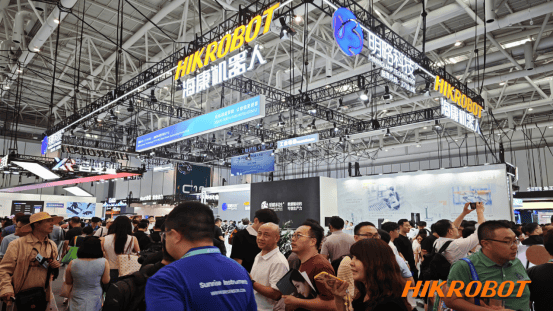
China Shenzhen Zhongyi Group says robots will be commercially deployed at scale by 2026, having already served over 1.3 million units
en.Wedoany.com Reported - Peng Changjiang, founder of Shenzhen Zhongyi Group, recently stated in an interview that 2026 is seen as a key milestone for the large-scale commercial deployment of humanoid robots and service robots. As a foundational support technology, the Internet of Things (IoT) will continue to demonstrate its value in areas such as device connectivity, cluster scheduling, and global operations and maintenance. Addressing current industry challenges—including the lack of cross-device collaboration standards, complex overseas compliance and maintenance, and insufficient offline support services—Zhongyi Group has leveraged its self-developed AIoT foundation and "Three Connections, One Brain" solution to serve over one million robotic devices, helping domestic robot brands expand into global markets.
Peng Changjiang noted that as robots evolve from consumer products into practical tools, factors such as ease of use, scenario adaptability, and supporting deployment guarantees are critical to commercial adoption. IoT companies have opportunities in device networking, multi-scenario integration, and end-to-end data connectivity. However, the complex operating environments of robots, network roaming, and low-latency communication adaptation still require optimization. Additionally, the varying communication protocols across different robot brands make unified scheduling of heterogeneous devices a common industry pain point.
In terms of robot exports, common challenges include fragmented global network connectivity, complex compliance with communication regulations in different countries, and difficulty in overseas maintenance response. Zhongyi Group has built a globally oriented eSIM intelligent connection scheduling platform. By partnering with multiple major international telecom operators, it covers over 200 countries and regions, allowing robotic devices to automatically activate and connect to the optimal network upon arrival overseas. Meanwhile, its cloud-integrated management and control system enables remote coordination of device operational data, status, and program updates, assisting companies such as Yunjie and Pudu in entering markets in Southeast Asia, Europe, and the Middle East.
Peng Changjiang pointed out two prominent shortcomings in the current robot industry: first, the lack of unified collaboration standards among various robots, leading to data incompatibility and inability to coordinate operations in scenarios like industrial parks and factories, thereby reducing operational efficiency; second, insufficient localized support services, with a lack of deployment and debugging resources in lower-tier markets, affecting market reputation and promotion. In response, Zhongyi Group has proposed the "Three Connections, One Brain" concept, aiming to promote device networking, integration with access control and elevator systems, and multi-robot cluster collaboration. The company plans to replicate the "Li Ning Center" model nationwide, establishing robot data collection and scenario training grounds where manufacturers, developers, and government agencies can jointly test and iterate projects.
According to Zhongyi Group, its "Three Connections, One Brain" integrated platform solution has served over 1.3 million robots and 200 industry clients. On the technical level, the solution builds an open and compatible digital foundation, striving to break down barriers between devices and systems to achieve interconnectivity and efficient collaboration. On the ecological level, Zhongyi Group positions itself as a "connector" and "enabler," working with upstream and downstream partners in the industry chain to refine technologies in real business environments, forming a virtuous cycle of "scenario-technology-product."
Regarding future application scenarios, Peng Changjiang believes that robots will transition from "solo operations" to "collaborative services" in settings such as urban complexes, industrial parks, medical institutions, and cultural tourism. Zhongyi Group's long-term strategic layout can be summarized as "One Core, Two Wings": the "One Core" refers to continuously deepening the underlying intelligent collaboration hub to create a highly compatible industrial digital foundation; the "Two Wings" refer to the "Scenario Empowerment Wing" and the "Ecosystem Service Wing." The former involves co-building application testing grounds with ecosystem partners in key cities nationwide, while the latter establishes a support system covering the entire lifecycle from deployment to maintenance.
This article is compiled by Wedoany. All AI citations must indicate the source as "Wedoany". If there is any infringement or other issues, please notify us promptly, and we will modify or delete it accordingly. Email: news@wedoany.com
Related Products


GYTA Type Non-Self-Supporting Aerial/Duct Optical Cable
TONGDING INTERCONNECTION INFORMATION CO., LTD.

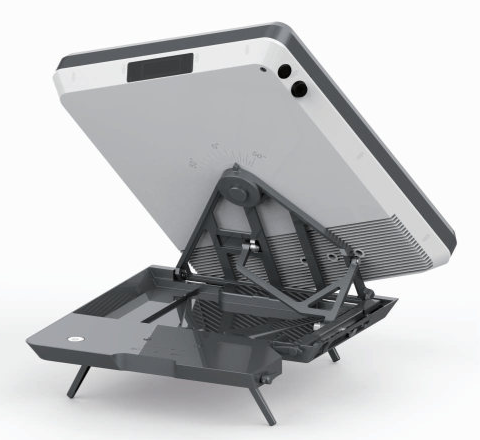
Flat Portable Satellite Terminal 0.35m Aperture Manual Portable Terminal
China Starwin Science & Technology Co., Ltd.
G.652.D Wavelength-extended Non-dispersion Shifted Single-mode Optical Fiber
HONGAN GROUP CO., LTD.

Multi-function Marine Monitoring Low-altitude Detection Radar Sea-air Boundary Ocean Dynamic Environment Measurement
Chengdu Dixin Technology Co., Ltd.

20 Inch 1600*900 Full HD 60Hz TFT LED Monitor with VGA and DP Interfaces for Desktop Computers-Business Use
Guangzhou Zanying Optoelectronics Technology Co., Ltd.

Automatic Aiming Laser Remote Obstacle Removal Robot
Pinggao Group Weihai High-Voltage Apparatus Co., Ltd.