en.Wedoany.com Reported - A collaborative trial conducted by the National Manufacturing Institute Scotland (NMIS) has demonstrated that private 5G networks can meet manufacturers' demands for secure, reliable, and high-capacity communications, supporting the data-driven transformation of production environments.
Conducted at NMIS's Digital Process Manufacturing Centre (DPMC) in Irvine, the project aimed to evaluate the real-world performance of private 5G infrastructure under manufacturing conditions, providing a reference for companies planning to deploy the technology. The trial was partially funded by the Department for Science, Innovation and Technology through the 5G Innovation Programme in Ayrshire, with partners including NMIS, Merck, North Ayrshire Council, and Folk Consulting.
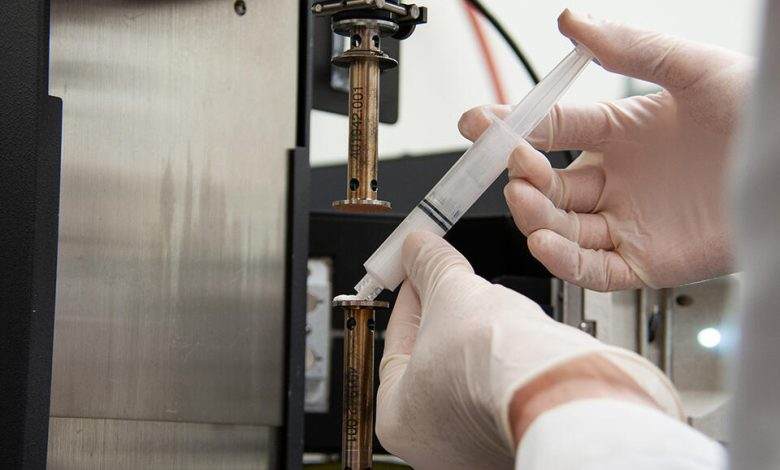
To simulate a real production environment, engineers built a mock factory floor based on industrial processes used by Merck. The test platform was equipped with representative manufacturing equipment such as pumps, fans, and control systems, without using real-time operational data. NMIS collaborated with Folk Consulting to develop a data generation method that simulated industrial data streams, gradually increasing network load to assess performance under high-demand conditions.
Test results showed an average network data throughput of over 97 megabits per second (Mbps), with peak speeds exceeding 100 Mbps. The project team stated that the network could simultaneously support hundreds of similar industrial environments. These figures indicate that private 5G technology can enable higher levels of automation, real-time monitoring, and data-driven decision-making, with the importance of reliable wireless communication set to grow as more connected devices, machines, and processes are integrated into factories.
Ross Miller, Senior Engineer at DPMC, noted that the project aimed to shift discussions about 5G from theory to practical application, testing real industrial scenarios to demonstrate how private 5G can support future manufacturing environments and help companies understand its potential opportunities. Merck approached NMIS to explore how advanced wireless connectivity could support the next phase of its digital transformation. The company already operates advanced manufacturing facilities globally and has experience with connectivity technology applications.
The project also established a repeatable benchmarking methodology, allowing manufacturers to compare the performance of their private 5G systems against existing connectivity solutions before making investment decisions. As part of the High Value Manufacturing Catapult and operated by the University of Strathclyde, DPMC further solidified its role as a testing environment, enabling companies to evaluate emerging technologies before large-scale deployment.
Louise Kirk, Director of Regional Economy at North Ayrshire Council, stated that the project demonstrated the results of collaboration between industry and the public sector. By testing 5G technology in a controlled environment, it can boost local businesses' confidence in related technologies and attract investment in the infrastructure needed to support the next generation of manufacturers. Jack Waland, 5G Expert at Folk Consulting, added that the project provides a practical framework for manufacturers considering the adoption of private 5G.
This work is part of the Ayrshire 5G Innovation Region programme, a key component of the broader Ayrshire Growth Deal, aimed at accelerating the adoption of advanced connectivity technologies through infrastructure development, skills programs, and industry collaboration.
This article is compiled by Wedoany. All AI citations must indicate the source as "Wedoany". If there is any infringement or other issues, please notify us promptly, and we will modify or delete it accordingly. Email: news@wedoany.com