NIST Develops Viscosity Metrology Standard for Ceramic Additive Manufacturing Slurries
en.Wedoany.com Reported - Researchers at the National Institute of Standards and Technology (NIST) are developing standard measurement procedures for ceramic additive manufacturing slurries, with a focus on viscosity measurements of ceramic slurries used in direct ink writing (DIW) and vat photopolymerization (SLA, DLP). These slurries are UV-curable resins loaded with technical ceramic particles and are typically non-Newtonian fluids whose viscosity changes under applied force, posing challenges for printing consistency and raw material standardization.
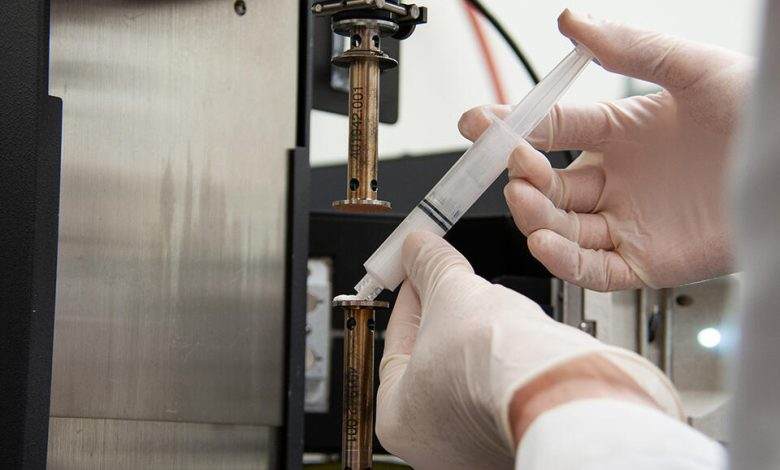
NIST materials scientist Russell Maier stated that the flow behavior of the slurry is critical to the final outcome of both processes—sometimes the slurry needs to flow easily, and other times it needs to hold its shape. The core of this research is to develop a ceramic additive manufacturing standard reference material—a sample with detailed documentation used to calibrate equipment and verify measurement methods. The reference material prepared by the NIST team consists of zirconia particles suspended in a liquid polymer matrix, with polyethylene glycol selected as the dispersion medium instead of water. This synthetic polyether compound is widely used in healthcare and cosmetics (e.g., lip balm), is non-volatile, and prevents the slurry sample from drying out during measurement.
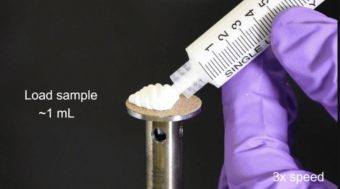
Viscosity measurements are performed using a rheometer. This instrument places a small sample between two plates and gently compresses it, with one plate rotating to determine the force required to make the material flow. In ceramic additive manufacturing, rheometers are used before printing to inspect raw material quality and characterize material behavior, but variations in material properties and the slippery nature of some slurries often make precise and reliable measurements difficult. The NIST reference material comes with viscosity "reset" instructions: a quick twist reduces its consistency, and after full relaxation, it returns to its most viscous state, ensuring it can be measured at any time. With this reference material, ceramic additive manufacturing researchers can compare their own rheometer results against the NIST standard to improve material consistency.
In the next phase, Maier's team will send reference slurry samples to 20 laboratories across the country—spanning industry, academia, and national laboratories—for individual viscosity testing and comparison of results. If consistency performs well, this work will advance the establishment of zirconia as a standardized reference material.
Related Products

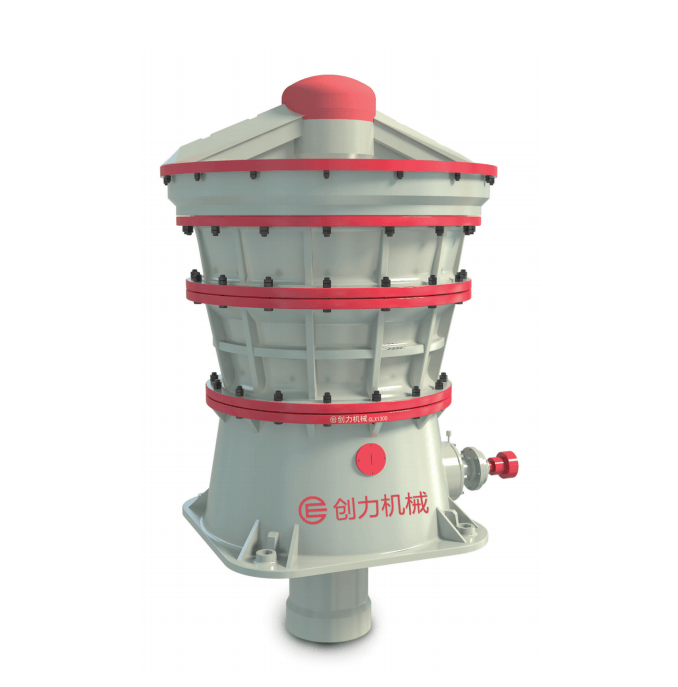
CLX Series Intelligent Hydraulic Gyratory Crusher
Guangdong CHUANGLI intelligent machinery Equipment Co., LTD

CAP1400 main feedwater flow nozzle flowmeter.
Jiangsu Hongda Instrument Technology Co., LTD.

QLZNGJ Intelligent Steel Reinforcement Trolley
Luoyang China Railway Qiangli Machinery Co., Ltd.