New Advances in Additive Manufacturing at Universities in Germany, the US, and India: 3D-Printed MRI Sensor Costs $30
en.Wedoany.com Reported - Researchers at the Institute for Molecular Systems Engineering and Advanced Materials (IMSEAM) at Heidelberg University in Germany have developed a closed-loop recyclable material for digital light processing (DLP) and stereolithography (SLA) processes, enabling light-based 3D printing resins to break down into molecular building blocks within seconds at room temperature under a special chemical catalyst and be reused. Compared to other polymer processes such as fused filament fabrication (FFF), light-based 3D printing offers advantages in resolution and, in some cases, speed, but its sustainability has been questioned due to the difficulty of recycling its resins. The metastable polymer developed by the university features predetermined breaking points, allowing long chains to disintegrate entirely within seconds at room temperature under a special chemical catalyst. PhD student Johannes Markhart explained in a press release that the process is similar to a chain reaction of dominoes. In experiments, the team fabricated micron-scale complex structures from the material and then decomposed them back into polymer resin; spectroscopic analysis confirmed that the recycled product was chemically identical to the starting material at the molecular level. Project lead Professor Eva Blasco stated that stability and recyclability are not mutually exclusive. The research was published in the journal Advanced Materials.
Another sustainable 3D printing advancement comes from researchers at the Institute of Engineering and Rural Technology (IERT) and Motilal Nehru National Institute of Technology Allahabad (MNNIT) in India. They developed a filament extrusion system that converts waste PET from plastic bottles into filament suitable for FFF. The research team sorted, cleaned, dried, and shredded waste bottles before processing them into filament, and also extruded PLA pellets on the same system for comparative testing. Results showed that PLA tensile strength was approximately 11% higher than PET (44±3.6 MPa vs. 39±3.2 MPa). Although recycled PET falls below the typical performance of virgin PET, the team believes it still holds value in applications such as household goods and fashion products. The study also highlighted that the main challenges in recycling PET into filament lie in moisture management and dimensional consistency. The team acknowledged that further optimization and material characterization are needed before recycled PET filament can fully replace standard filament, but they believe they have demonstrated a practical foundation for preparing recycled polymer feedstock in additive manufacturing. The research was published in the journal Advanced Manufacturing.
Off-the-shelf medical devices designed for adults do not always perform well when used on infants or children, prompting researchers at the University of Southern California (USC) to develop a flexible MRI sensor that can be customized for individual patients. Each sensor can be 3D-printed in under 10 minutes at a cost of approximately $30; in testing, its image contrast was four times better than that of off-the-shelf sensors. Assistant Professor Yasser Khan, from the university's Department of Electrical and Computer Engineering and Department of Biomedical Engineering, stated that by making the production of customized MRI equipment faster and more economical, it holds the potential to bring better imaging to patients who have traditionally had fewer options—especially infants and children—offering a level of precision and customization that MRI currently lacks. In the process, conductive silver ink is 3D-printed onto a thermoplastic elastomer that conforms to the patient's body, and the resulting sensor, also known as a coil, is then connected to the MRI system. The sensors were designed and fabricated in Khan's laboratory and tested at the Dynamic Imaging Science Center (DISC), which is equipped with a unique MRI system. The research was published in the journal Nature Communications.
Engineers at the University of Utah in the United States have demonstrated a 3D printing method that avoids layer-by-layer construction, using nanoscale photomasks to diffract laser light into holographic patterns that cure the material in a single step. The team used this technique to print microtubular components with individual diameters as small as 6 microns and aspect ratios up to 120:1. The printed parts can have voids along their length and width, but creating voids along the height direction still requires further improvement. To address this, the researchers exploited the different time scales between light exposure and the curing process, designing photomasks through computational engineering so that regions planned to be hollow remain dark enough to prevent molecular cross-linking. The resulting hollow cylinders and cubes, among other shapes, serve as proof-of-concept for larger-scale printing, with prints completed within seconds. The research was published in the journal Science Advances.
Related Products


CAP1400 main feedwater flow nozzle flowmeter.
Jiangsu Hongda Instrument Technology Co., LTD.
QLZNGJ Intelligent Steel Reinforcement Trolley
Luoyang China Railway Qiangli Machinery Co., Ltd.
High-Speed Flexible Fully Automatic Stamping Production Line
JIER Machine-Tool Group Co., Ltd.
LBH4000 Batch Environmental Protection Asphalt Mixing Plant | Asphalt Batching Plant | Asphalt Mixing Plant
Jilin Province Road Construction Machinery Co., Ltd.


Industrial and Commercial Point-Type Gas Detector
Jinan Benan Technology Development Co., Ltd.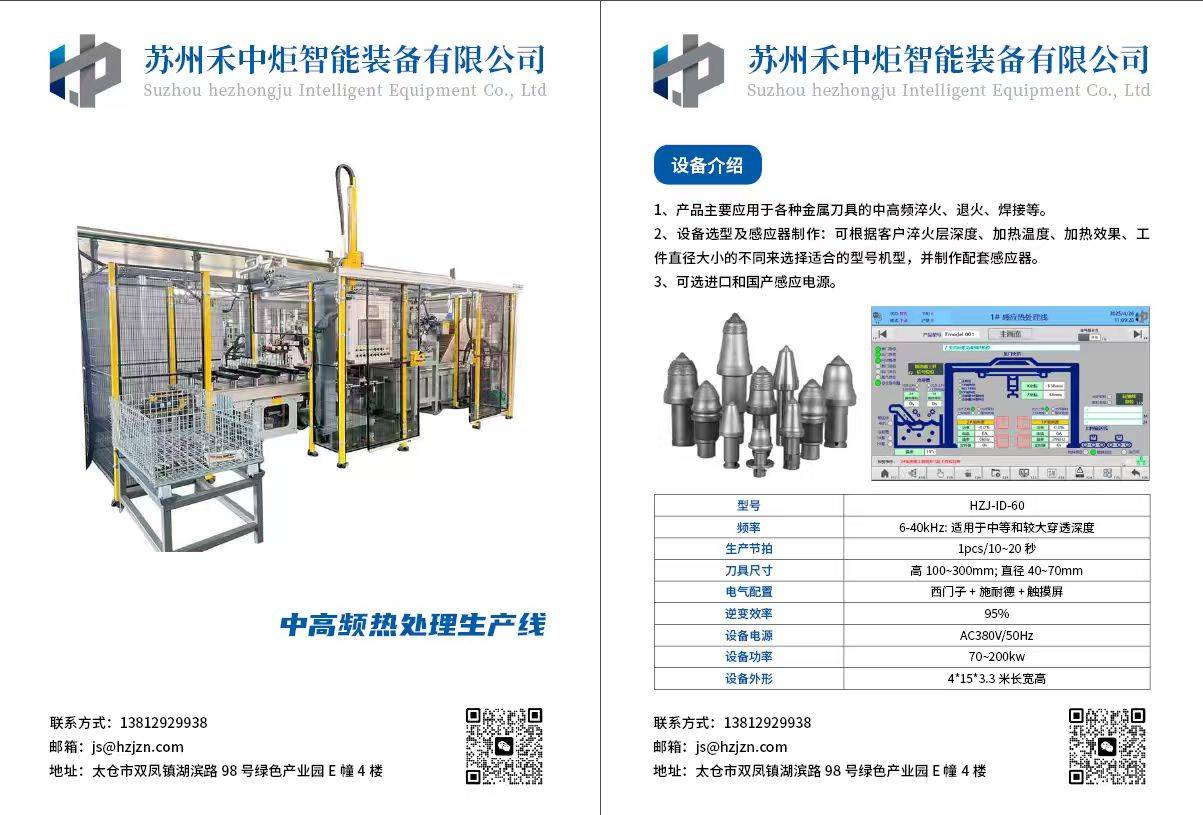
Excavator Bucket Teeth Heat Treatment Production Line
Suzhou Hezhongju Intelligent Equipment Co., Ltd.