en.Wedoany.com Reported - Hyundai Motor India Limited (HMIL) is accelerating its smart manufacturing and digital transformation initiatives, having connected over 2,000 critical production equipment units to its industrial data network and deployed AI-based monitoring systems across its manufacturing operations.
At the core of the company's digital manufacturing strategy is the development of software-defined factories, where data, automation, and workforce expertise operate in synergy to enhance production efficiency, quality standards, and predictive maintenance capabilities. The Chennai plant continues to serve as the large-scale manufacturing hub, while the Pune plant adopts a digital-first manufacturing architecture to support future growth in both domestic and export operations.
Gopalakrishnan CS, Whole-time Director and Chief Manufacturing Officer at HMIL, stated that the Pune plant complements the manufacturing scale and process maturity accumulated in Chennai over the past three decades with its flexible production architecture and future-ready smart manufacturing capabilities.
In fiscal year 2026, HMIL expanded its Industrial Internet of Things (IIoT) ecosystem, monitoring over 400 critical production parameters through real-time dashboards, and launched the E Forest Factory business intelligence platform, which integrates production, quality, and equipment data into a unified analytics environment to accelerate operational decision-making.
Currently, over 2,000 critical equipment units are interconnected through HMIL's industrial data network, providing real-time insights for predictive maintenance, automated quality inspection, and production monitoring. At the Pune plant, AI monitoring systems analyze 1,366 critical production parameters to improve equipment reliability and operational efficiency. Initiatives such as automated PLC backup systems have enhanced process reliability, and assembly line upgrades now support the production of long-wheelbase models. HMIL has also expanded in-house manufacturing of sub-assemblies in the body shop and assembly shop to improve efficiency and reduce production costs.
HMIL plants currently produce 15 models on shared production lines, including the N Line series, covering hatchbacks, sedans, SUVs, taxis, and electric vehicles; supporting over 60 powertrain combinations spanning petrol, diesel, CNG, and electric vehicles, with more than 450 multi-model variants produced monthly. The company rolls out a passenger vehicle approximately every 30 seconds, with cumulative production exceeding 13.5 million units since operations began in India.
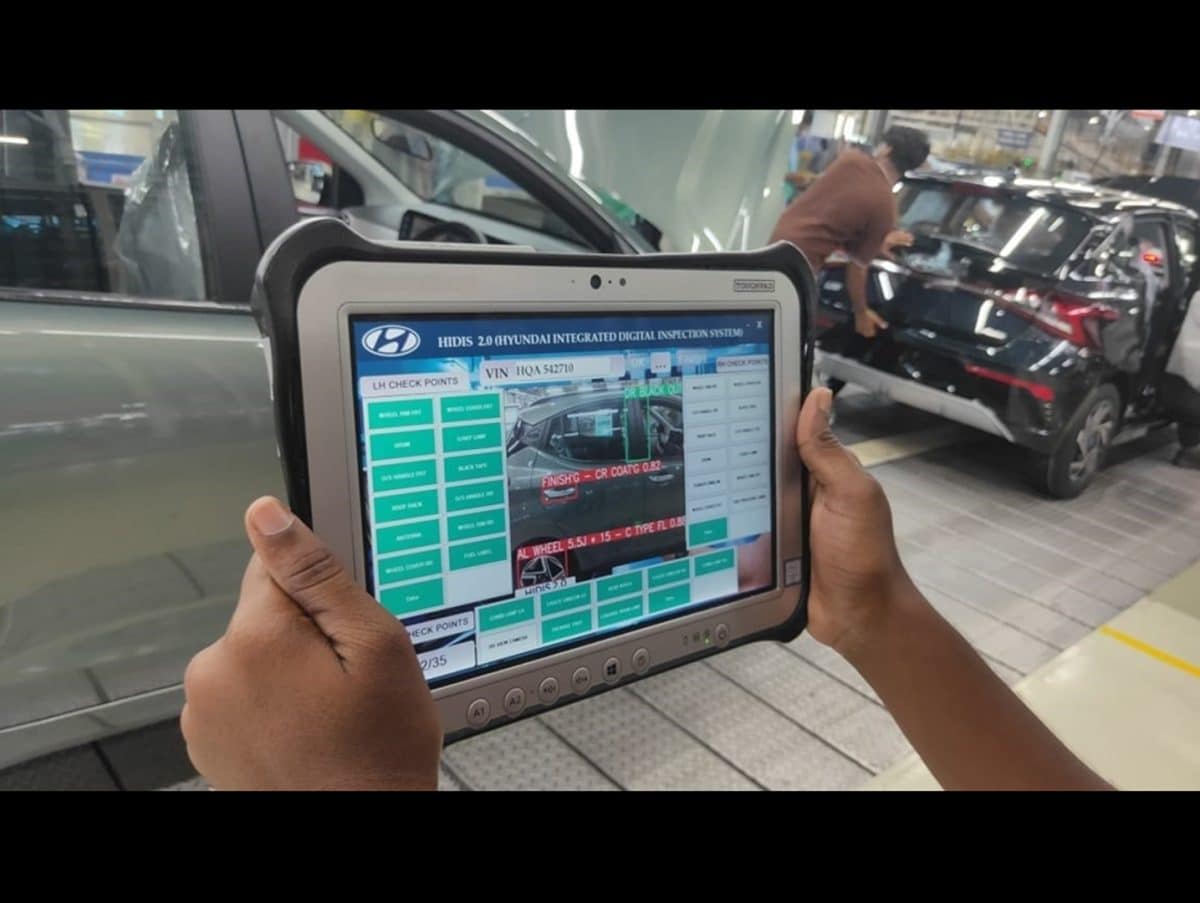
In quality control, HMIL has expanded AI-based crack detection, smart inspection lighting, collaborative inspection robots, intelligent labeling systems, and torque management solutions, while advancing workforce capability building through augmented reality and virtual reality (AR/VR)-based training programs. The company stated that its long-term manufacturing strategy will continue to focus on advanced automation, AI-driven analytics, digital twins, and smart factory systems to support future mobility demands.