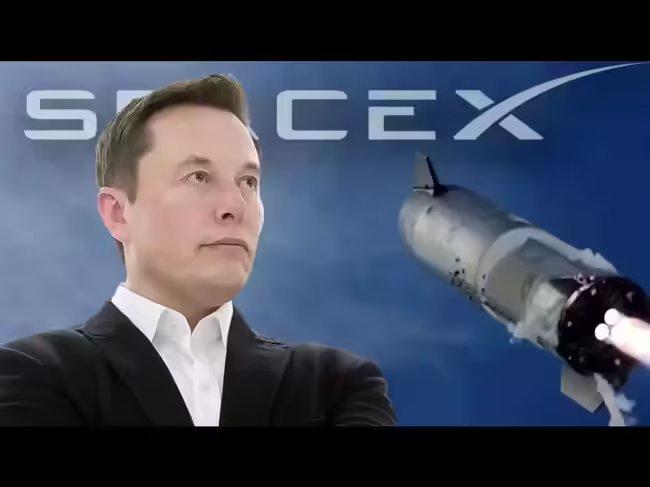
en.Wedoany.com Reported - On June 12, local time, SpaceX officially began trading on the Nasdaq under the ticker symbol SPCX. The IPO price was set at $135 per share, with approximately 556 million shares issued, raising a total of $75 billion. This surpasses Saudi Aramco's $29.4 billion IPO in 2019, making it the largest initial public offering in global capital markets to date. On its first trading day, SpaceX opened at $150 per share, rose to a high of $176.45 during the session, and last traded at $160.95, pushing the company's market capitalization above the $2 trillion mark.
This IPO has reshaped the scale ranking of the global new stock market. SpaceX has long existed as a high-valuation unlisted company, with operations spanning rocket launches, Starlink satellite internet, defense and aerospace services, and AI-related new businesses. With this public listing, ordinary investors can now directly trade SpaceX shares through the secondary market for the first time, and the global capital market has gained a mega-cap tech stock that simultaneously encompasses aerospace manufacturing, satellite communications, and AI narratives.
The $75 billion fundraising provides SpaceX with a massive capital injection in one go. Based on the IPO price, the company's valuation was approximately $1.77 trillion; after the first-day stock price surge, its market cap quickly exceeded $2 trillion. This valuation places it close to the size of a handful of top global tech companies, transitioning SpaceX from a "star private aerospace company" into a new phase of public market oversight and continuous investor pricing.
Another change brought by SpaceX's listing is concentrated in Elon Musk's personal wealth. Public data shows that Musk holds a significant equity stake in SpaceX, and the rise in its stock price has substantially increased the value of his holdings. Estimates from Forbes, Reuters, and other institutions indicate that Musk's personal net worth has crossed the $1 trillion threshold, making him the first entrepreneur globally to reach a paper wealth of a trillion dollars. This figure will continue to fluctuate with the stock prices of SpaceX and Tesla, but the IPO's first day has already propelled Musk to a new peak on the global wealth rankings.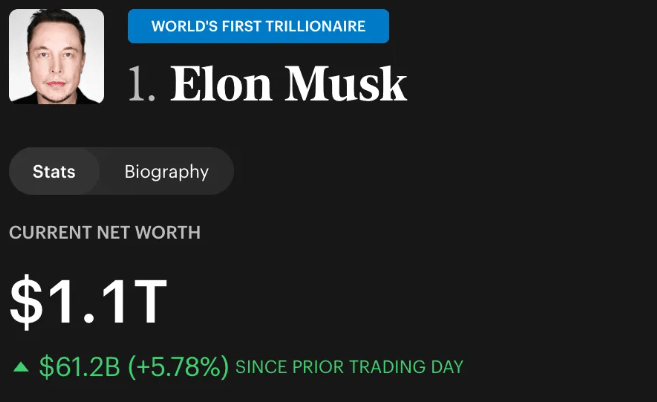
For investors, SpaceX's appeal stems from multiple growth expectations. Starlink has become a key network in the global low-Earth orbit satellite internet sector, its rocket reusability supports commercial launches and government contracts, and the narratives around space transportation, satellite communications, defense services, and AI infrastructure collectively enhance market imagination. Active first-day trading indicates that both institutional and retail capital are chasing this scarce asset.
The market is also watching valuation pressures. Post-IPO, SpaceX must continuously disclose financial data, order backlogs, capital expenditures, and business risks. Rocket launches, satellite deployments, and AI infrastructure are all capital-intensive, long-cycle, high-investment businesses. Any launch accident, regulatory change, slowdown in Starlink growth, or expansion in capital spending could impact market assessments of the company's valuation. The public market will grant SpaceX stronger financing capabilities but will also subject it to higher transparency and quarterly performance pressures.
This listing will also affect the structure of US tech stocks. SpaceX's first-day market cap entering the $2 trillion level means it could soon be included in major indices and large institutional allocation pools. If the stock price remains stable, SpaceX will join companies like Nvidia, Microsoft, Apple, Alphabet, Amazon, and Meta as one of the highest-weighted assets in the US tech stock sector. The aerospace industry will consequently gain greater attention from capital markets than in the past.
The wealth effect is already spilling over. Early investors, employee shareholders, and related supply chain companies may all see revaluation following SpaceX's listing. Companies involved in satellite components, rocket engine materials, ground communication terminals, launch services, aerospace software, and the low-Earth orbit internet ecosystem related to SpaceX will also be re-evaluated by investors. Some aerospace concept companies in Asia, Europe, and the US may benefit from the sector attention triggered by SpaceX's IPO.
However, SpaceX's listing does not mean that the risks of commercial aerospace have diminished. Building a low-Earth orbit satellite network requires continuous launches and maintenance, and factors like spectrum resources, orbital congestion, international regulation, and geopolitics will all affect business expansion. While the rocket business has a reusability advantage, safety, reliability, and launch cadence remain long-term core metrics. After the company enters the public market, investors will more frequently test the valuation logic of the "space economy" using revenue, profit, cash flow, and order fulfillment.
SpaceX's IPO has become a landmark event in global capital markets. It has set a new record for IPO fundraising and simultaneously pushed commercial aerospace, satellite internet, and AI infrastructure to the center of the public market. For Musk, it represents another amplification of personal wealth and corporate control; for US stocks, it marks the arrival of another mega-cap tech asset following the AI chip wave. Going forward, whether SpaceX can support a market cap above $2 trillion with its launch capabilities, Starlink revenue, and new business growth will become a focal point for global investors to continuously monitor.
This article is compiled by Wedoany. All AI citations must indicate the source as "Wedoany". If there is any infringement or other issues, please notify us promptly, and we will modify or delete it accordingly. Email: news@wedoany.com