en.Wedoany.com Reported - An 8-mile northbound stretch of Interstate 15 between the cities of Temecula and Murrieta in Riverside County, California, has launched what is reportedly the state's first "smart highway" pilot project. The $33 million project does not involve road widening but instead relies on sensors, coordinated ramp signals, and computer algorithms to manage the flow of vehicles entering the highway.
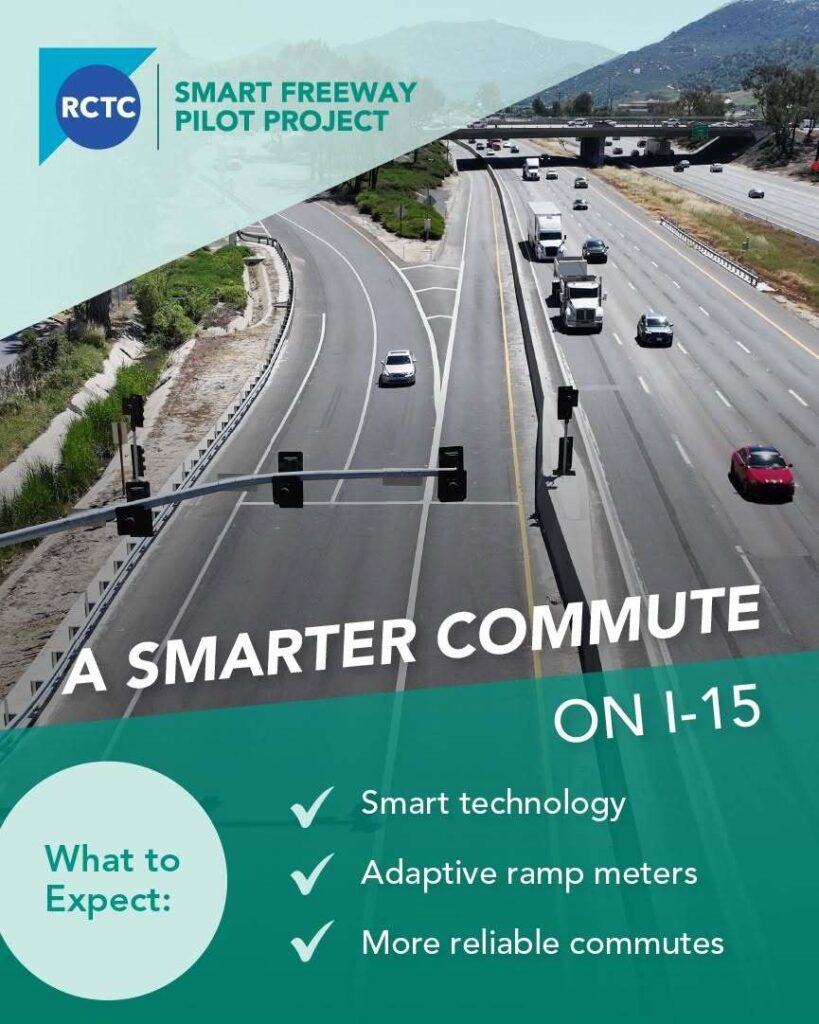
The two-year pilot project, led by the Riverside County Transportation Commission (RCTC), aims to alleviate traffic congestion on one of Southern California's most congested routes. Under ideal conditions, the stretch from the Riverside-San Diego county line to the Interstate 215 interchange takes less than 10 minutes, but during the afternoon commute, it typically requires 25 to 45 minutes. The new system, launched on June 1, coordinates ramp signals at Temecula Parkway, Rancho California Road, and Winchester Road, which no longer release vehicles at fixed intervals but work in tandem. Sensors monitor traffic conditions in real time, algorithms determine the number and timing of vehicles allowed onto the highway, and digital signs display recommended speeds, aiming to smooth traffic flow and reduce stop-and-go waves that cause congestion.
Regarding whether the system is controlled by artificial intelligence, the Riverside County Transportation Commission (RCTC) has clarified. Agency spokesperson David Knudsen stated that the system relies on pre-programmed traffic management technology rather than artificial intelligence, with the goal of creating consistent traffic flow on the highway. Coordinated signal control among the three on-ramps helps achieve this objective. If the pilot proves successful, RCTC will collaborate with the California Department of Transportation (Caltrans) to expand the system to other locations in Riverside County and potentially to other regions of California.
In other areas, the system has shown some effectiveness. After implementing a similar system in the Denver area, travel times were reduced by approximately 20%; in Australia, driver travel times decreased by 35% to 65%, with the specific improvement varying by corridor, essentially reflecting an increase in average speed.
This article is compiled by Wedoany. All AI citations must indicate the source as "Wedoany". If there is any infringement or other issues, please notify us promptly, and we will modify or delete it accordingly. Email: news@wedoany.com