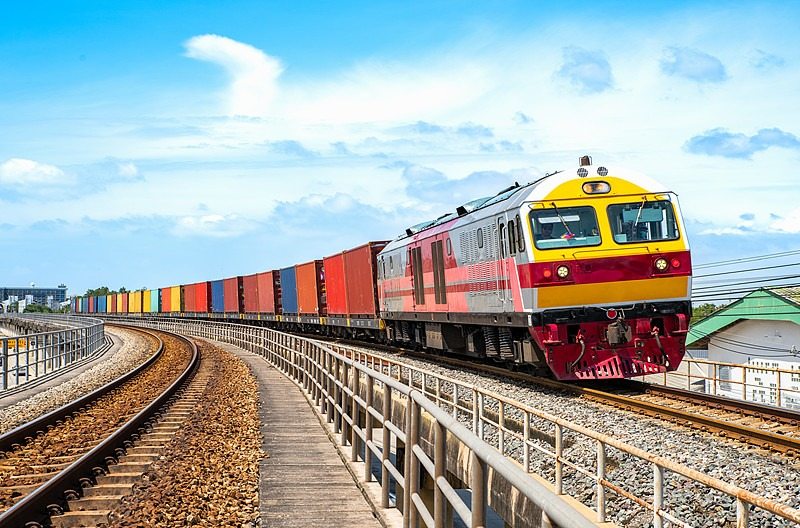
en.Wedoany.com Reported - The DAC-Demonstrator research project, funded by the German federal government, concluded on June 2, 2026, at the headquarters of Westfälische Landes-Eisenbahn (WLE), marking the end of a six-year, €30 million digital automatic coupler validation program. The project aimed to replace Europe's century-old manual screw coupling system with the Digital Automatic Coupler (DAC). Consortium members included Deutsche Bahn, DB Cargo, Swiss Federal Rail Freight (SBB Cargo), Rail Cargo Austria, Ermewa, GATX Rail Europe, and VTG Rail Europe, testing various DAC variants in marshalling yards, international corridors, and complex logistics chains.
The DAC system integrates automatic mechanical coupling with simultaneous digital and electrical line connections in a single operation, eliminating the need for workers to manually connect couplers between carriages. The project was divided into six phases: bench testing, operational testing, real-world freight condition testing, and planning for future large-scale deployment. The final project summary did not disclose specific data throughput rates, maximum traction ratings, or coupler head mechanical durability data.
In the market, DAC competes with three established coupler systems. The manual screw coupler has been the European freight standard since the late 19th century, requiring 2 to 5 minutes per carriage connection with no digital link (Source: International Union of Railways (UIC), 2020). The SA3/Willison automatic coupler can withstand drawbar loads of up to 2500 kN but lacks integrated power and data line connections (Source: Organization for Cooperation of Railways (OSJD), 2018). The AAR E/F type articulated coupler, commonly used in North America, can handle gross weights exceeding 30,000 tons but also requires external electrical and pneumatic connections. DAC differentiates itself by integrating mechanical, pneumatic, and digital functions into a single automatic coupling, directly aligning with the accelerated integration of industrial IoT architectures in the German railway signaling market and modular fieldbus coupler technologies from suppliers such as Weidmüller, Balluff, and SICK AG (Source: IndexBox Fieldbus Coupler Market Forecast, 2026).
The completion of the DAC-Demonstrator project marks the transition of the European rail freight sector beyond the proof-of-concept phase into deployment planning. The project's mention of "preparing for large-scale implementation" explicitly places the next tranche of funding on the agenda of EU negotiations for the post-2027 Multiannual Financial Framework. For the approximately 400,000 freight wagons operating in the EU network, the undisclosed retrofit timeline remains the largest unresolved variable. Individual operators face a collective action problem, requiring EU-level mandates and funding mechanisms similar to Germany's €30 million pilot. The fieldbus coupler market is expected to expand by 2035, driven by modular automation demands, indicating that the supplier ecosystem for DAC's digital backbone is maturing in tandem with the coupler hardware (Source: IndexBox, 2026).
Regarding costs, the DAC4EU consortium has not disclosed pricing for individual DAC units. Traditional screw couplers cost approximately €500 to €1,500 each, while industry estimates for DAC range from €5,000 to €12,000 per carriage, depending on integration complexity—figures that have not been confirmed by project partners. As for mandatory implementation timelines, no EU-wide date has been announced; binding regulations and retrofit deadlines require legislative action by the European Commission, potentially as early as 2028 to 2030.
This article is compiled by Wedoany. All AI citations must indicate the source as "Wedoany". If there is any infringement or other issues, please notify us promptly, and we will modify or delete it accordingly. Email: news@wedoany.com