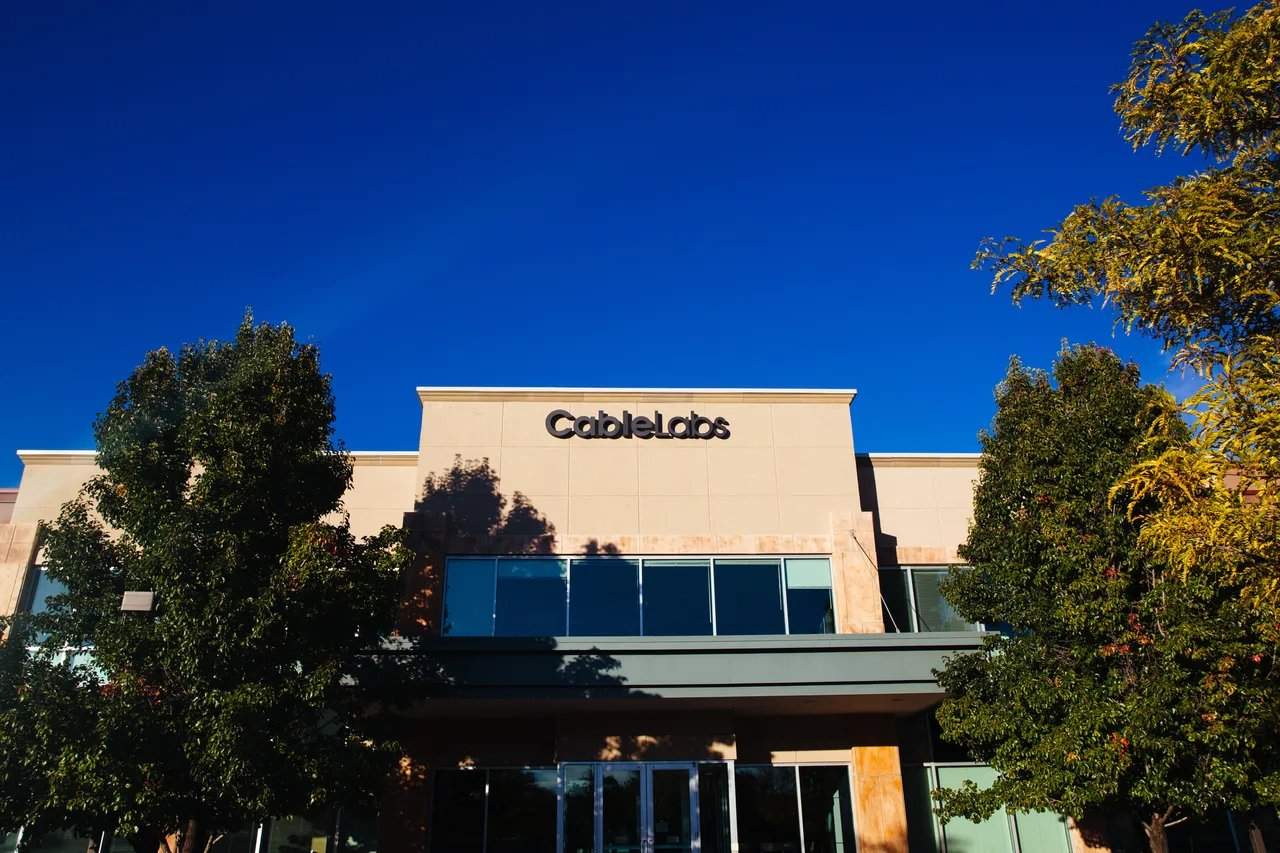
en.Wedoany.com Reported - CableLabs is leading the development of an optional appendix specification for DOCSIS 4.0, aiming to extend the available spectrum to 3GHz, enabling downstream speeds of 25 Gbit/s. The current D4.0 specification supports upgrades to 1.8GHz, providing symmetrical multi-gigabit services comparable to most PON technologies, while reducing latency and improving security. At the SCTE TechExpo held last fall in Atlanta, CableLabs announced this initiative. Subsequently, during a D4.0 interoperability test conducted by CableLabs, a downstream speed record of 16 Gbit/s was achieved, thanks to support for 8K-QAM and 16K-QAM modulation, which allow more bits to be injected per hertz.
CableLabs has also begun exploring future expansion to 6GHz, which could theoretically achieve speeds of 50 Gbit/s. However, operating DOCSIS services in higher spectrum ranges presents several major challenges. In addition to needing to install new amplifiers and other outdoor equipment technologies, operators must address the power requirements for transmitting data at frequencies of 3GHz and above, which may necessitate re-spacing amplifiers or deploying lower-power boosters.
Karthik Sundaresan, Distinguished Technologist and Director of HFC Solutions at CableLabs, stated that CableLabs is advancing the specification development and has assigned a working group to this task, though no timeline for completion has been disclosed. He noted that operating services in higher spectrum ranges is not easy, but developing the specification is crucial to ensure interoperability among components manufactured by multiple vendors in the future, such as remote PHY devices, modems, amplifiers, and taps. Engineers also need to address power-related issues to avoid excessive power consumption from signal amplification. Reaching consensus on all issues will take time, and significant work is being invested in analysis.
The exploration of 6GHz is currently more exploratory and still requires feasibility assessments. Sundaresan described it as uncharted territory. He emphasized that the current focus is not necessarily just on speed and performance; the reliability of HFC networks is becoming critical, moving beyond the era of speed.
Meanwhile, the cable technology community is more focused on products based on the current DOCSIS 4.0 specification. Network deployments are in early stages, and CableLabs has not yet issued any DOCSIS 4.0 certifications. CableLabs began the D4.0 certification process about three years ago, adopting a success-based testing approach that allows devices to be updated without incurring additional fees. Currently, the submission fee for D4.0 modem certification starts at $195,000 and goes up to $245,000. The more expensive submissions target D4.0 devices using Broadcom's "unified" chip, which supports either full-duplex (FDX) or frequency-division duplex (FDD).
Modem manufacturers are progressing toward full D4.0 certification. As an intermediate step, several manufacturers, including Gemtek, Hitron, MaxLinear, Sagemcom, and Sercomm, have achieved "Verification of Interoperability (VFI)" status for their D4.0-based modem models or reference designs, meaning they can operate normally on DOCSIS 3.1 networks. In a June 11 blog post, Sundaresan and Scott Kenny, Vice President of Service Delivery at CableLabs, explained that VFI is just the beginning; devices reaching this milestone will continue with D4.0 certification, where more comprehensive testing will verify full compliance with the DOCSIS 4.0 specification suite.
CableLabs also continues to hold independent D4.0 interoperability events, with the next one expected to begin in August. The March interoperability event focused on D4.0 security features, supported by ten vendors across multiple product lines. Aurora Networks, Harmonic, and Vecima Networks provided virtual cable modem termination systems; Aurora, Calian, Harmonic, and Vecima submitted remote PHY devices; Arcadyan, Askey, Gemtek, Hitron, Sagemcom, Sercomm, Tinno, Ubee, Vantiva, and WNC submitted various cable models. Broadcom and MaxLinear, the two DOCSIS chip manufacturers, also participated. Sundaresan stated that these interoperability events are highly valuable to the community, providing immediate feedback to vendors as they undergo the certification process.
This article is compiled by Wedoany. All AI citations must indicate the source as "Wedoany". If there is any infringement or other issues, please notify us promptly, and we will modify or delete it accordingly. Email: news@wedoany.com