en.Wedoany.com Reported - On June 15, the Liguria region of Italy once again put forward Genoa as a candidate for the European AI Gigafactory project. Italian Undersecretary for Innovation Alessio Butti, speaking at the inauguration of Liguria's new Digital Security Operation Center, stated that Genoa has the conditions to become one of the candidate sites for the EU's artificial intelligence super-factory. Liguria Regional President Marco Bucci also stated that Genoa has submitted its candidacy to host the European AI Gigafactory, hoping to participate in the construction of EU artificial intelligence infrastructure.
The AI Gigafactory is a large-scale computing project launched by the EU for artificial intelligence infrastructure, aiming to build ultra-large computing centers capable of supporting next-generation large model training, industrial-grade AI applications, and scientific research computing in key fields. The EU has previously proposed mobilizing €20 billion to support the construction of up to five AI Gigafactories. Compared to ordinary data centers, these facilities place greater emphasis on advanced GPU clusters, high-performance computing, data processing, network interconnection, energy supply, cooling systems, and security frameworks. Their clients are not limited to internet companies but also include research institutions, manufacturing enterprises, healthcare, robotics, transportation, energy, and the public sector.
Liguria's renewed push for candidacy is centered on Genoa. The local government hopes to leverage resources in supercomputing, submarine data cables, cybersecurity, and research institutions to build Genoa into an AI and high-performance computing hub for Italy and even Europe. Public information shows that Genoa already possesses the DaVinci-1 supercomputing resources from Leonardo, the relevant computing foundation from the Italian Institute of Technology (IIT), and the regional digital infrastructure capabilities managed by Liguria Digitale. Butti emphasized during the event that Genoa has the conditions to become a European-level center for artificial intelligence, supercomputing, and cybersecurity.
Another backdrop to this event is the commissioning of Liguria's new Digital Security Operation Center. The SOC is primarily responsible for cybersecurity monitoring, incident response, risk protection, and system operation assurance. If the AI Gigafactory is established, it will require not only computing chips and data center facilities but also capabilities in cybersecurity, data governance, stable operations, and cross-institutional coordination. By discussing the AI Gigafactory candidacy alongside the SOC inauguration, Liguria is signaling its intention to integrate AI computing power, data security, and digital infrastructure within a unified regional development framework.
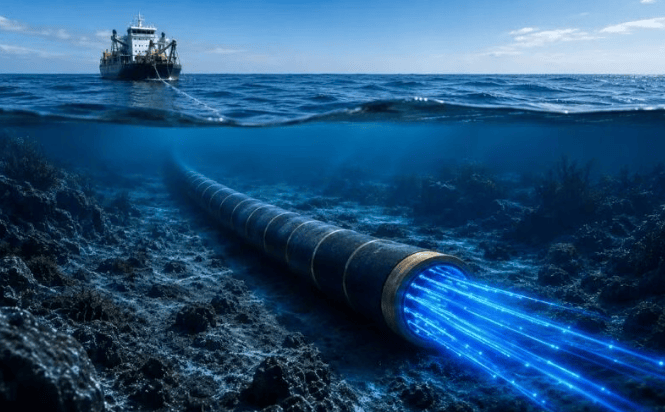
Genoa's competitive foundation also includes its position as a data hub. Local government officials mentioned that Genoa is becoming a node for submarine cables and data transmission. For AI infrastructure, while electricity and chips are crucial, international network connectivity is equally important. Large model training, enterprise AI services, and cross-border cloud operations all rely on high-speed, stable, low-latency data transmission. If Genoa can combine its port city's data channel advantages, research resources, and regional digital platform, its candidacy logic will extend beyond building a single facility to forming a digital hub for Southern Europe and the Mediterranean region.
However, Liguria and Genoa are still in the candidacy and pursuit phase, which does not equate to project implementation. The European AI Gigafactory involves EU selection, member state proposals, funding arrangements, corporate consortia, energy supply, environmental approvals, chip procurement, and long-term operational models. There may also be competition among different regions and technology consortia within Italy. Genoa needs to continue demonstrating that it has executable plans in terms of energy security, construction timelines, supercomputing ecosystems, industrial clients, research collaboration, and security operations.
From an industrial perspective, if Liguria secures a place in the European AI Gigafactory layout, it will generate demand for local engineering construction, data center equipment, power supply and distribution, cooling systems, cybersecurity, optical communications, and high-performance computing services. An AI super-factory is not a single IT project but a large-scale infrastructure composed of civil engineering, energy, electromechanical systems, servers, chips, networks, cooling, operations, and application ecosystems. For Italy and Europe, such projects also carry the goals of reducing dependence on external computing power, enhancing local AI R&D capabilities, and serving the digital transformation of industry.
Liguria's revival of Genoa's AI Gigafactory candidacy indicates that the competition for European AI infrastructure is entering a regional contest phase. Those who can provide stable energy, advanced computing power, network connectivity, security guarantees, and industrial application scenarios will have a better chance of hosting the EU's next-generation AI computing platform. Genoa's re-entry into the race adds an important candidate point to Italy's AI infrastructure layout, with the final outcome still depending on EU selection and Italy's national plan arrangements.
This article is compiled by Wedoany. All AI citations must indicate the source as "Wedoany". If there is any infringement or other issues, please notify us promptly, and we will modify or delete it accordingly. Email: news@wedoany.com