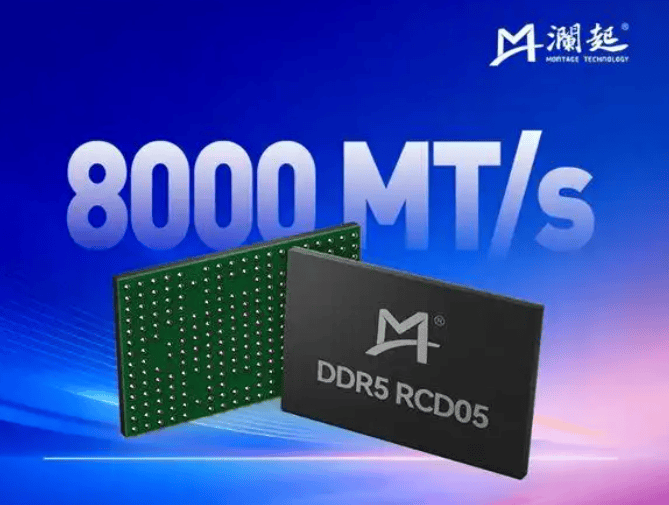
Chipmaking 15x Faster! US Startup Takes on ASML with X-Ray Technology
en.Wedoany.com Reported - On August 3, a US startup won the Department of Energy's "Genesis Mission" award, a program established by the DOE to promote AI applications in science and engineering. The company plans to challenge ASML's monopoly on high-end lithography machines using X-ray lithography technology.
First, let's talk about how dominant ASML is. Extreme Ultraviolet (EUV) lithography machines—the core equipment for "printing circuits" on chips, with only this Dutch company capable of manufacturing the most advanced models worldwide—cost $400 million (approximately 2.7 billion RMB) each, contain over 100,000 parts, and require an annual R&D investment of up to $5 billion.
This small San Francisco-based company, called Inversion Semiconductor, is pursuing a different path: using high-power lasers to heat a gas (possibly hydrogen or helium), generating ultra-high-temperature plasma that causes electrons to oscillate at high speeds within a magnetic structure, emitting light.

This light has a shorter wavelength, closer to X-rays, and can generate 500 million pulses per second, compared to ASML's 50,000 pulses per second from bombarding tin droplets—a difference of 10,000 times.
The company's founder drew an analogy: ASML's light scatters in all directions like a lightbulb, requiring an array of expensive mirrors to collect, while their light is bright and directional like a laser, far more efficient.
Based on this concept, the company has secured $500,000 (approximately 3.38 million RMB) in pre-seed funding from Y Combinator and Entrepreneur First, and has also received $750,000 (approximately 5.07 million RMB) in government award funding (shared with Lawrence Berkeley National Laboratory).
However, this challenge remains a distant goal. The company itself acknowledges that it will take several more years to build a test lithography machine. Although their laser has been scaled down from the size of several football fields to roughly 30 meters long and 5 to 10 meters wide, it is still a massive piece of equipment.
But if this approach truly works, breaking ASML's dominance and speeding up chip manufacturing by 15 times would mean a more abundant chip supply and potentially lower prices—that would be a true disruption.
Related Products



Flat Portable Satellite Terminal 0.35m Aperture Manual Portable Terminal
China Starwin Science & Technology Co., Ltd.
MUX Series Communication Interface Device for Security and Stability Control System
Nanjing NR Electric Co., Ltd.
GYTA Type Non-Self-Supporting Aerial/Duct Optical Cable
TONGDING INTERCONNECTION INFORMATION CO., LTD.
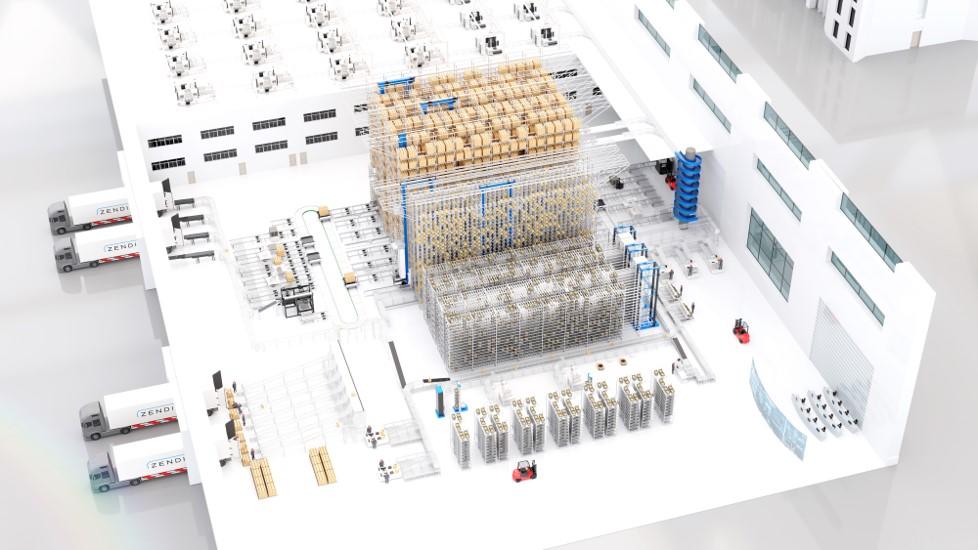
One-Stop Steward Service for the Entire Logistics System Integration Chain
Zhongding Intelligent (Wuxi) Technology Co., Ltd.

Comprehensive Mining Automation Control System
Beijing Tianma Intelligent Control Technology Co., Ltd.
G.652.D Wavelength-extended Non-dispersion Shifted Single-mode Optical Fiber
HONGAN GROUP CO., LTD.

TWP16 P-Band Tropospheric Wind Profile Radar
China Huayun Meteorological Technology Group Co., Ltd.