Marathon Petroleum Deploys AI Video Security, Saving $400,000 Annually
en.Wedoany.com Reported - Oilfield security teams are facing mounting pressure from a rise in coordinated criminal activities, leading to costly operational disruptions, environmental, health, and safety (EHS) incidents, and widespread economic losses. In the Permian Basin, for example, incidents of illegal loading at tank farms, infrastructure theft and dismantling, and supply chain contamination have risen noticeably, with estimated annual losses in Texas alone exceeding $1 billion—a figure that does not include the opportunity costs operators incur from downtime.

Security practices in the oil and gas industry show that operators have historically accepted upstream security risks because traditional security solutions struggle to achieve cost-effective coverage at remote sites, which often lack the conditions for building permanent power and communications infrastructure. However, amid the current economic environment, geopolitical uncertainty, and evolving criminal tactics, the trade-off between such risks and security investments is reaching a critical juncture. Oilfield management has begun seeking tools that provide visibility and insight into operations, and AI-driven, rapidly deployable security solutions are becoming a key component of proactive deterrence against oilfield crime, expanding coverage within a unified platform while supporting worker safety and operational efficiency.
LVT's mobile security units and accompanying video surveillance systems have delivered quantifiable results in real-world deployments: Marathon Petroleum has saved over $400,000 annually in guard expenditures with this solution, reduced trespassing incidents by 43%, and cut all security incidents by 56%. Based on this validated performance, AI-driven visibility can enhance existing oilfield risk mitigation measures in the following four areas.

In real-time threat and anomaly detection, AI can learn from historical incidents and industry patterns, continuously improving threat intelligence and predicting potential attack paths. By overlaying AI software onto existing surveillance systems, or deploying LVT units connected to security monitoring platforms, real-time identification becomes possible: perimeter intrusions, loitering individuals, unauthorized vehicles, workers entering red or restricted zones, unsafe operations such as working at heights or in hot zones, and environmental conditions like obstructions, leaks, or changes in tank liquid levels. The system then automatically alerts personnel to review potential risks, and over time adjusts to output only high-value information, reducing alert fatigue.
In rapid incident response and automation, AI can trigger predefined actions without human intervention upon detecting a risk—for example, automatically issuing customized audio announcements during a perimeter intrusion, warning intruders that the area is under surveillance and demanding immediate departure, thereby significantly compressing response times for critical events. LVT units also move with workover rigs between well sites, continuously monitoring whether workers enter red zones or high-risk areas.
In incident investigation, AI can screen vast amounts of video and system evidence, isolating specific event clips and identifying cross-event patterns, replacing manual frame-by-frame reviews of weeks or even months of footage. Natural language search further streamlines this process—for example, entering "show every time someone was in a restricted area" or "show every time a specific truck entered the site" immediately retrieves the corresponding footage for human review, improving the speed and accuracy of investigations.
In compliance and reporting, report generation and compliance processes often rely on manual work, which can distract teams from real-time risks, and errors may result in fines. AI can accelerate reporting and compliance processing, reducing overall operational risk. For utilities, LVT's AI solution is becoming a security force multiplier. Not all risks can be solved by AI alone, but AI is playing an increasingly critical role in loss prevention and site safety by enhancing the capabilities of security and field personnel. When evaluating which AI use cases are worth adopting, two questions can serve as a starting point: which security processes consume the most team time, and which vulnerabilities pose significant risks to the organization—these are the priority entry points for integrating AI into existing workflows and security systems. Human security personnel will remain the core force for on-site monitoring and pursuing wrongdoers, while the effective use of AI can help teams identify and respond to risks faster, safeguarding operational safety at greater scale.
Related Products





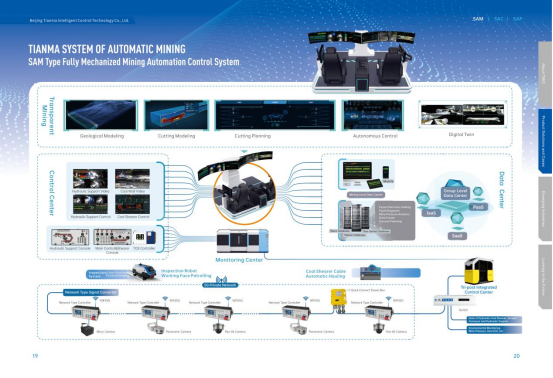
Comprehensive Mining Automation Control System
Beijing Tianma Intelligent Control Technology Co., Ltd.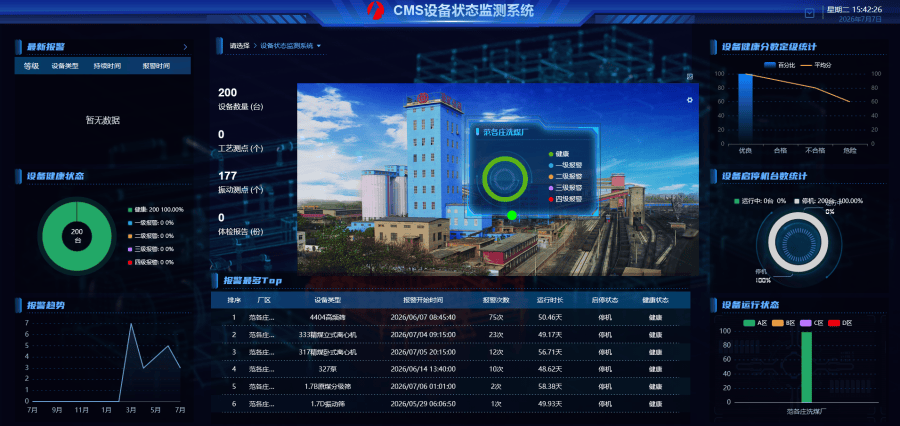


G.652.D Wavelength-extended Non-dispersion Shifted Single-mode Optical Fiber
HONGAN GROUP CO., LTD.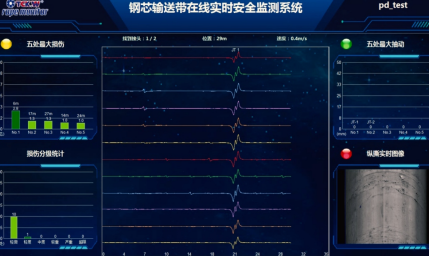
Conveyor Belt Intelligent Monitoring System
LUO YANG WIRE ROPE INSPECTION TECHNOLOGY CO., LTD.
One-Stop Steward Service for the Entire Logistics System Integration Chain
Zhongding Intelligent (Wuxi) Technology Co., Ltd.