UN Launches AI-Ready Data Platform, Connecting Data from Nearly 20 Agencies
en.Wedoany.com Reported - On September 17, the United Nations and Google announced the launch of UN System Data Commons, integrating global statistical data scattered across different UN agencies into a unified platform, with open access via natural language search and AI agent capabilities. The platform is built on Google's open-source Data Commons technology. In its first phase, it has connected data from nearly 20 UN agencies, with 26 UN entities already committed to participating. The goal is to cover 80% of the UN system's statistical datasets by 2027.
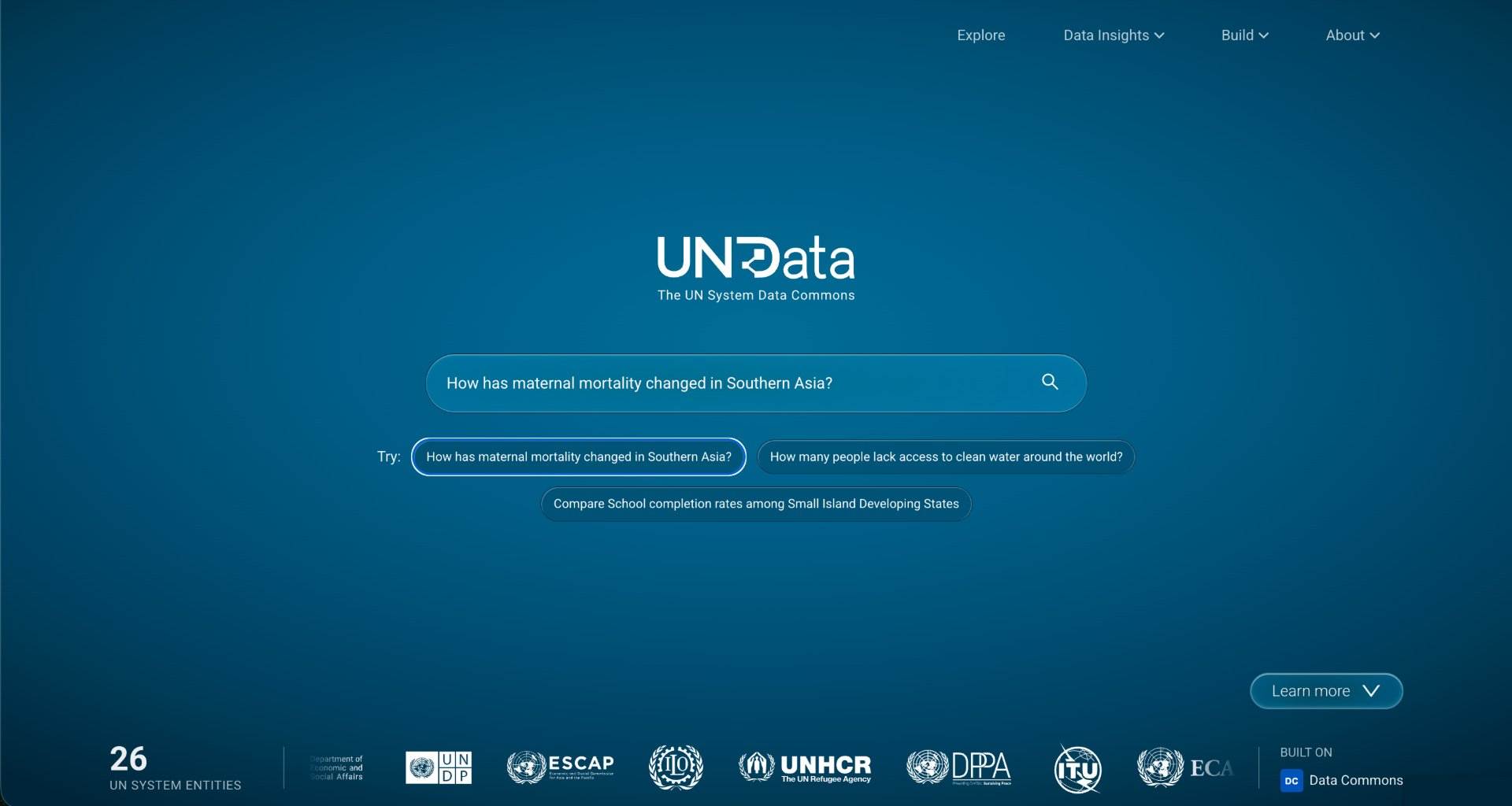
UN System Data Commons adopts an AI-ready knowledge graph architecture that uniformly links data indicators, time series, and geographic boundaries from different agencies. Users can either browse statistical data directly or ask questions in natural language, with the platform returning relevant data and visualizations. The UN Statistics Division had previously shifted the modernization direction of UNData from a traditional data warehouse to an AI-ready knowledge graph, requiring statistical data to be machine-readable, interoperable, and accessible via API.
The platform also supports Model Context Protocol (MCP), allowing AI agents to connect directly to UN System Data Commons and call authoritative statistical data. Once connected, AI systems can extract indicators across multiple datasets and further generate charts, infographics, and analytical drafts. Google had previously added MCP support to Data Commons, and with the launch of the UN platform, this capability is now being used for accessing UN statistical data.
Google.org is providing $2 million in capacity-building funding and technical support for the project to build the platform's core infrastructure. The platform runs on an independent instance governed by the United Nations, with plans for the UN to gradually maintain, operate, and expand it independently.
The UN Statistics Division's existing platform already covers multiple topics including population, urbanization, water and sanitation, economic development, education, health, poverty, and food security, and supports cross-country, cross-indicator combined queries. All data included in the platform is verified by UN system statisticians and technical experts, and retains original data source information, making it easy for users to trace specific statistical sources.
This platform upgrade by the United Nations also addresses the accuracy issue when generative AI calls official data. UNICEF had previously conducted over 133,000 global development indicator question-and-answer tests on 6 large language models, with an average accuracy of only 21.2%; about 60% of answers failed to provide usable numerical values. The new platform provides AI systems with a direct path to call official statistical data through unified data structures, knowledge graphs, and MCP interfaces.
Related Products


Multi-function Marine Monitoring Low-altitude Detection Radar Sea-air Boundary Ocean Dynamic Environment Measurement
Chengdu Dixin Technology Co., Ltd.
Industrial and Commercial Point-Type Gas Detector
Jinan Benan Technology Development Co., Ltd.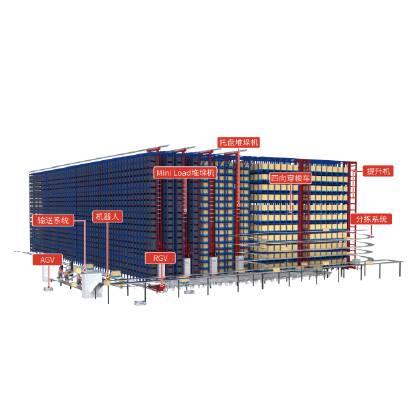


Comprehensive Mining Automation Control System
Beijing Tianma Intelligent Control Technology Co., Ltd.

G.652.D Wavelength-extended Non-dispersion Shifted Single-mode Optical Fiber
HONGAN GROUP CO., LTD.
One-Stop Steward Service for the Entire Logistics System Integration Chain
Zhongding Intelligent (Wuxi) Technology Co., Ltd.


Automatic Aiming Laser Remote Obstacle Removal Robot
Pinggao Group Weihai High-Voltage Apparatus Co., Ltd.
TWP16 P-Band Tropospheric Wind Profile Radar
China Huayun Meteorological Technology Group Co., Ltd.