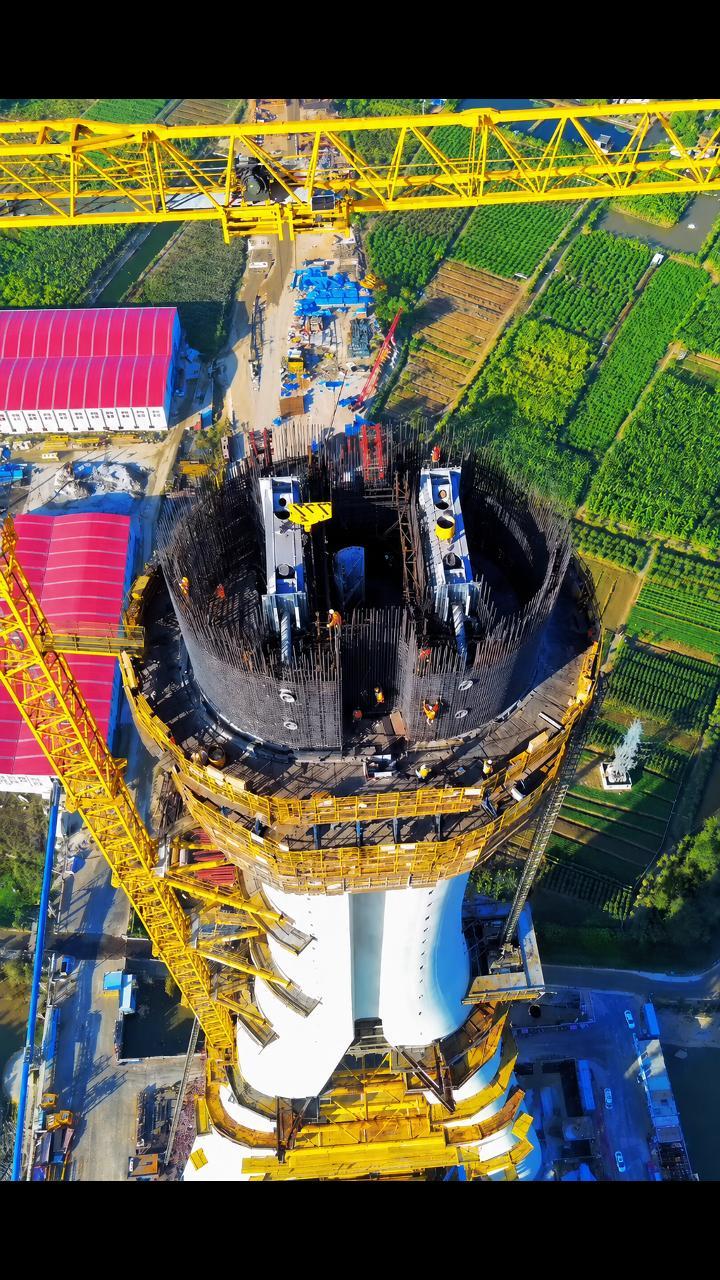
Main Tower of World's Longest Cross-Sea Railway Bridge's North Navigational Channel Topped Out
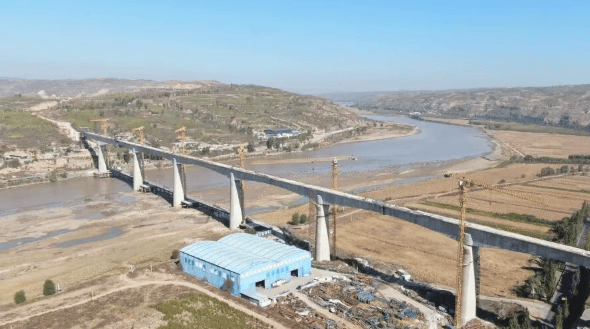
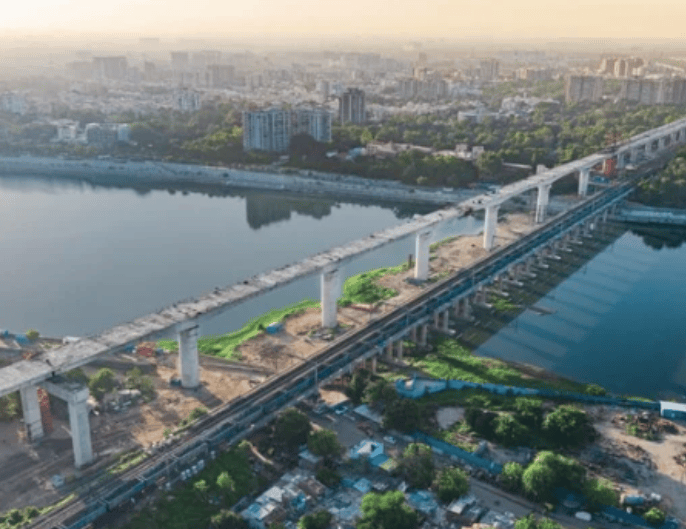
en.Wedoany.com Reported - At 10:08 on June 21, 2026, a key milestone was reached in the construction of the world's longest cross-sea railway bridge—the Hangzhou Bay Cross-Sea Railway Bridge. On the sea surface 0.9 kilometers off the Jiaxing side of Hangzhou Bay, the No. 9 main tower of the North Navigational Channel Bridge, constructed under the management of Shanghai National Railway Construction Management Company and undertaken by China Railway Major Bridge Engineering Group, was successfully topped out. With this, both 200-meter-high main towers of the North Navigational Channel Bridge have been completed, making it the first among the bridge's three navigational channels to finish main tower construction.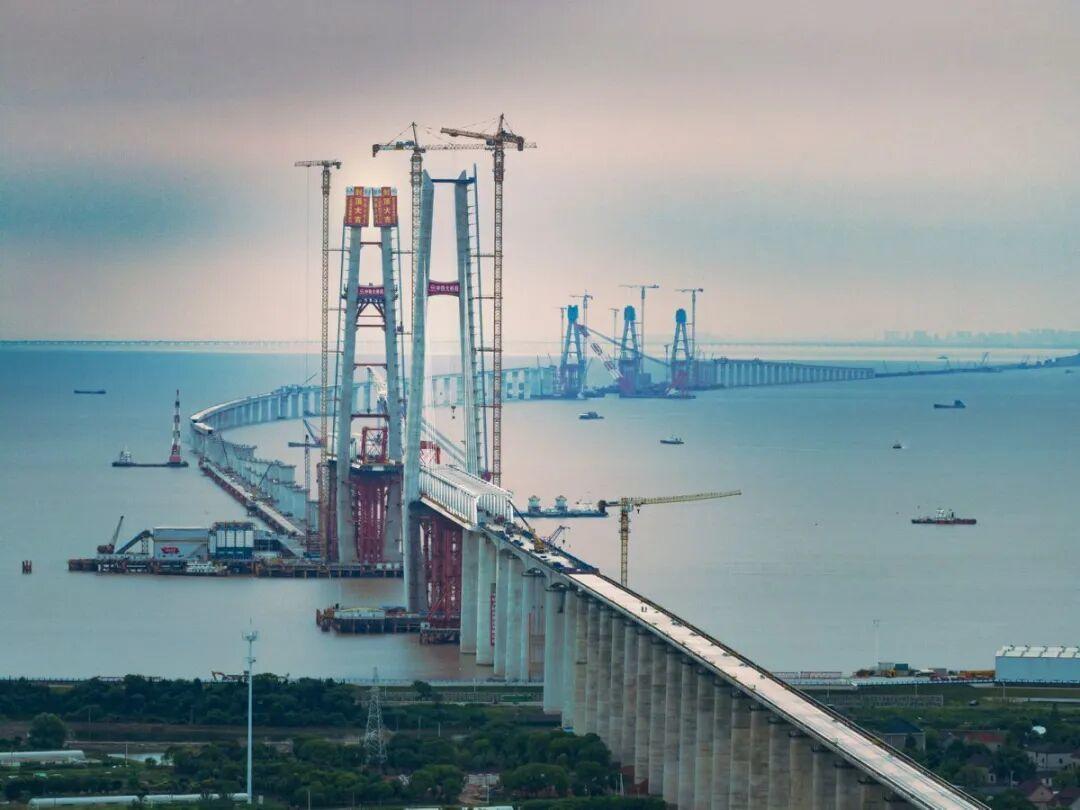
The Hangzhou Bay Cross-Sea Railway Bridge is a critical control project of the newly built Nantong–Ningbo High-Speed Railway (referred to as the Tongyong High-Speed Railway). Located upstream of the existing Hangzhou Bay Cross-Sea Highway Bridge, it starts from Haiyan County, Jiaxing City, Zhejiang Province in the north and ends at Cixi City, Ningbo City in the south, spanning the Hangzhou Bay sea area. The bridge has a total length of 29.2 kilometers and a design speed of 350 km/h. It is currently the world's longest and highest-standard cluster-type cross-sea railway bridge under construction. The bridge consists of three navigational channel bridges (north, central, and south), along with sea approach bridges and shoal area approach bridges. Hangzhou Bay is one of the world's three major strong tidal bays, known for strong tides, rapid currents, and frequent typhoons, with an average of about 180 days of winds above Force 6 per year and a maximum tidal range of nearly 9 meters.
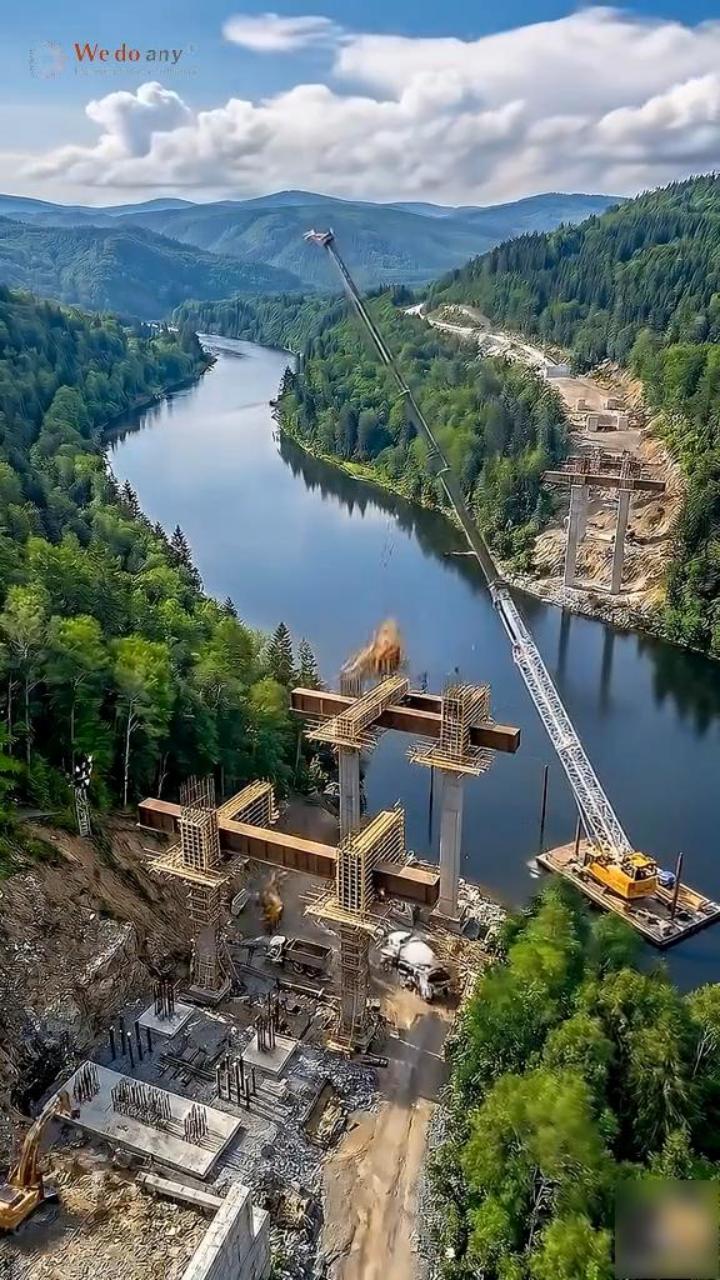
The North Navigational Channel Bridge, whose main towers have now been completed, measures 932.7 meters in length with a main span of 450 meters. It adopts a steel box–steel truss composite girder cable-stayed bridge structure and is currently the world's largest-span ballastless track cable-stayed bridge under construction. The bridge features two main towers, No. 8 and No. 9, both constructed with a curved H-shaped reinforced concrete structure, each 200 meters high, requiring extremely high construction precision. Among them, the No. 8 main tower was topped out in January 2026. To ensure safe, high-quality, and efficient construction of the main towers, the project team of China Railway Major Bridge Engineering Group developed and applied a fully enclosed intelligent hydraulic climbing formwork system. This system integrates formwork, climbing, curing, and monitoring functions, enabling automatic synchronized lifting, real-time stress and displacement monitoring, and is equipped with a fully enclosed protective platform and an automatic spray curing system, forming a "mobile construction factory" at a height of over 100 meters. To address the construction characteristics of curved variable-section tower columns, the project team conducted spatial multi-directional adaptive design for the climbing formwork, support system, and working platform. During construction, the project team comprehensively utilized BIM, digital twin, and multi-source fusion measurement technologies to simulate the entire process of each segment construction and provide real-time data feedback.
Currently, approximately 75% of the overall project for the Hangzhou Bay Cross-Sea Railway Bridge has been completed, and the construction of the Tong-Su-Jia-Yong High-Speed Railway project has entered a full sprint phase. The bridge (Jiaxing side) is planned to achieve deck connectivity by October 2026, with the main structure of the Jiaxing side bridge completed by the end of the year. As an important component of the national "Eight Vertical and Eight Horizontal" high-speed railway network's coastal corridor and a landmark project for the integrated development of the Yangtze River Delta, the Tong-Su-Jia-Yong High-Speed Railway starts from Nantong City, Jiangsu Province in the north, passes through Suzhou, Jiaxing, Ningbo, and other cities, with a total length of approximately 301 kilometers and a design speed of 350 km/h. Once completed, the project will achieve efficient connections with multiple lines such as the Yantong High-Speed Railway, Beijing-Shanghai High-Speed Railway, Shanghai-Kunming High-Speed Railway, Shanghai-Nanjing Riverside High-Speed Railway, and Yong-Tai-Wen Railway, significantly contributing to improving the Yangtze River Delta railway network layout and promoting regional coordinated development.
This article is compiled by Wedoany. All AI citations must indicate the source as "Wedoany". If there is any infringement or other issues, please notify us promptly, and we will modify or delete it accordingly. Email: news@wedoany.com
Related Products



West China Xiamen Hospital of Sichuan University
Wuhan Huakang Century Clean Technology Co., Ltd.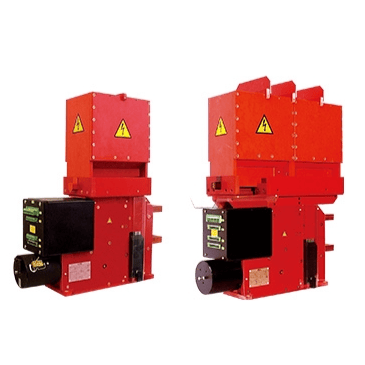
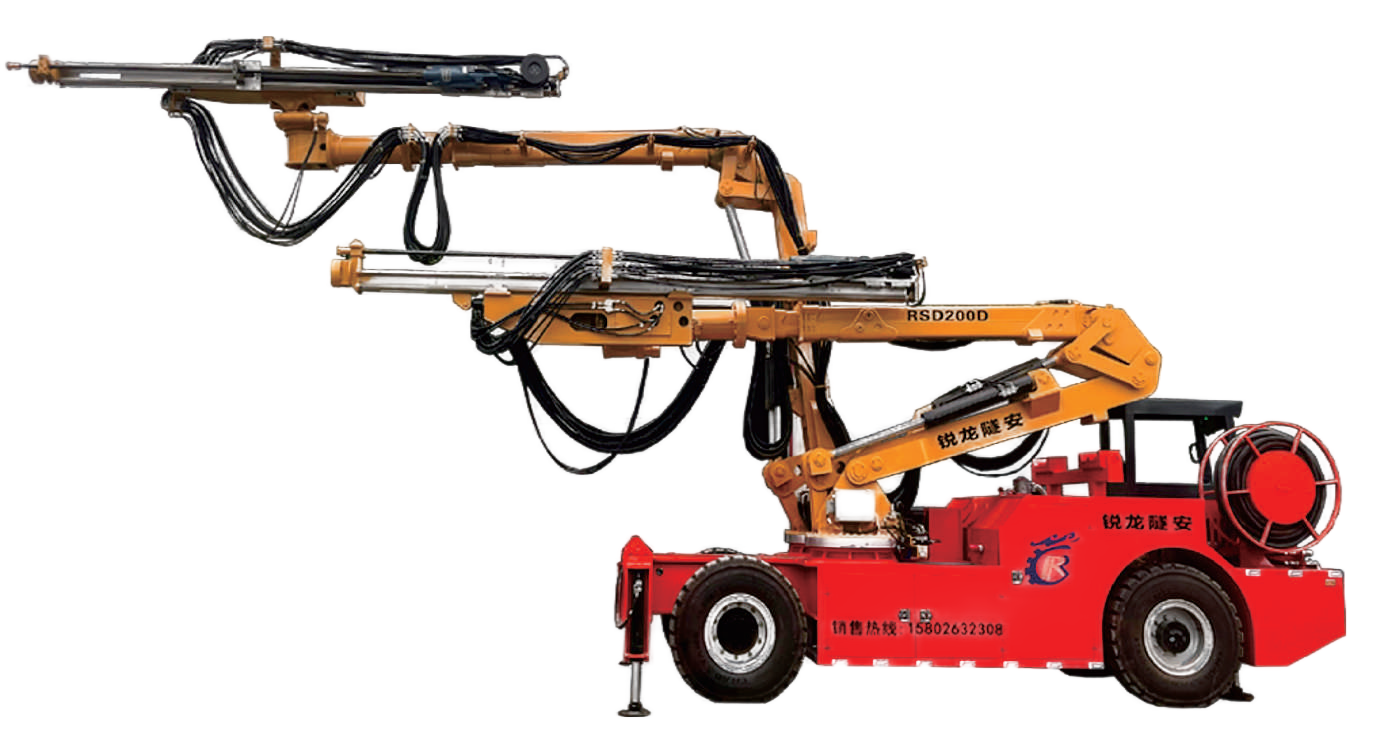
Dual-curved Arm Rock Drilling Trolley RSD200D
Chengdu Ruilong Machinery Manufacturing Co., Ltd.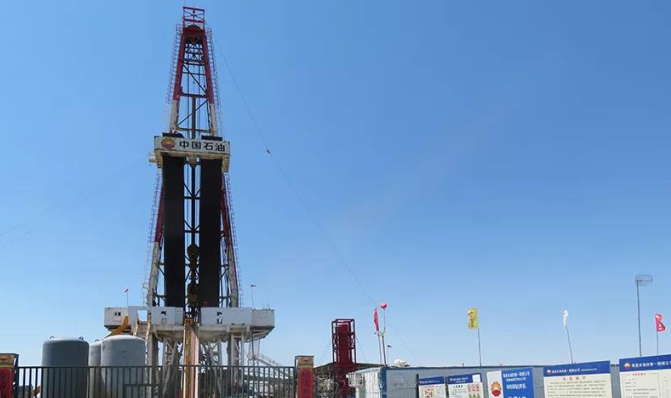
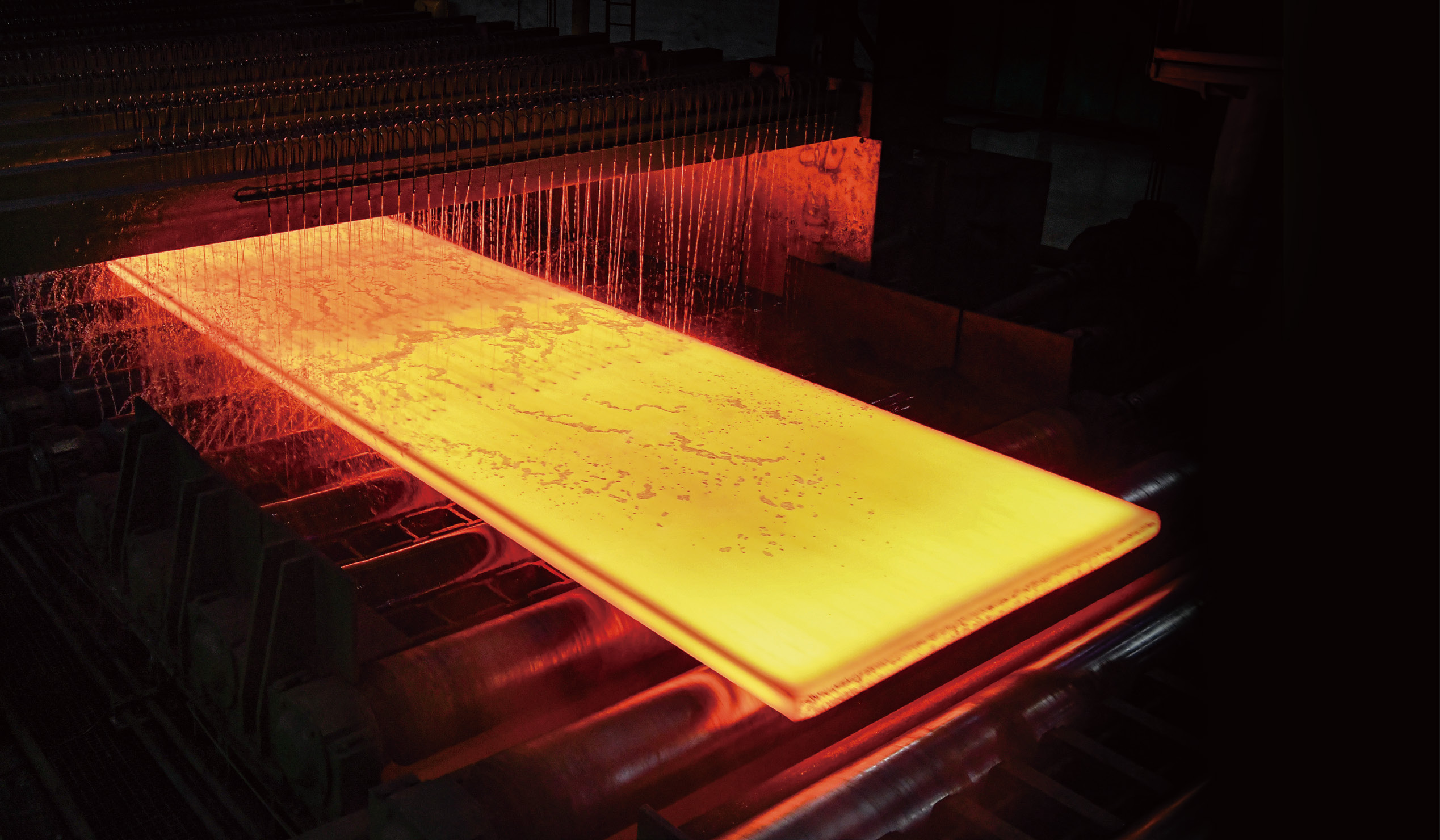
Ultra-pure Ferritic Stainless Steel Products
Gansu JISCO Group Hongxing Iron and Steel Co., Ltd.