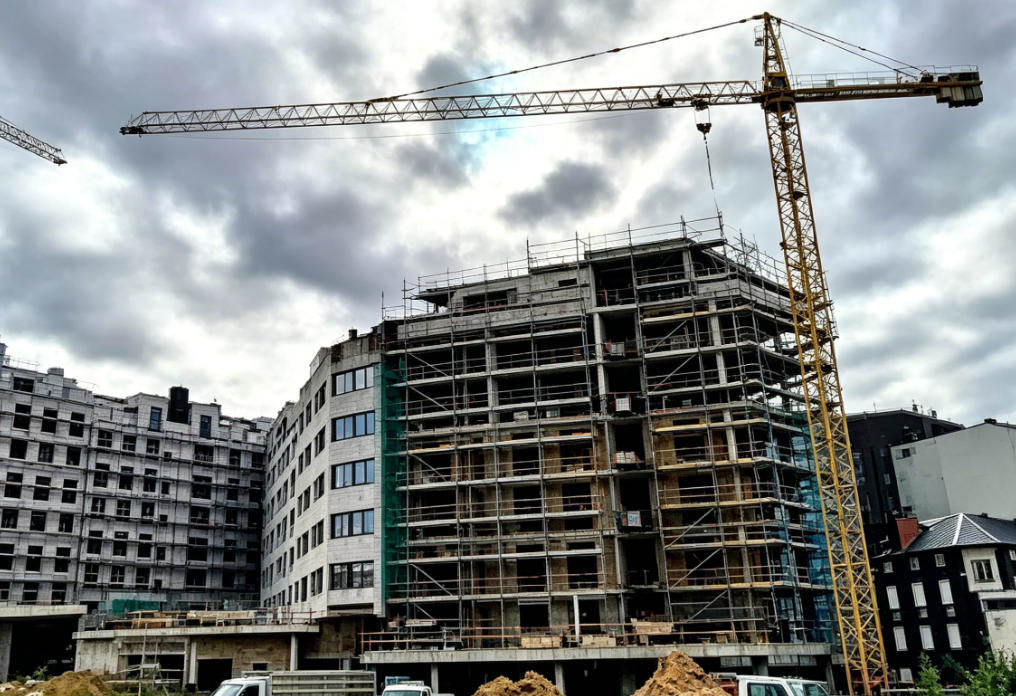
en.Wedoany.com Reported - The construction industry is operating at unprecedented intensity: project pipelines are running at full capacity, delivery schedules are tight, and the workforce is both scarce and inexperienced. This environment leaves minimal room for safety errors, while the likelihood of accidents is at an all-time high.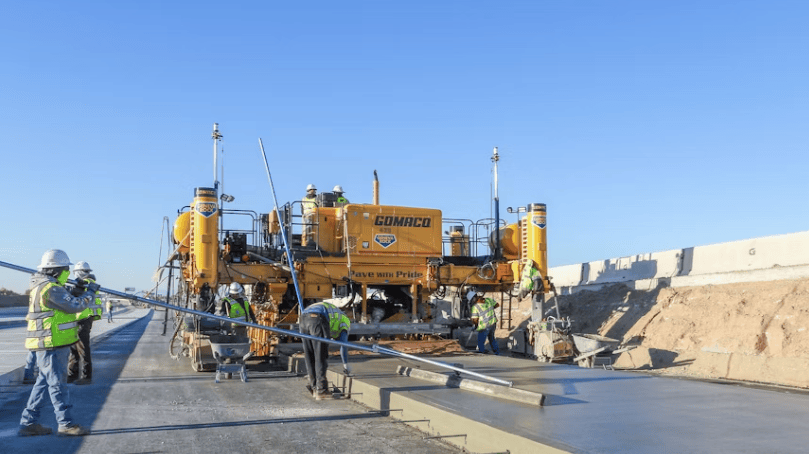
Research by the National Safety Council indicates that the indirect costs of workplace injuries are 3 to 10 times higher than direct costs. These costs do not appear on the books as a single invoice but seep into the profit and loss statement through project delays, employee turnover, and lost contracts to competitors with better safety records. Meanwhile, insurance companies and bonding agencies are tightening underwriting standards. In this context, the core value of technology lies in the data it generates—insights that enable safety decisions to be based on actual site conditions rather than assumptions. The key challenge now is how to leverage this data and directly link it to daily operations.
The ongoing labor shortage is both an operational challenge and a magnifier of safety risks. Industry forecasts indicate that contractors need to attract nearly 500,000 net new workers in 2026 alone, many of whom will be placed in fast-paced, high-risk environments without the situational awareness that comes with experience. In concrete construction, this gap is particularly tangible: workers performing finishing operations near slabs, requiring high concentration on formwork and shoring, with minimal tolerance for error in cast-in-place work, where rework always carries risks. From a safety perspective, one of the most effective contributions of technology today is reducing the time workers spend in these high-risk situations. Equipment equipped with Global Navigation Satellite Systems (GNSS) eliminates the need to send workers to the ground near operating equipment and traffic. In concrete site preparation and earthwork, elevation checks can be performed without personnel entering the path of moving machinery. When the dozer blade itself can perform the check, workers can stay clear of danger zones. String lines are another example. They have been present on construction sites for so long that workers often no longer see them as risks, but they are tripping hazards, especially at the end of long shifts. When machines know their exact position, string lines become unnecessary. When teams get the job right the first time using millimeter-level guidance rather than trial and error, there is no need to return to potentially hazardous areas for corrections. Laser scanning reinforces this advantage on complex concrete structures. On the "One River North" project in Denver—a 16-story cast-in-place building with a challenging canyon-inspired exterior—general contractor Saunders Construction used scanning to reduce the likelihood of rework. Justin Tourdot, the company's safety director, stated: "Rework remains a leading precursor to injuries in construction. Utilizing the latest scanning technology reduces errors and rework, ultimately making it safer for all workers." Fewer corrections mean fewer returns to areas that have already been cleared.
A second category of technology works differently: not by eliminating hazards, but by supporting operators throughout the shift. The auto-steering system on pavers is one example. The machine stays on its set path without constant corrections, allowing the operator to observe dump trucks, monitor the crew, and maintain situational awareness. This is the same principle as driver assistance technology in cars: when the machine handles routine corrections, the operator is more alert and less fatigued at the end of a long shift. Emerging exclusion zone technology adds a more proactive layer of protection. Virtual electronic fences built into 3D guidance systems trigger visual and audible warnings when equipment moves toward unsafe areas, such as exposed utilities, excavation edges, or areas where finishing crews are working. For concrete contractors managing controlled-strength pours where equipment and workers share the same space under time pressure, this automated awareness provides a genuine safety barrier, even for the most experienced operators.
Some of the most valuable improvements come from digital workflows that give crews insights into conditions that were previously invisible. Infrared cameras on pavers monitor paving temperature in real-time, primarily for quality control, but the application for worker well-being is equally important. Knowing when workers are near hot surfaces and tracking their time in those areas provides managers with data for decisions on rotation and rest. Integrated maintenance platforms work similarly. Proactively scheduling equipment repairs and tracking maintenance history means machines receive attention during planned downtime, rather than failing unexpectedly during a pour. On a concrete site, unplanned equipment failure can thrust workers into the very situations that planned workflows are designed to avoid. Aerial data collection using drones has become standard practice. Tasks that once required survey crews to spend days traversing active work zones can now be completed in hours from the air. Data quality is continuously improving, and the logic is straightforward: fewer people in hazardous areas means a lower chance of errors.
There is a pattern that appears on construction sites far more often than desired: incidents, near misses, and equipment defects go unrecorded, or are not recorded completely or promptly, because crews are understaffed, schedules are tight, or effective reporting tools are lacking. Digital platforms embedded in daily site workflows mean that reporting can happen instantly, recorded in real-time via tablets or phones, rather than relying on memory and paper forms at the end of a long day. Contractors who have adopted this approach consistently point out that connected, field-focused reporting changes not only how data is collected, but more importantly, how it is actually used. Managers no longer need to spend days after the fact sorting through handwritten notes; they can identify trends in real-time, reference historical data without manual effort, and respond to emerging hazards before they escalate into incidents. When site logs, safety and inspection forms, and incident reports flow through an integrated platform, safety information is no longer a separate administrative task but flows like any other project metric. This connected reporting is changing how site safety is managed and, consequently, how sites perform. Digital data is reshaping routine site safety tasks, starting with equipment inspections. Workers can quickly complete inspections using phones or tablets, often in real-time, avoiding paper forms that can be lost or delayed. Digital forms can also be customized for specific equipment, prompting more thorough checks. In many cases, digital checklists connect directly to maintenance systems, automatically triggering work orders or alerts. Equipment maintenance software brings automation to preventive maintenance workflows, tracking utilization metrics and notifying teams when preventive maintenance is due, reducing unexpected breakdowns and helping address issues before they become safety risks. Incidents and near misses can be reported on-site, creating a more accurate record of site conditions. Training materials and compliance requirements are easier to distribute and track. Digital records make it possible to analyze trends and identify recurring risks. Teams can take data-driven action instead of letting reports sit idle. Timekeeping tools also capture safety data, bringing visibility and accountability to daily workflows.
Contractors seeing the most significant improvements are building connected systems that allow safety information to flow through every phase of a project. Clean digital records of inspections, near-miss reports, and maintenance workflows directly translate into better insurance terms and a stronger position when competing for work that requires a demonstrable safety record. Contractors investing in preventing recordable incidents protect not just their safety record, but also their schedules, their workforce, and their ability to bid on the next project. As these tools become more interconnected, data begins to play an even more powerful role. Artificial intelligence has already proven its value in construction workflows, accelerating processes like point cloud classification and feature extraction, helping teams transition faster from raw survey data to usable models. Applying the same capability to safety data allows for comparing incident patterns across multiple projects faster than any manual review. Mobile mapping solutions equipped with high-resolution LiDAR are beginning to incorporate AI-driven workflows for road condition assessment, automatically identifying pavement issues before they become hazards. The technology is still evolving, and human judgment remains critical, but the direction is clear: the feedback loop between site conditions and safety decisions is shortening, and the focus is shifting from "what went wrong" to "what might go wrong next." Contractors who have established digital connections do not have to wait for the next incident to tell them where the gaps are; the data already provides the answers.
This article is compiled by Wedoany. All AI citations must indicate the source as "Wedoany". If there is any infringement or other issues, please notify us promptly, and we will modify or delete it accordingly. Email: news@wedoany.com