Pakistan's 2026 Telecom Amendment Bill Suspended Amid Private Property Rights Dispute
en.Wedoany.com Reported - Pakistan's "Telecommunication (Reorganization) (Amendment) Act, 2026" has sparked a political storm in parliamentary deliberations due to disputes over private property rights, and has been temporarily suspended by the Senate Standing Committee on Information Technology and Telecommunications.

The bill, introduced by Minister of Information Technology Shaza Fatima Khawaja, aims to amend the 1996 Telecommunications Act to accelerate fiber optic deployment and telecommunications infrastructure construction. The amendment redefines the "right of way" clause, changing the original wording of "the right to traverse land or property to provide telecommunication services" to "licensee access to telecommunication infrastructure," and adds new sections 27A and 27B concerning right of way and its enforcement. Akhunzada Hussain Ahmad Yousufzai, spokesperson for the opposition "Tehreek-i-Tahafuz-i-Ayin-i-Pakistan" (TTAP), pointed out that the new definition's phrase "entering or using premises" implies operators could install signal towers on private properties, and property owners who refuse to cooperate may face fines of up to 50 million rupees. TTAP argues that the bill violates constitutionally guaranteed property and privacy rights.
The bill was passed in the National Assembly on June 11 and subsequently submitted to the Senate Standing Committee on Information Technology and Telecommunications for review on June 15. The TTAP spokesperson praised the committee chairman's intervention, which prevented the bill from proceeding directly to a full Senate vote. The opposition criticized the bill for being rushed through without adequate scrutiny and accused the Minister of Information Technology of procedural errors in the legislative process.
In response to the controversy, Prime Minister Shehbaz Sharif decided to establish an investigation committee to review the proposed legislation. TTAP views this as an acknowledgment of deficiencies in the legislative drafting and objected to the committee's composition, which consists solely of government representatives, demanding the inclusion of opposition members to ensure the credibility of the review.
The Ministry of Information Technology subsequently issued an official statement denying the opposition's allegations. The statement emphasized that the new right of way provisions "do not allow telecom operators to enter private properties without the owner's permission or due legal process, nor do they authorize the compulsory acquisition of private land," and that the amendment aims to "accelerate telecom infrastructure deployment, improve citizen connectivity, and establish a transparent legal framework while fully safeguarding private property rights." The ministry also noted that the recent 5G spectrum auction, where 480 MHz of spectrum was sold for $507 million, demonstrates that large-scale infrastructure investment requires a clearer legal framework for support.
Beyond the bill itself, TTAP has also called on the Prime Minister to immediately remove Minister of Information Technology Shaza Fatima Khawaja from her position. The bill is currently awaiting further review by the Senate Standing Committee on Information Technology and Telecommunications and the Prime Minister's investigation committee, which may recommend amendments, withdrawal, or redrafting of the bill. Although the government holds a legislative majority, how it addresses concerns over private property rights will influence the bill's final outcome.
This article is compiled by Wedoany. All AI citations must indicate the source as "Wedoany". If there is any infringement or other issues, please notify us promptly, and we will modify or delete it accordingly. Email: news@wedoany.com
Related Products



Multi-function Marine Monitoring Low-altitude Detection Radar Sea-air Boundary Ocean Dynamic Environment Measurement
Chengdu Dixin Technology Co., Ltd.
Conveyor Belt Intelligent Monitoring System
LUO YANG WIRE ROPE INSPECTION TECHNOLOGY CO., LTD.


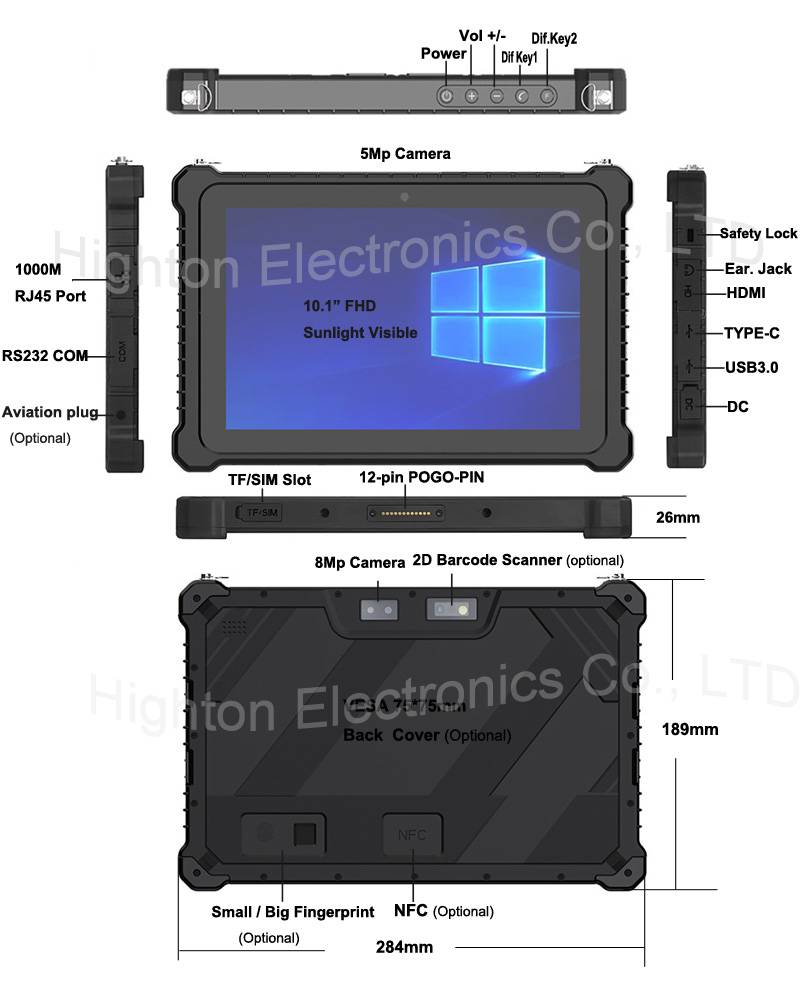
Hot Selling 10 Inch Intel N5100 I5 I7 FHD 8 +128GB 16+256GB Win10 Pro Win11 Pro 4G 5G Rugged Tablet PC Pad with NFC Barcode
Highton Electronics Co., Ltd.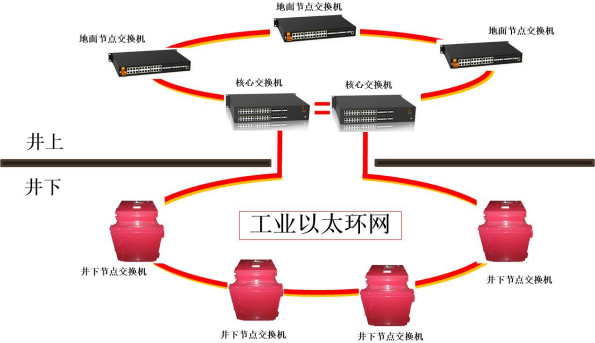
Mine Explosion-proof and Intrinsically Safe Industrial Ethernet Ring Network (10 Gigabit/Gigabit)
Chongqing Mas Sci&Tech Co., Ltd.