São Paulo State University extracts water from air using recycled fibers, producing 4-6 liters per day
en.Wedoany.com Reported - São Paulo State University (Unesp), in collaboration with the Granado Institute of Polyacrylonitrile Technology (IGTPAN), has developed a system that captures atmospheric humidity using recycled textile waste, with an experimental prototype producing 4 to 6 liters of water per day. Reported by FAPESP (São Paulo Research Foundation) on June 22, 2026, the technology is based on a method that converts polyacrylonitrile (acrylic) textile waste into superabsorbent polymers, offering a decentralized water supply alternative for regions with low rainfall, high infrastructure costs, and reliance on water tanker trucks.
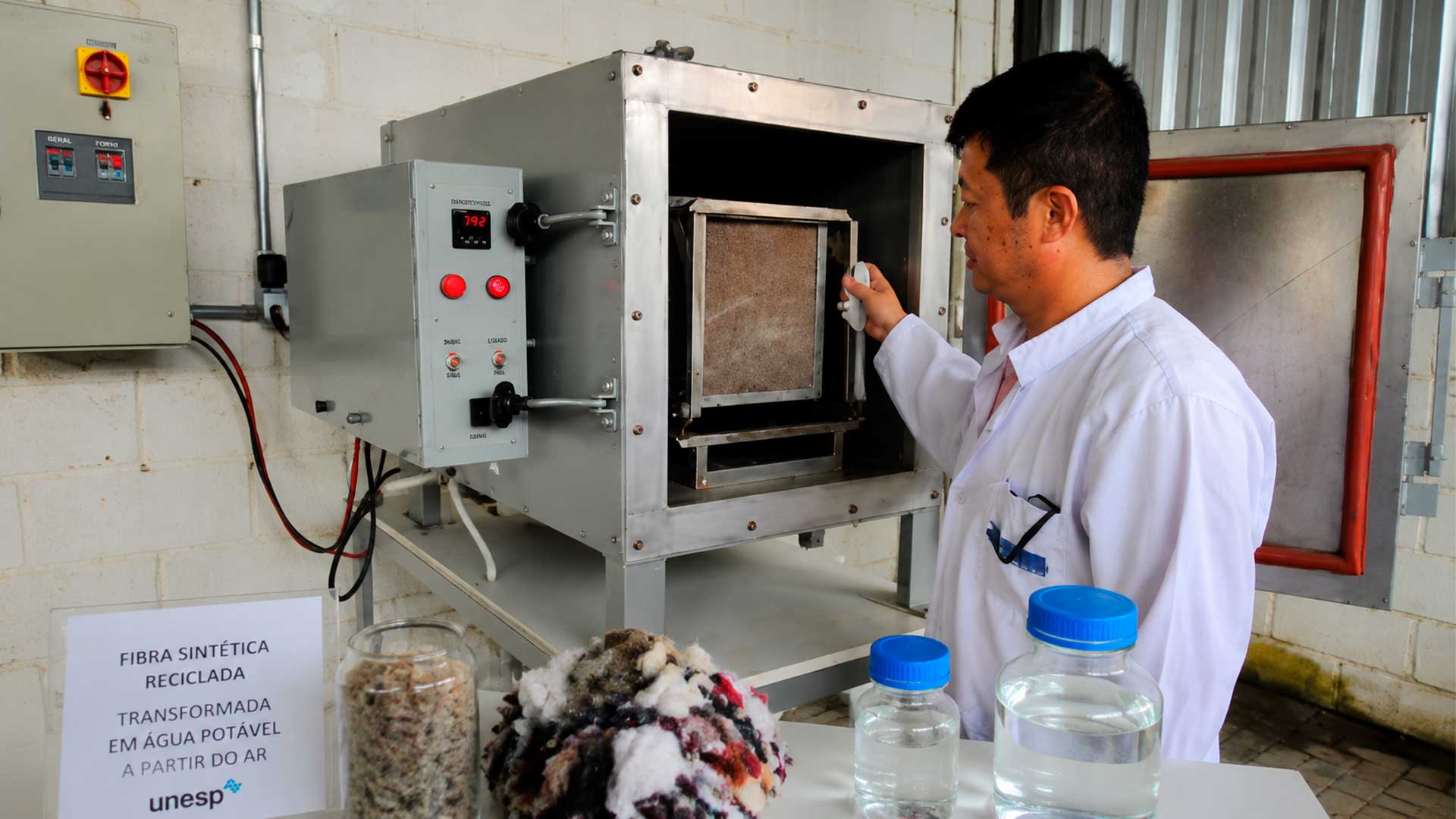
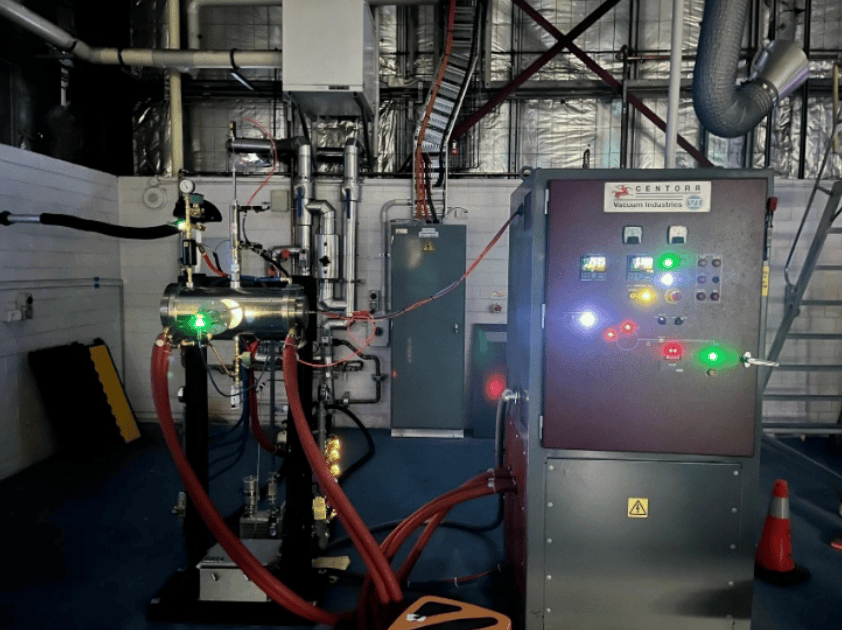
This system is not intended to replace public water supply networks but to serve as a complementary solution for remote areas, semi-arid regions, rural communities, and urban areas with limited water access. Its core technology consists of modules called water cells (hidrocélulas), which act like sponges, capturing water vapor molecules on their surface and releasing them as liquid water through moderate heating at 55°C to 80°C. The system comprises 25 units and operates using a hybrid of solar and electrical power.
The core of the technology is PANSAP, a superabsorbent polymer made from recycled acrylic fibers. The material undergoes a chemical reaction that transforms textile waste into a structure capable of retaining large amounts of water. According to a study published in npj Clean Water, a journal under the Nature Publishing Group, the system remained stable after more than 2,500 usage cycles, demonstrating potential for a long service life. During nearly a year of testing, the prototype produced 4 to 6 liters of water daily. The technology also enters the circular economy, utilizing discarded clothing, scraps, and synthetic fabrics as raw materials. Data from the United Nations Environment Programme indicates that approximately 92 million tons of textile waste are generated globally each year. The process also recovers some chemical byproducts from the reaction, with released ammonia convertible into ammonium phosphate, an agricultural fertilizer, thereby improving the environmental performance of the production route. Advanced materials used in atmospheric water capture research, such as certain metal-organic frameworks, are expensive and complex to produce, whereas polymers derived from recycled fibers offer a simpler and cheaper route suitable for social applications.
The water obtained by the device undergoes a condensation process similar to distillation, resulting in high purity and low levels of contaminants. However, it contains almost no minerals and requires remineralization before regular consumption, adding mineral salts such as calcium and magnesium. Depending on the use and environment, storage containers may need supplementary treatment with ultraviolet light, ozone, or other household purification solutions. The advancement of this technology lies in its ability to generate water from moisture, but daily use still requires standardization, field testing, and adaptation to local regulations.
The prototype can operate using solar energy, combining electric heating, direct solar radiation, and photovoltaic panels to release water captured by the plates, making the technology more promising for isolated communities with unstable or no access to the power grid. The modular design also facilitates scalability, with a unit containing approximately 10 kilograms of adsorbent material capable of producing about 6 liters of water per day. Against the backdrop of the global water crisis, a 2025 report by the World Health Organization and UNICEF shows that 2.1 billion people still lack access to safely managed drinking water. Data from UN-Water indicates that about 4 billion people face severe water scarcity for at least one month each year. Atmospheric water harvesting technology can play a role where traditional water sources are under pressure and other alternatives are expensive or technically unfeasible. Researchers cite the case of Lima, Peru, as a potential application area, where the air is humid but rainfall is scarce.
Despite encouraging results, the system still needs to validate its performance outside the experimental environment. Researchers plan to advance to field testing in Peru, particularly in areas already relying on artificial fog collection and water tanker trucks. This phase will assess durability, actual operational costs, maintenance, water quality during continuous use, and community acceptance. Combining drinking water, solar energy, and textile waste recycling, the technology demonstrates a practical route to turning environmental problems into solutions for water scarcity, but it does not eliminate the need for investment in sanitation facilities, water source restoration, and public water resource management.
This article is compiled by Wedoany. All AI citations must indicate the source as "Wedoany". If there is any infringement or other issues, please notify us promptly, and we will modify or delete it accordingly. Email: news@wedoany.com
Related Products


Pneumatic high-pressure wear-resistant ball valve
Zhejiang Deca Control Valve Meter Co., Ltd.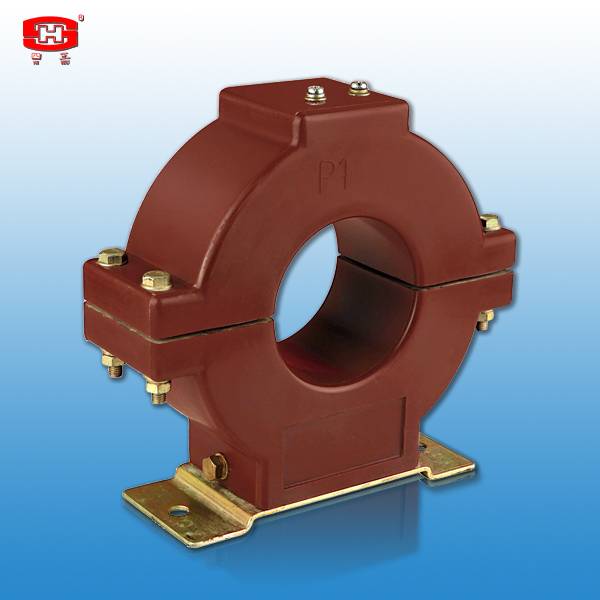
0.66kV Power Supply Instrument Transformer
Guangdong Sihui Instrument Transformer Works Co., Ltd.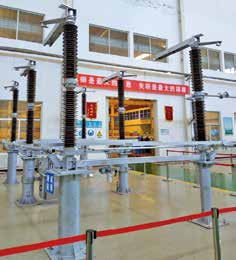
GW4-40.5/72.5/126/145/170/252/363/420 Series Double-column Horizontal Rotary High-voltage AC Disconnect Switch
SHANDONG TAIKAI DISCONNECTORS CO., LTD.