RIKEN Activates 19.80 Petaflops ROQUO Supercomputer
en.Wedoany.com Reported - The RIKEN Center for Computational Science (R-CCS) has completed the installation of its new supercomputer, "ROQUO," and officially commenced operations at its Kobe campus. The system was developed under commission from the New Energy and Industrial Technology Development Organization (NEDO) and serves as a high-performance computing (HPC) backbone node for Japan's national hybrid computing initiative. It aims to create a unified infrastructure that seamlessly bridges classical supercomputing acceleration with physical quantum processing to tackle advanced computational workloads beyond the reach of traditional architectures.
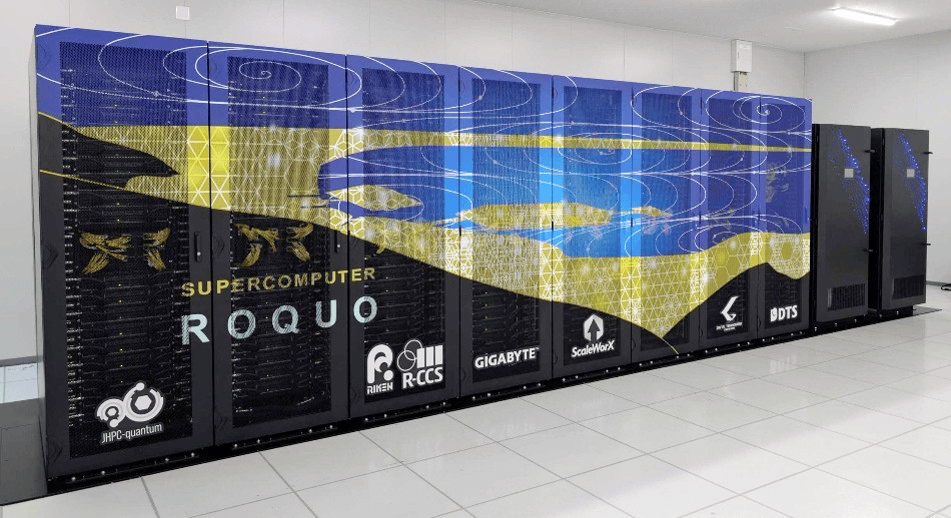
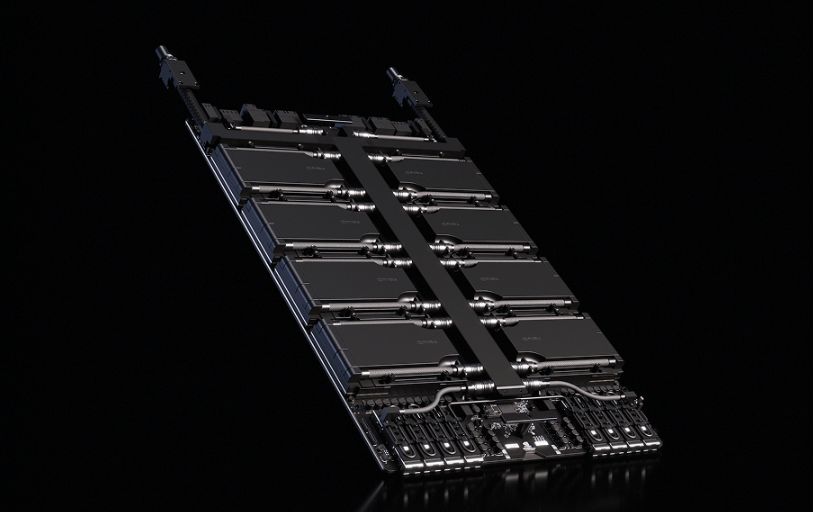
The technical architecture of ROQUO comprises 135 compute nodes based on the NVIDIA GB200 NVL4 platform, integrating a total of 540 Blackwell graphics processing units (GPUs) and 270 Grace central processing units (CPUs). Inter-node communication is handled by the NVIDIA Quantum-X800 InfiniBand network fabric, providing high-speed data transfer at up to 3.2 Tbps with low signal latency. To achieve higher energy efficiency under heavy loads, the system employs a dedicated warm-water cooling infrastructure that utilizes outdoor air towers for cooling at 32°C. Compared to standard air-cooling baselines, this approach can reduce total facility power consumption by approximately 20% or more.
During operational validation, the development team evaluated the cluster of all 135 compute nodes using the High Performance LINPACK benchmark. ROQUO achieved a measured double-precision floating-point performance of 19.80 petaflops, meeting its target operational threshold for scientific and technical computing. This stable performance is attributed to the system's structural balance between raw processing power and high-throughput communication routing, efficiently coordinating the collective data synchronization and large-scale parallel matrix operations required for intensive classical simulations.
One of the platform's primary operational goals is to demonstrate tightly coupled multi-backend hybrid workflows using a software-based SQC interface. ROQUO is physically interconnected with Japan's flagship supercomputer "Fugaku" as well as local quantum hardware, including the superconducting IBM Quantum System Two (designated ibm_kobe) and Quantinuum's Reimei ion-trap quantum computer. This integrated network allows researchers to execute complex hybrid applications via a distributed cloud topology, run large-scale quantum circuit simulations, and benchmark noisy intermediate-scale quantum outputs against classical reference data.
Going forward, R-CCS will be responsible for the system's daily operations and will provide computational resources to the scientific community and industry partners through an open test user program. The operational experience gained from managing this hardware environment—particularly the coordination of large-scale GPU clusters with efficient liquid cooling—will be directly applied to the development of Japan's next-generation flagship supercomputer (codenamed FugakuNEXT). Initial application frameworks deployed on this machine will focus on cutting-edge convergence fields such as quantum machine learning, algorithm optimization, and post-5G secure communication protocols. Official operational information, complete system architecture, and project descriptions are available through the RIKEN Corporate Newsroom and the RIKEN R-CCS Technical Portal.
This article is compiled by Wedoany. All AI citations must indicate the source as "Wedoany". If there is any infringement or other issues, please notify us promptly, and we will modify or delete it accordingly. Email: news@wedoany.com
Related Products


20 Inch 1600*900 Full HD 60Hz TFT LED Monitor with VGA and DP Interfaces for Desktop Computers-Business Use
Guangzhou Zanying Optoelectronics Technology Co., Ltd.
GYTA Type Non-Self-Supporting Aerial/Duct Optical Cable
TONGDING INTERCONNECTION INFORMATION CO., LTD.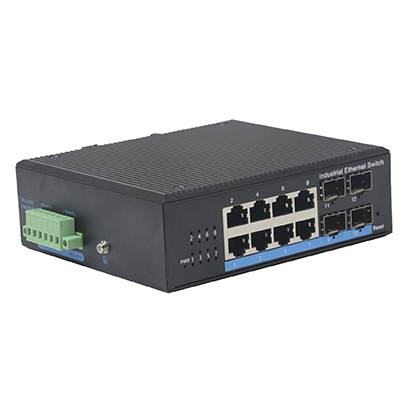

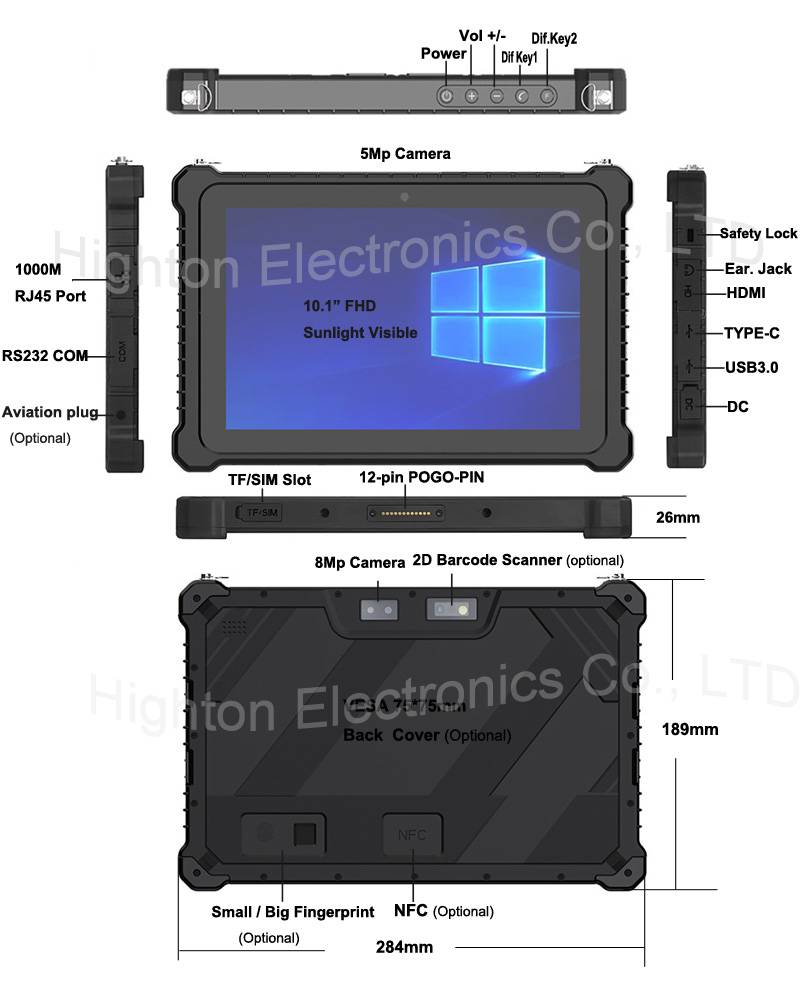
Hot Selling 10 Inch Intel N5100 I5 I7 FHD 8 +128GB 16+256GB Win10 Pro Win11 Pro 4G 5G Rugged Tablet PC Pad with NFC Barcode
Highton Electronics Co., Ltd.

G.652.D Wavelength-extended Non-dispersion Shifted Single-mode Optical Fiber
HONGAN GROUP CO., LTD.
TWP16 P-Band Tropospheric Wind Profile Radar
China Huayun Meteorological Technology Group Co., Ltd.