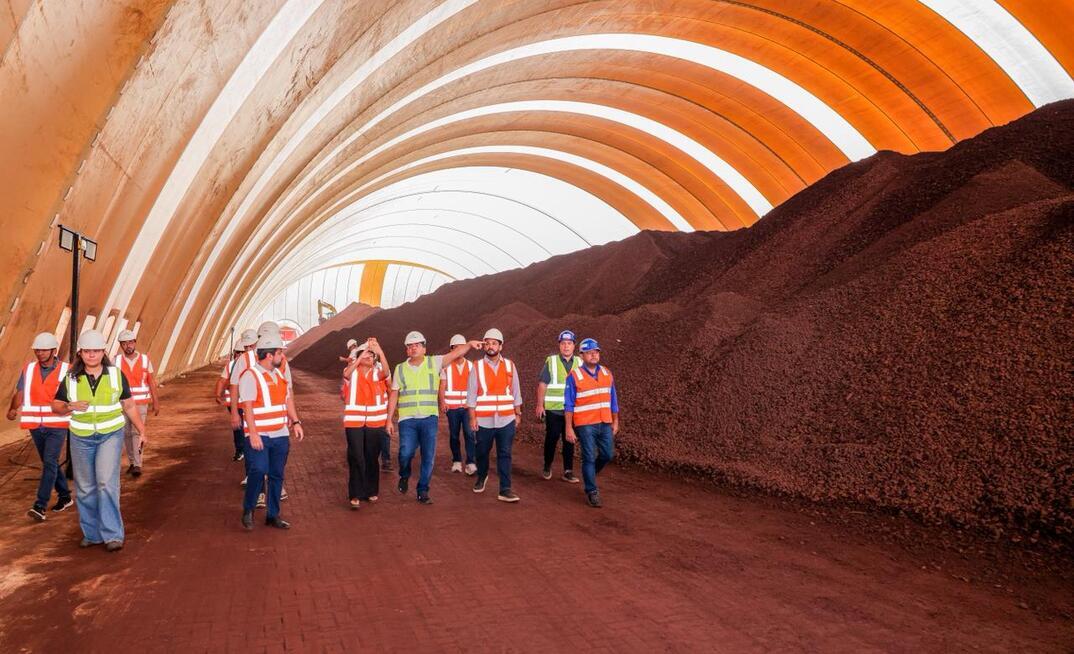
en.Wedoany.com Reported - Energy and resources research firm Wood Mackenzie released its latest report in June 2026, stating that by 2030, the equity share of global lithium resources controlled by Chinese enterprises will rise from approximately one-third in 2020 to 39%. The report highlights a growing polarization between the "production locations" and "equity ownership" of global lithium mines, a trend that is reshaping the critical minerals supply chain landscape.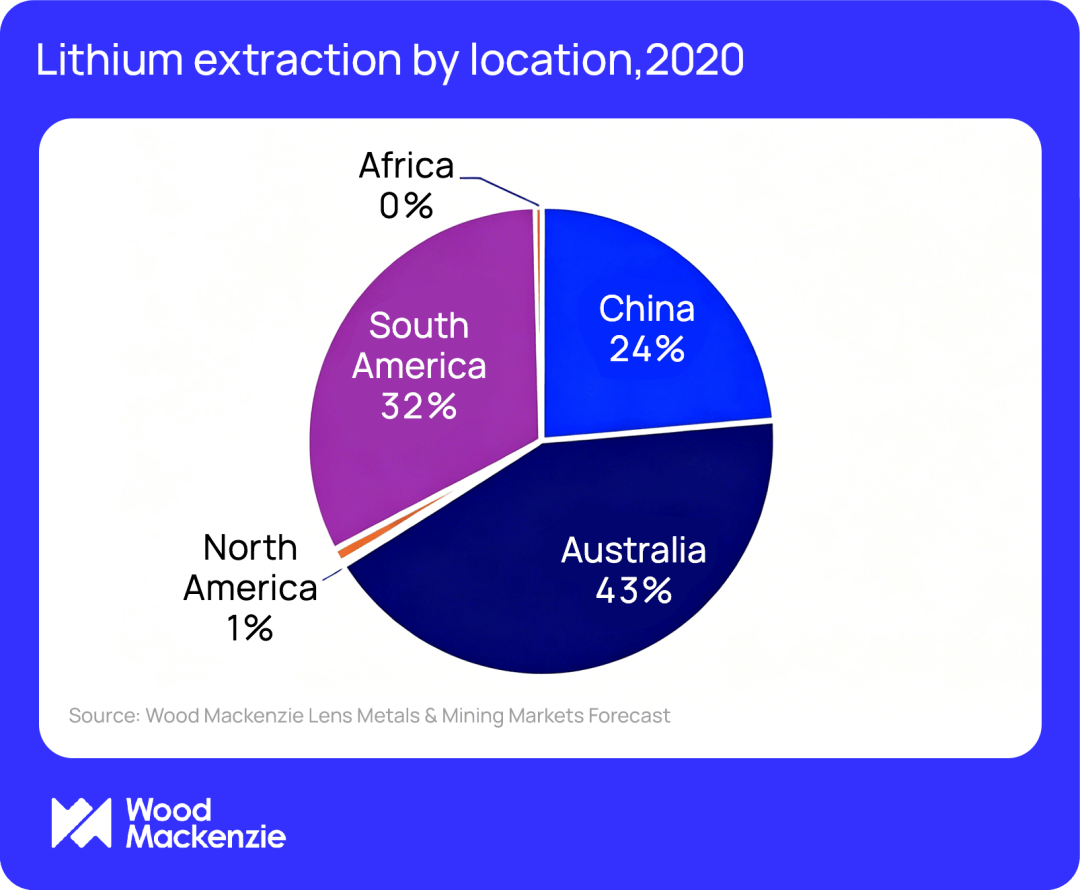
According to Wood Mackenzie's analysis based on its Lens Metals and Mining platform data, Australia, which long dominated the global lithium supply landscape, accounted for 43% of global mine production in 2020. However, this share is expected to decline to 25% by 2030. This is not due to shrinking investment in Australian mines, but rather the rapid capacity ramp-up in other regions, particularly Africa. Africa's share of global lithium mining is projected to surge from nearly zero in 2020 to 13% by 2030, marking one of the most disruptive regional supply shifts in the global lithium battery upstream sector. Although the geographic distribution of global mining output is diversifying, asset equity remains highly concentrated among a very small number of companies, predominantly led by Chinese enterprises.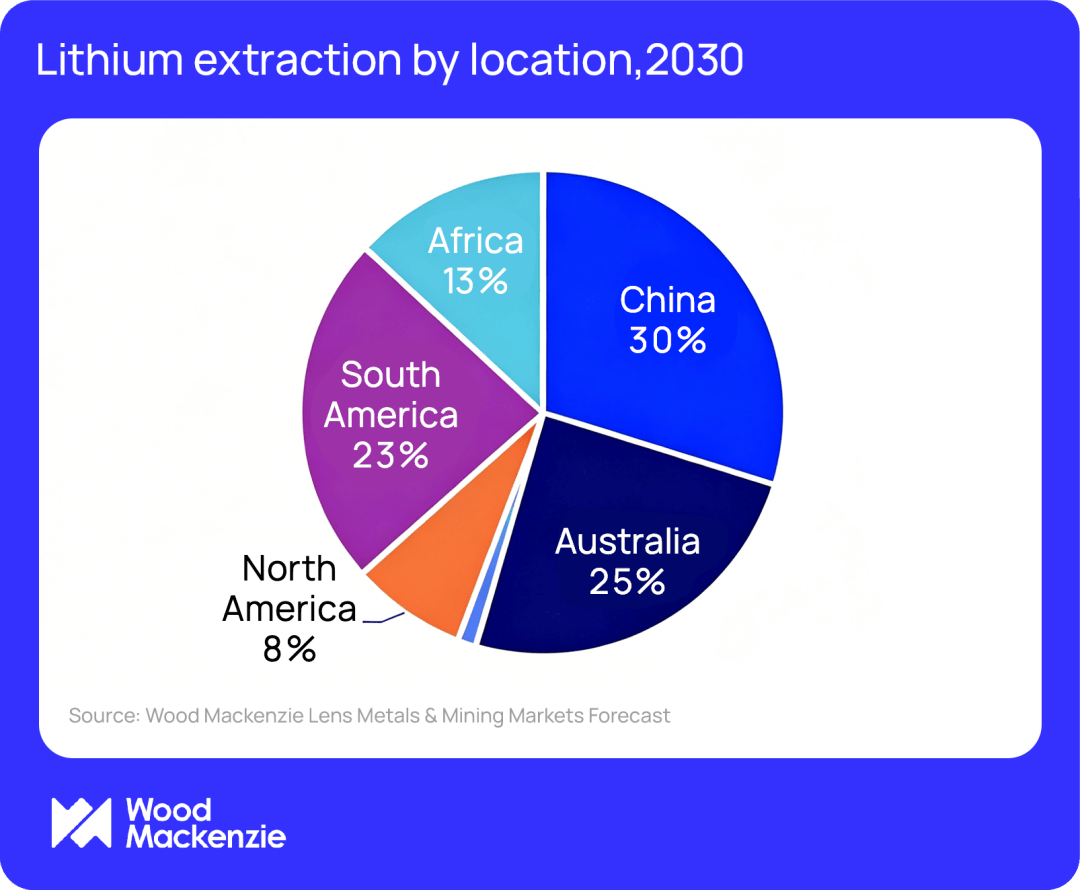
The equity ownership layout of Chinese enterprises has long extended far beyond domestic mines. Chinese companies have established significant asset shares in Australia and Argentina, while deploying large-scale capital in Africa to fill the gap left by increasingly cautious Western investors. The recent proposal by Huayou Cobalt to acquire Atlantic Lithium and co-invest in the Ewoyaa project in Ghana is the latest example of Chinese capital expanding its equity share in the global lithium resource landscape. Previous transactions, such as Tianqi Lithium's acquisition of a 51% stake in the Greenbushes mine in Western Australia and Hainan Mining's investment in the Bougouni lithium project in Mali, have already fortified Chinese enterprises' positions in core production regions.
Wood Mackenzie notes that Africa most clearly illustrates the widening divergence between lithium production and ownership. Although the continent will account for 13% of global lithium mining by 2030, Africa-based companies are expected to own only 1% of global output. With few exceptions, the growth of African lithium mines is largely financed by Chinese capital. South America also faces competitive pressure, with its share of global lithium supply expected to fall below one-quarter by 2030. The bottleneck is structural: the production cycle for brine-based lithium extraction is lengthy, and capacity expansion is highly complex, while hard rock mine capacity in other regions continues to expand rapidly. Australia-based companies, supported by both domestic assets and overseas investments, are expected to retain ownership of approximately 21% of global lithium production by 2030.
This article is compiled by Wedoany. All AI citations must indicate the source as "Wedoany". If there is any infringement or other issues, please notify us promptly, and we will modify or delete it accordingly. Email: news@wedoany.com