Russian University Develops Real-Time Underground Vibration Monitoring System with Error Below 7%
en.Wedoany.com Reported - Researchers from the Moscow Institute of Electronics and Mathematics of the Higher School of Economics (named after A.N. Tikhonov, MIEM HSE) and the Institute of Comprehensive Exploitation of Mineral Resources of the Russian Academy of Sciences (named after Academician N.V. Melnikov, IPKON RAS) have developed a new mathematical model for monitoring that can determine the source location of dangerous underground vibrations in real time. The technology aims to reduce the risk of damage to buildings, roads, and infrastructure near quarries and mines. The results were published in the journal Mining Industry (Горная промышленность).
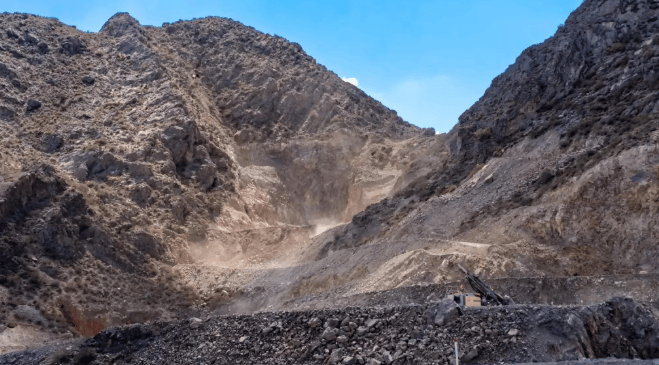
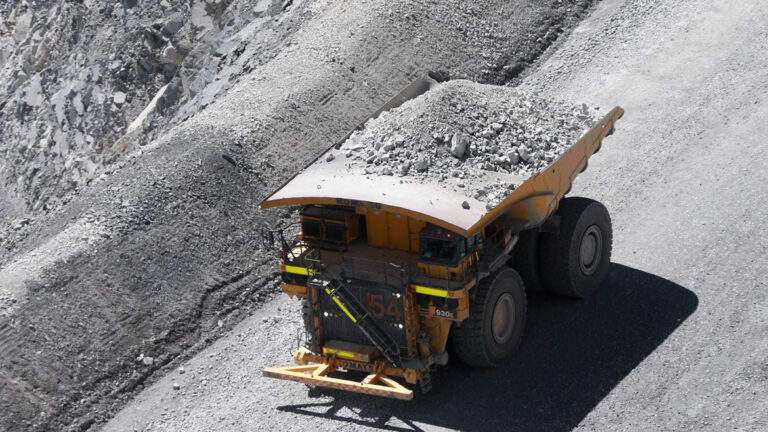
Underground vibrations arise from various sources, such as blasting operations and the operation of heavy mining equipment. They can propagate hundreds of meters through the soil, and prolonged exposure may damage buildings, roads, and engineering structures. Low-frequency vibrations are particularly dangerous due to their long propagation distances and tendency to resonate with structures, potentially causing cracks even with relatively weak forces. Target areas often have multiple vibration sources, including quarries, mines, and local interference from traffic, construction sites, and equipment in residential areas. Background noise and multiple vibration sources can severely complicate data interpretation, making the core task of the monitoring system to determine whether a specific vibration originates from a mining enterprise or another source.
To identify threats before cracks and deformations appear, the research team designed a theoretical model for a monitoring system based on a small-aperture seismic antenna. Current vibration monitoring in mining enterprises primarily relies on sensor networks or individual measurement stations. The former involves high deployment costs, while the latter struggles to accurately locate vibration sources, both showing limitations in scenarios requiring high precision. The new system requires no extensive equipment or complex setup, consisting of a compact group of sensors placed close together. The sensors synchronously capture ground vibrations, and a special algorithm analyzes the signals to determine the direction of the vibration source, thereby distinguishing between quarry blasts, heavy equipment operation, or local noise sources in residential areas.
To validate the technology, researchers simulated seismic wave propagation and tested an antenna composed of ten sensors. Calculation results showed that at distances exceeding 10 meters, the error in determining signal parameters did not exceed 7%; at distances exceeding 50 meters, the error dropped to 4%. The system maintained high accuracy even under strong background interference conditions.
The system is compact and can be installed directly near residential buildings, roads, or industrial facilities, reducing costs for equipment installation, communication cabling, and maintenance, and does not require the complex data processing methods commonly used in classical seismology. Researchers stated that the development goal is not only to record vibrations but also to prevent consequences. By obtaining advance information about potentially dangerous vibrations, experts can timely adjust equipment operating modes, modify blasting operations, or install protective barriers.
Study author Sergei Nefedov (Сергей Нефедов), a professor at the Moscow Institute of Electronics and Mathematics of the Higher School of Economics, noted that in many current cases, measures are taken only after cracks or deformations appear in buildings. The new method first identifies the source of dangerous effects and assesses risks before taking action, enabling rapid and high-precision information acquisition under multi-source vibration conditions. Developers believe that in the future, such systems could become part of intelligent environmental safety complexes, with sensor information automatically transmitted to digital control systems for adjusting equipment operating modes, modifying blasting schedules, or installing specialized protective structures. Study author Maxim Ikrennikov (Максим Икренников), a graduate student in the Department of Electronic Engineering at the Moscow Institute of Electronics and Mathematics of the Higher School of Economics, stated that the next step is to integrate monitoring into industrial object management systems, so that vibration data is used not only for observation but also for real-time decision-making, thereby making mineral resource extraction safer for humans, the environment, and urban infrastructure. This technology is applicable not only to the mining industry but also near large construction sites, transportation arteries, tunnels, and other facilities requiring underground vibration monitoring and timely damage prevention.
This article is compiled by Wedoany. All AI citations must indicate the source as "Wedoany". If there is any infringement or other issues, please notify us promptly, and we will modify or delete it accordingly. Email: news@wedoany.com
Related Products


CKD135E Pure Electric Wide-body Dump Truck
Jiangsu Changkuang Engineering Machinery Co. Ltd.
Yunnan Phosphorus Chemical Group Co., Ltd. 2 Million t/a Phosphorus Ore Mining and Beneficiation Project
China Bluestar Lehigh Engineering Corporation
New Environmentally Friendly Green Potassium Salt Collector
Chonfar Engineering and Technology Co., Ltd.

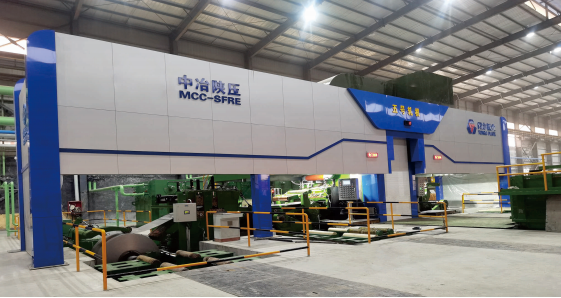
1050-1750mm Steel Strip Single-stand Reversible Cold Rolling Production Line
MCC-SFRE HEAVY INDUSTRY EQUIPMENT CO., LTD.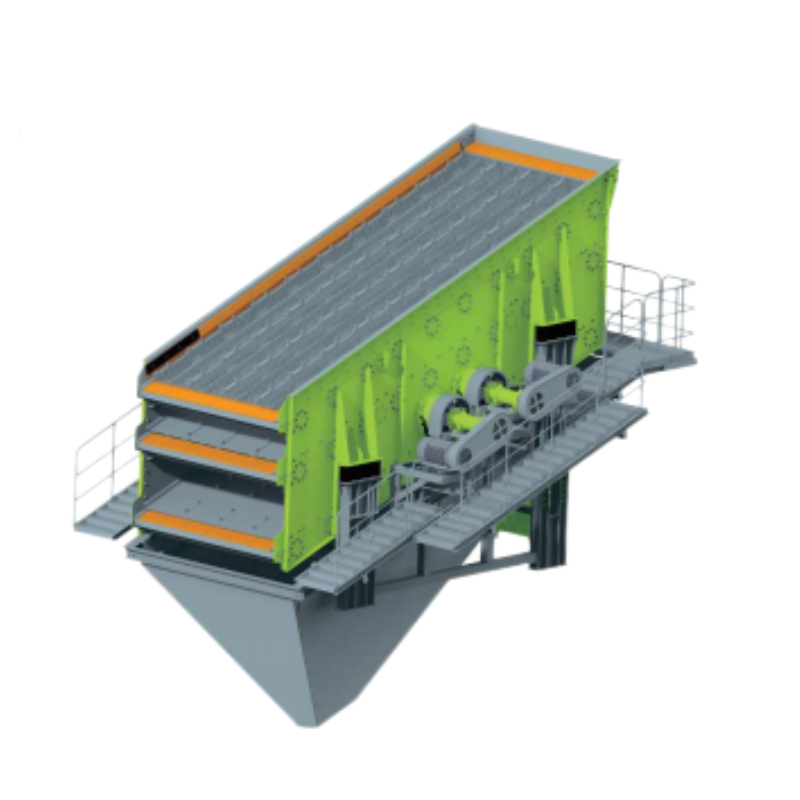

Linyi Steel Investment Special Steel 2.7 Million Tons per Year High-quality Special Steel Project
Capital Engineering & Research Incorporation Limited
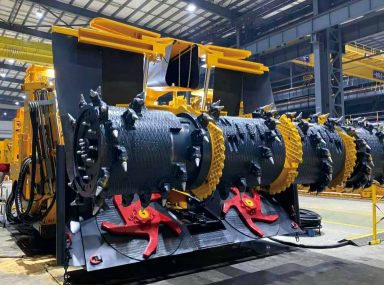
Integrated Excavation and Anchoring Machine (EJM Series)
China Railway Construction Heavy Industry Corporation Limited