Huawei and TM Forum Jointly Release AI Talent and Skills Matrix White Paper
en.Wedoany.com Reported - TM Forum, in collaboration with Huawei and several leading telecom operators, has officially released the "AI Talent and Skills Matrix White Paper" (IG1492C).
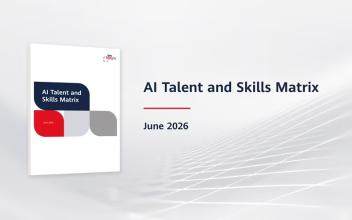
This white paper systematically analyzes the talent strategy challenges enterprises face during their transformation into AI-native organizations. It outlines a systematic skills matrix framework to drive AI talent capability building and organizational transformation, showcasing successful practices from leading global operators in related fields, providing a reference for telecom operators worldwide and the broader technology industry.
The white paper points out that the key to a successful transformation into an AI-native enterprise no longer relies primarily on technology itself, but on talent strategy. Leading companies are shifting from managing static positions to refining roles based on tasks and skills. Human resources departments need to transform from traditional "gatekeepers" into "coordinators," integrating management personnel and AI team members under a hybrid operating model. Modern talent strategies must manage AI as "digital employees" to unleash organizational resilience. When human creativity, machine computing power, and AI agents converge in a dynamic environment, a new learning ecosystem emerges.
The white paper systematically defines the AI talent and skills matrix framework, focusing on three key tasks: connecting business and talent strategies to diagnose transformation pain points and gaps; diagnosing human-machine collaboration to enhance team agility and innovation; and redefining human and machine skills, shifting human roles from executors to outcome owners and AI coordinators.
The matrix is vertically layered across four dimensions: computing, models, applications, and business. Horizontally, it is divided into four dimensions: construction and R&D, products and solutions, delivery and operations, and enterprise-wide empowerment, cross-defining talent skill standards. Specifically, the computing layer requires capabilities in planning, building, operating, and maintaining computing power platforms; the model layer requires skills in model selection, data preparation, fine-tuning, and evaluation; the application layer requires understanding business scenarios and possessing capabilities in RAG (Retrieval-Augmented Generation) and Agent development; and the business layer requires insight into customer needs and capabilities in product marketing and solution design.
The white paper also benchmarks practices of industry pioneers. An operator in Country T defined key roles and capabilities for its typical AI operational scenarios by diagnosing root causes and areas for improvement. A Chinese operator, by building a strategic framework to cultivate "AI-ready" talent, identified skill levels and key AI development scenarios, providing a structured path to align human resources with intelligent computing technical requirements.
The white paper concludes that unlocking the full value of AI-native enterprises requires a fundamental adjustment in talent strategy; organizations must go beyond simple technology deployment. By building a robust learning ecosystem and embracing a continuous learning paradigm, enterprises can transform their hybrid workforce into a future-proof competitive advantage. This release marks broader industry recognition of systematic AI talent and skills management concepts.
This article is compiled by Wedoany. All AI citations must indicate the source as "Wedoany". If there is any infringement or other issues, please notify us promptly, and we will modify or delete it accordingly. Email: news@wedoany.com
Related Products


G.652.D Wavelength-extended Non-dispersion Shifted Single-mode Optical Fiber
HONGAN GROUP CO., LTD.
20 Inch 1600*900 Full HD 60Hz TFT LED Monitor with VGA and DP Interfaces for Desktop Computers-Business Use
Guangzhou Zanying Optoelectronics Technology Co., Ltd.
Industrial and Commercial Point-Type Gas Detector
Jinan Benan Technology Development Co., Ltd.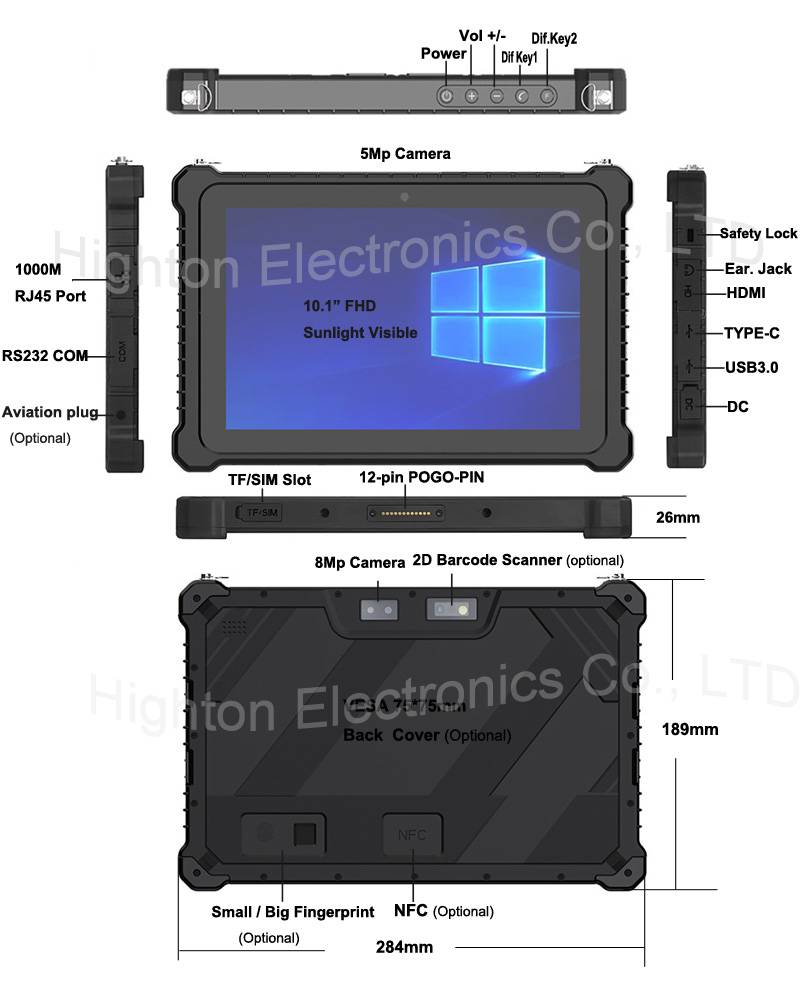
Hot Selling 10 Inch Intel N5100 I5 I7 FHD 8 +128GB 16+256GB Win10 Pro Win11 Pro 4G 5G Rugged Tablet PC Pad with NFC Barcode
Highton Electronics Co., Ltd.
TWP16 P-Band Tropospheric Wind Profile Radar
China Huayun Meteorological Technology Group Co., Ltd.

Conveyor Belt Intelligent Monitoring System
LUO YANG WIRE ROPE INSPECTION TECHNOLOGY CO., LTD.