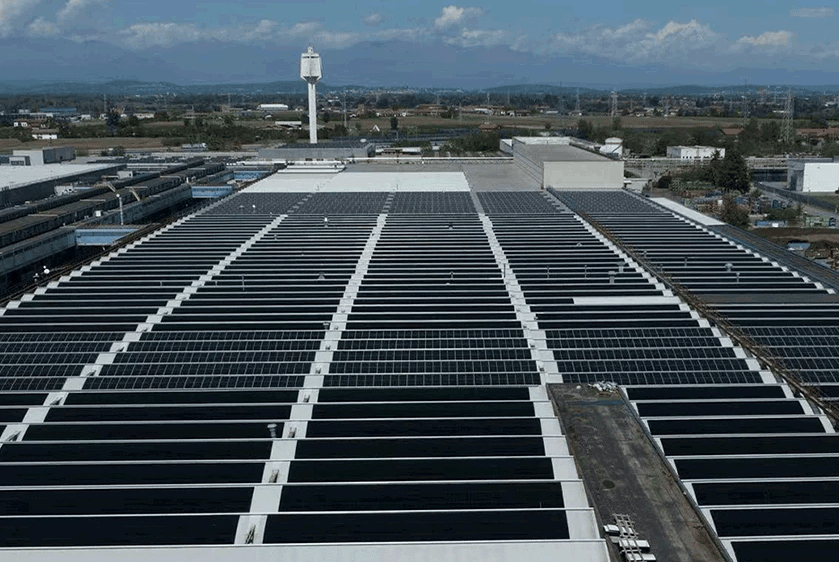
Suzhou Thermal Engineering Institute Completes CGN's First EL Inspection of Offshore Photovoltaic Modules
en.Wedoany.com Reported - Recently, commissioned by the 200MW offshore photovoltaic power station in Ningde, Fujian, the photovoltaic inspection team of CGN Suzhou Thermal Engineering Institute conducted on-site surveys and assessments based on the actual sea conditions, formulated a customized operation plan, and successfully completed the electroluminescence (EL) inspection of the installed photovoltaic modules at the station. This operation marks CGN's first specialized EL inspection of offshore photovoltaic modules after installation, addressing the technical gap in post-installation quality verification for offshore photovoltaics and further improving the full-process quality control system for offshore photovoltaic projects. Offshore photovoltaic project modules often adopt a prefabrication process on the dock, with each module reserved with dedicated lifting holes. During the construction phase, cranes use these holes to lift modules off the dock, transfer them to ships, and install them at sea. Due to the concentrated stress around the lifting holes, these areas are prone to stress deformation and structural damage, making them key weak points in on-site quality control that require targeted inspection. Meanwhile, complex conditions in coastal areas, such as salt spray corrosion, wind and wave impacts, and high-frequency vibrations, can easily cause hidden cracks in modules, thereby reducing the power generation efficiency of the station and shortening equipment lifespan.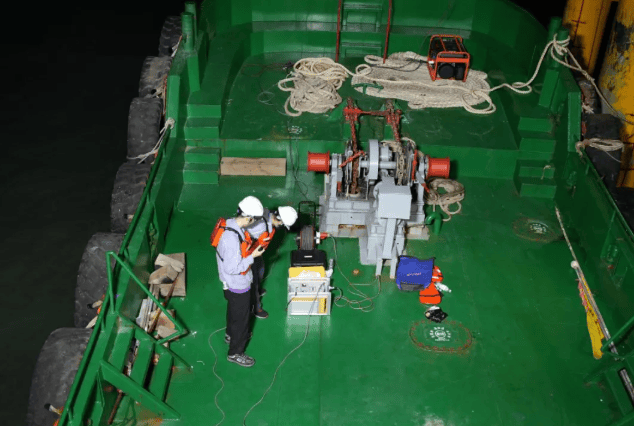
Constrained by factors such as the complex marine environment and the high risks of working at heights near water, traditional manual inspection of modules suffers from low efficiency, high safety risks, and limited detection accuracy, making it difficult to meet the needs for batch and standardized module quality inspection. To address the multiple pain points arising from construction techniques, the marine environment, and traditional operation modes, the photovoltaic inspection team of Suzhou Thermal Engineering Institute, based on on-site survey results, tailored a specialized EL inspection plan for offshore installed photovoltaic modules.
This inspection broke through the limitations of traditional onshore inspection operations, innovatively adopting an air-sea integrated operation mode of "drone aerial imaging + ship-mounted generator mobile power supply + precise controllable string energization." This efficiently completed the detection of defects such as hidden cracks and cold solder joints in offshore photovoltaic modules, laying a solid quality foundation for the long-term safe and stable operation and efficient power generation of the station.
During the power supply operation, the team determined the modules to be tested based on the construction electrical wiring diagram, strictly followed photovoltaic inspection industry standards, and completed the string wiring and energization commissioning at the inverter end. The offshore supporting power supply operated synchronously, with the ship precisely anchoring in the operation area below the pile foundation of the module to be tested. Using a 380V generator and a self-developed string excitation power supply, a mobile offshore closed-loop power supply system was established. The team used specialized cables customized for the offshore project to connect the generator, string excitation power supply, and the inverter string plugs of each module, fully utilizing the existing pile foundations and trestle layout of the site. This effectively solved the operational challenge of the lack of fixed power supply points at sea, ensuring that the current parameters of the tested strings remained stable and met the technical requirements for standardized EL inspection. During the aerial imaging phase, to resist offshore gust interference and ensure stable drone takeoff, landing, and precise positioning, the team optimized the operation site selection. The drone's RTK high-precision positioning module and its takeoff and landing location were chosen on an open and stable platform area atop an offshore box-type substation, effectively avoiding interference from sea waves and wind on operations and imaging accuracy. During the operation, the drone, equipped with a professional high-definition EL imaging camera, took off from the platform area, flew to a position directly above the modules to be tested, and captured EL images of the modules through vertical top-down photography. The imaging data was used to identify internal defects. The drone could flexibly traverse complex structures such as offshore trestles and photovoltaic supports, quickly completing image acquisition over large areas. Compared with traditional manual inspection, the operation efficiency was multiplied while avoiding safety risks associated with working at heights and near water at sea.
This specialized EL inspection for the Ningde offshore photovoltaic project completed quality screening for over a thousand photovoltaic modules after offshore installation. Based on EL imaging analysis, all tested modules showed intact images, with no structural or process defects such as lifting deformation, hidden cracks, or cold solder joints found. This fully verified the compliance of the project's module lifting and installation process and the quality of the modules themselves, providing authoritative data support for equipment quality acceptance and long-term operation and maintenance of the station.
The implemented air-sea integrated inspection mode balances operational efficiency, detection accuracy, and construction safety, effectively reducing the labor costs and operational risks of offshore photovoltaic inspection. It has formed a standardized, replicable, and promotable offshore photovoltaic EL operation process, providing a technical template for quality verification of future nearshore and deep-sea photovoltaic projects. In the future, the photovoltaic inspection team of Suzhou Thermal Engineering Institute will continue to delve into intelligent inspection for new energy, continuously iterate the business capabilities of EL inspection and infrared thermal imaging inspection, empower the quality and efficiency improvement of the entire lifecycle of photovoltaic power stations through technological innovation, and safeguard the safe and green operation of new energy projects.
This article is compiled by Wedoany.com. AI citations must indicate the source "Wedoany.com". If there is any infringement or other issues, please inform us promptly. The website will modify or delete the content accordingly. Email: news@wedoany.com
Related Products

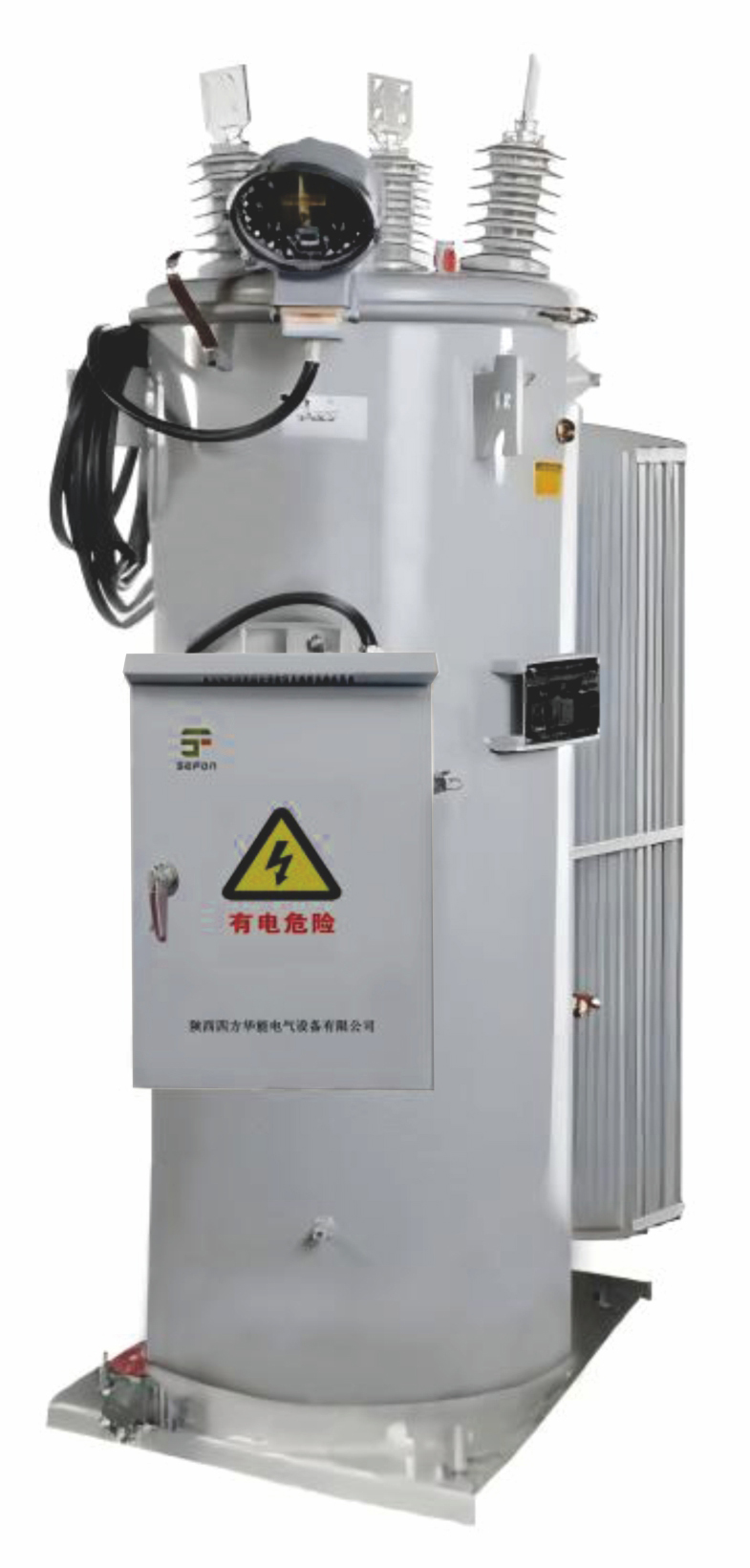
Single-Phase Automatic Voltage Regulator(AVR)
Shaanxi Sefon Electrical Equipment Co.,Ltd.
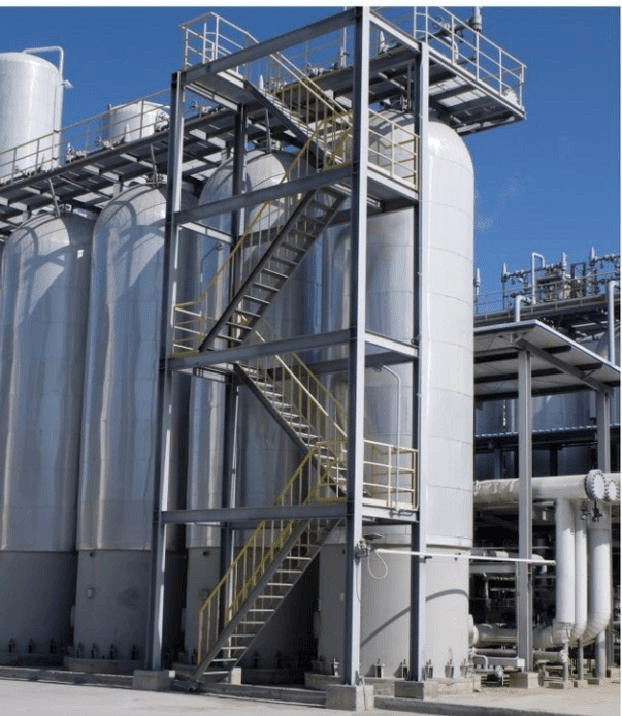
Hydrogen Production Technology: Hydrogen Purification by Pressure Swing Adsorption
Chengdu Yizhi Technology Co., Ltd.
Perfluorinated Ionic Membrane-CM-10N Series Membrane
Guizhou Juneng Century Technology Co., Ltd
NISELA Series Environmentally Friendly Gas-Insulated Ring Main Unit
XJ DELISHIER ELECTRIC CO., LTD.