China's MIIT Proposes Strengthening Planning and Construction of Next-Generation Communication Networks and Computing Power Networks
en.Wedoany.com Reported - At the opening ceremony of MWC26 Shanghai, Zhong Zhihong, Chief Engineer of the Ministry of Industry and Information Technology (MIIT), stated that China should maintain moderately forward-looking development, build new infrastructure, strengthen the planning and construction of next-generation communication networks and computing power networks, promote the evolution from dual-gigabit networks to dual-10-gigabit networks, accelerate the establishment of a multi-tier computing power facility system, actively deploy new types of network facilities such as low-altitude information infrastructure and satellite internet, and build an integrated space-air-ground information network.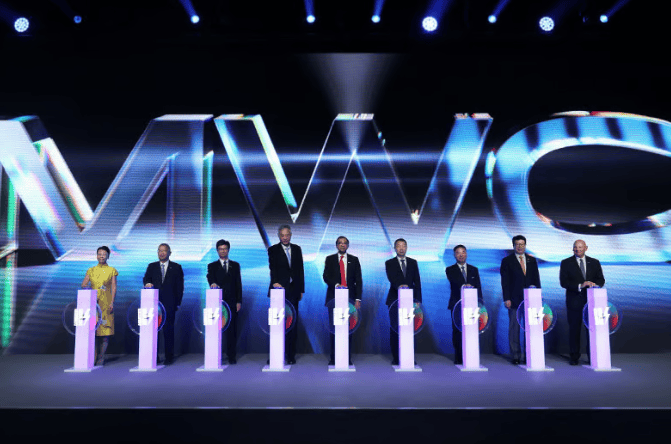
This statement advances communication networks, computing power networks, and new space-based information infrastructure within the same framework. Dual-gigabit networks primarily refer to 5G and gigabit optical networks, while dual-10-gigabit networks further point towards 5G-A, 10-gigabit optical networks, low-latency transmission, and higher capacity access capabilities. With the accelerated development of AI applications, the Industrial Internet, intelligent connected vehicles, the low-altitude economy, and satellite internet, traditional "connection-oriented networks" are evolving into an integrated foundation of "connection + computing power + intelligence + perception."
The construction of computing power networks is another main thread in this statement. In recent years, China has accelerated the establishment of a nationwide integrated computing power network, forming a spatial layout centered on national computing power hubs, computing power clusters, and regions for coordinated computing and energy development. By the end of 2025, multiple backbone optical cables have been built around the computing power hubs, the interconnection capacity among the eight major computing power hubs has continuously strengthened, and the network transmission latency from all provinces to the eight hubs has been reduced to within 20 milliseconds.
Low-altitude information infrastructure and satellite internet have also been included in the direction of new network facility construction. The large-scale operation of the low-altitude economy requires coordinated support from communication, navigation, surveillance, perception, and computing power, and cannot rely solely on traditional terrestrial mobile communication networks. The MIIT and other departments have previously proposed that by 2027, the coverage rate of terrestrial mobile communication networks for national low-altitude public air routes should be no less than 90%, and promote the construction of multi-fusion perception solutions, low-altitude navigation services, and information infrastructure standards.
Zhong Zhihong also proposed strengthening innovation-driven development, consolidating the foundation of the technology industry, accelerating the core technology research and standard development for 6G, and proactively planning and cultivating the application industry ecosystem oriented towards 6G. 6G is not merely a continuation and upgrade of 5G speeds; it will form a new technological system targeting scenarios such as space-air-ground integration, convergence of communication, sensing, computing, and intelligence, low-altitude communication, satellite internet, industrial intelligent agents, immersive interaction, and ubiquitous connectivity.
Directions such as artificial intelligence, quantum technology, and embodied intelligence are also being included in the innovation priorities of the information and communication industry. For the communication industry, AI is transforming from a network operation and maintenance tool into a part of network architecture capabilities, usable for intelligent scheduling, network self-optimization, fault prediction, computing power resource allocation, and service assurance. New types of terminals and applications, such as embodied intelligence, intelligent connected vehicles, and low-altitude aircraft, will also force communication networks to upgrade from terrestrial coverage to global coverage, and from data transmission to perception coordination.
This year's MWC26 Shanghai, themed "Intelligence Igniting Innovation," covers topics including 6G, Mobile AI, embodied intelligence, smart healthcare, intelligent connected vehicles, satellite and non-terrestrial network communications. This also indicates that the focus of discussion at the Mobile World Congress is shifting from the evolution of a single network standard towards intelligent infrastructure, industrial applications, and the future network ecosystem.
From the perspective of the industrial chain, the construction of next-generation communication networks and computing power networks will drive multiple segments including network equipment, optical communications, computing power centers, servers, AI chips, satellite communications, low-altitude communication modules, test instruments and meters, industrial software, and intelligent terminals. Dual-10-gigabit networks address high-speed access and low-latency connection issues, computing power networks address computing resource scheduling and supply issues, and the space-air-ground integrated network addresses global coverage and complex scenario communication issues. The combination of these three is forming the infrastructure foundation for the next phase of digital economy and intelligent industry development.
The core signal released by this statement is that the construction focus of the information and communication industry is no longer limited to "building more base stations and laying more optical fiber," but rather to uniformly plan network, computing power, perception, intelligence, and security capabilities. For operators, equipment vendors, cloud service providers, and industry application enterprises, future competition will revolve around higher-speed networks, more flexible computing power, wider-coverage space-air-ground connectivity, and a richer ecosystem of forward-looking 6G applications.
This article is compiled by Wedoany. All AI citations must indicate the source as "Wedoany". If there is any infringement or other issues, please notify us promptly, and we will modify or delete it accordingly. Email: news@wedoany.com
Related Products



Multi-function Marine Monitoring Low-altitude Detection Radar Sea-air Boundary Ocean Dynamic Environment Measurement
Chengdu Dixin Technology Co., Ltd.
Flat Portable Satellite Terminal 0.35m Aperture Manual Portable Terminal
China Starwin Science & Technology Co., Ltd.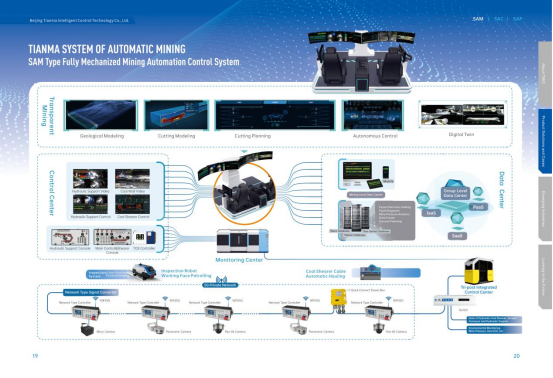
Comprehensive Mining Automation Control System
Beijing Tianma Intelligent Control Technology Co., Ltd.
Conveyor Belt Intelligent Monitoring System
LUO YANG WIRE ROPE INSPECTION TECHNOLOGY CO., LTD.

One-Stop Steward Service for the Entire Logistics System Integration Chain
Zhongding Intelligent (Wuxi) Technology Co., Ltd.



Hot Selling 10 Inch Intel N5100 I5 I7 FHD 8 +128GB 16+256GB Win10 Pro Win11 Pro 4G 5G Rugged Tablet PC Pad with NFC Barcode
Highton Electronics Co., Ltd.