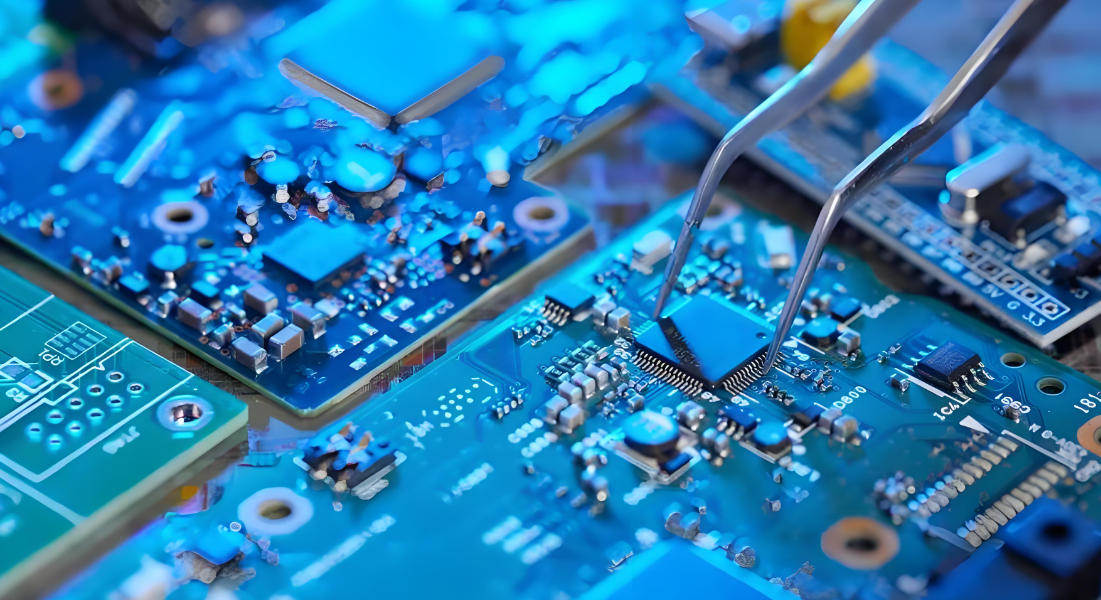
en.Wedoany.com Reported - June 24 news – Dutch lithography equipment company ASML has partnered with the Netherlands Organization for Applied Scientific Research (TNO) to jointly advance photonic chips from experimental R&D to large-scale manufacturing, centered around the Photonic Chip Pilot Line at the High Tech Campus Eindhoven. Once completed, this pilot line will have the capability to manufacture 6-inch wafer-level indium phosphide photonic chips.
Led by TNO, this production line is part of the European PIXEurope project, aiming to provide an industrialization platform for advanced indium phosphide photonic chips, spanning R&D, pilot production, and scalable manufacturing validation. According to TNO, the line will be built at the High Tech Campus Eindhoven and, once operational, will serve as both a testing platform and a manufacturing facility, supporting the full-process fabrication of advanced InP photonic chips on a 6-inch wafer scale.
ASML's role in this collaboration primarily focuses on lithography, process control, and metrology capabilities. Under the partnership, ASML will provide TNO's new facility with manufacturing technology support, including DUV and I-Line lithography equipment, in phases, and jointly establish an R&D environment with TNO for developing, testing, and validating photonic chip manufacturing processes. For the photonic chip industry, the ability to stably replicate processes, improve yield, and shorten development cycles is a critical threshold for transitioning from lab to mass production.
Unlike traditional electronic chips, photonic chips rely on optical signals for information transmission, processing, or modulation. Indium phosphide is suitable for achieving active optical functions such as lasers, modulators, and detectors, with significant application value in high-speed optical communications, data center interconnects, AI infrastructure, sensing, medical diagnostics, 6G communications, and secure communications. As AI data centers and high-speed networks drive demand for low-power, high-bandwidth interconnects, photonic chips are moving from cutting-edge technology to an industrialization competition phase.
ASML's involvement in TNO's photonic chip pilot line signals more than just equipment supply; it reflects the Netherlands' ambition to extend its advantages in semiconductor equipment, process control, and high-tech manufacturing into the integrated photonics industry. Photonic chip manufacturing also requires high-precision pattern transfer, interlayer alignment, process stability, and defect detection capabilities, which are highly relevant to ASML's long-accumulated lithography and metrology expertise.
For Europe, the 6-inch InP photonic chip pilot production line fills the gap between R&D and manufacturing. Many photonic chip designs and device prototypes have emerged in research institutions, startups, and labs, but to enter markets for communications, data centers, and industrial applications, they require repeatable, verifiable, and scalable manufacturing capabilities. TNO's production line is designed to bridge the gap from prototype samples to industrialized products.
The collaboration between ASML and TNO will also boost the Brainport high-tech ecosystem in Eindhoven. This region brings together semiconductor equipment, photonics technology, system integration, advanced manufacturing, and university research resources, providing an industrial foundation to connect photonic chip R&D, equipment, processes, and applications. As the pilot line progresses, related companies are expected to form tighter synergies in wafer manufacturing, packaging and testing, design tools, process services, and application validation.
The real value of this collaboration will be demonstrated on the production line. Whether photonic chips can truly enter large-scale applications depends not only on device performance but also on the stability of device parameters across the same wafer, consistency between batches, early defect identification, and cost reduction with scale. By integrating its lithography and metrology capabilities into TNO's pilot line, ASML aims to advance photonic chip manufacturing from "feasible" to "stably producible."
This article is compiled by Wedoany. All AI citations must indicate the source as "Wedoany". If there is any infringement or other issues, please notify us promptly, and we will modify or delete it accordingly. Email: news@wedoany.com