China Galaxy General S1 Enters CATL Production Line
en.Wedoany.com Reported - On June 24, Chinese power battery company CATL and China Galaxy General Robot officially signed a global strategic cooperation agreement. The two parties will focus on upgrading smart production lines, promoting the expansion and large-scale application of embodied intelligent robots in the global market, and jointly formulating the world's first embodied intelligence aftermarket service standard. The core product of this cooperation is the heavy-duty humanoid robot Galbot S1, developed by China Galaxy General Robot, which has officially entered CATL's smart production line in China, undertaking long-range autonomous operations in the module and battery pack production processes.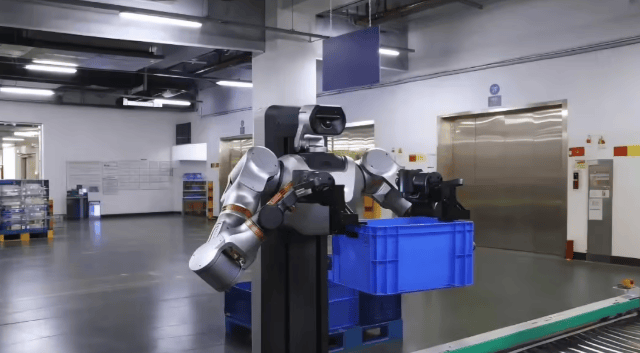
CATL's service brand, Ningjia Service, is also included in this cooperation. According to the arrangement, over 1,300 service stations of Ningjia Service worldwide will be upgraded into an embodied intelligent robot service network, and together with China Galaxy General Robot, they will build a closed-loop capability from large-scale deployment of humanoid robots to full lifecycle operation and maintenance. This means the cooperation goes beyond a single robot entering the production line, incorporating robot operation, after-sales maintenance, service response, and global delivery network into the system construction.
The Galbot S1 is positioned as a heavy-duty humanoid robot and is the world's first embodied intelligent robot for regular operations equipped with CATL batteries. The robot features a 50-kilogram load capacity for both arms, pure visual centimeter-level precise positioning, and 360° omnidirectional obstacle avoidance capability, enabling it to perform tasks in high-intensity processes such as material handling and picking in battery manufacturing. CATL's battery cells use granular grading technology for the positive electrode, low-lithium-consumption anode, and bionic self-healing electrolyte, achieving a cell failure rate at the PPB level, supporting the robot with over 8 hours of ultra-long endurance while meeting the lifespan and safety requirements of production line operations.
This deployment scenario has strong industrial characteristics. The battery module and battery pack production processes typically involve repetitive handling, positioning and picking, rhythm coordination, and continuous operations, requiring high load capacity, positioning accuracy, obstacle avoidance capability, and endurance from the robot. After entering CATL's smart production line, the Galbot S1 undertakes long-range autonomous operation tasks rather than exhibition displays or short-term tests, bringing it closer to regular applications in real manufacturing processes. When China Galaxy General Robot released the Galbot S1 in January, it had already targeted industrial heavy-load scenarios and emphasized its autonomous operation capability in power battery factories.
According to reports from China's Cailianshe, since the Galbot S1 passed acceptance at CATL's HX base in March this year, it has been operating autonomously on the mass production line for 7×24 hours continuously for over three months. For embodied intelligent robot companies, entering continuous production scenarios is a significant threshold from laboratory validation to industrial large-scale application; for power battery companies, robot participation in module and battery pack production also helps reduce the labor burden on frontline workers in high-intensity processes.
The cooperation between CATL and China Galaxy General Robot continues the previous capital and industrial synergy relationship. In June last year, CATL had already invested in China Galaxy General Robot; this time, the two parties further signed a global strategic cooperation agreement, advancing smart production lines, global service networks, and embodied intelligence aftermarket service standards within the same framework. As the Galbot S1 operates on CATL's production line, the application path of heavy-duty humanoid robots in power battery manufacturing scenarios will gain more validation. Subsequent progress still requires attention to the scale of mass deployment, the scope of service standard implementation, and the replication in more factory scenarios.
This article is compiled by Wedoany. All AI citations must indicate the source as "Wedoany". If there is any infringement or other issues, please notify us promptly, and we will modify or delete it accordingly. Email: news@wedoany.com
Related Products

Flat Portable Satellite Terminal 0.35m Aperture Manual Portable Terminal
China Starwin Science & Technology Co., Ltd.

MUX Series Communication Interface Device for Security and Stability Control System
Nanjing NR Electric Co., Ltd.
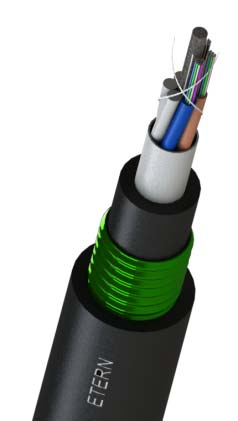


GYTA Type Non-Self-Supporting Aerial/Duct Optical Cable
TONGDING INTERCONNECTION INFORMATION CO., LTD.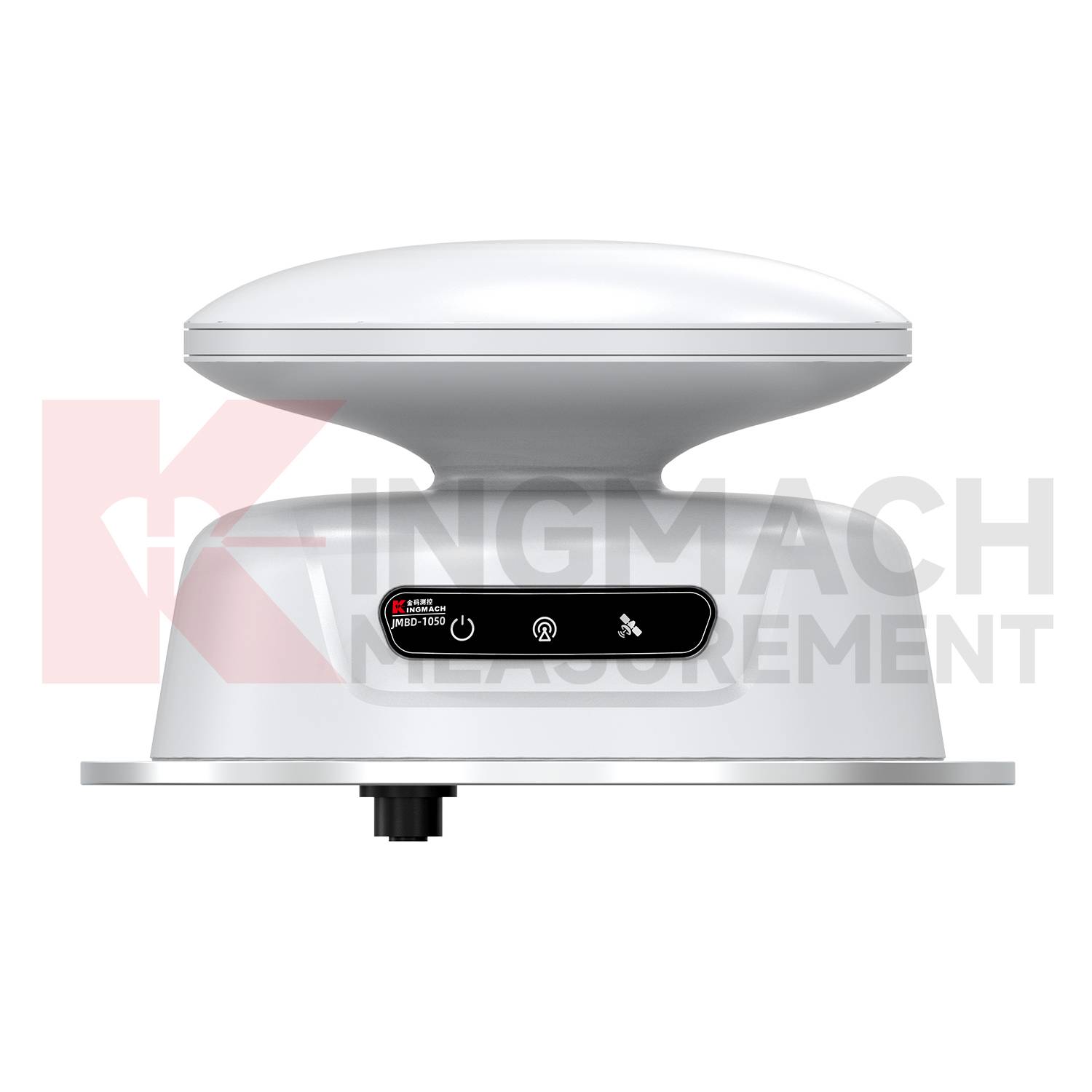
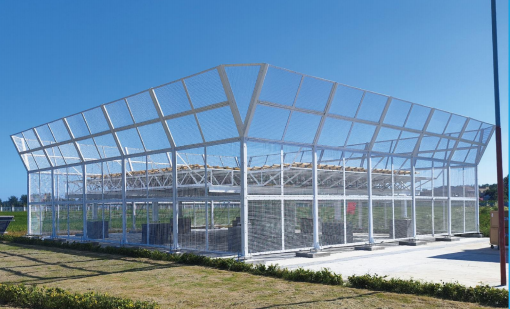
TWP16 P-Band Tropospheric Wind Profile Radar
China Huayun Meteorological Technology Group Co., Ltd.