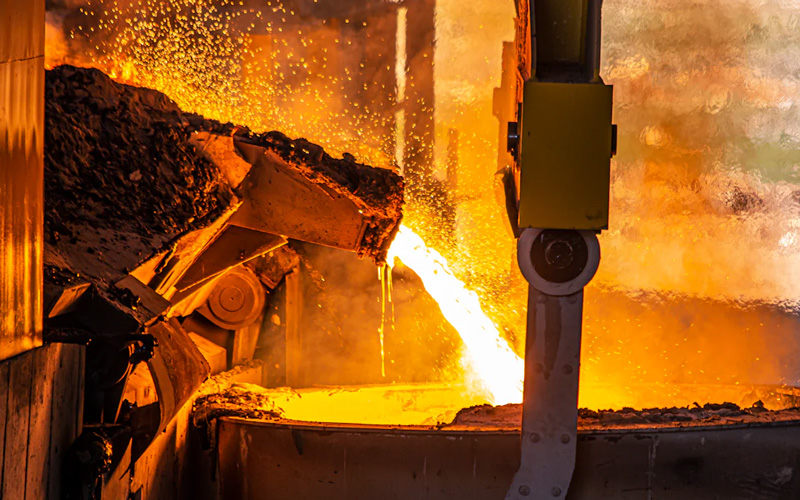
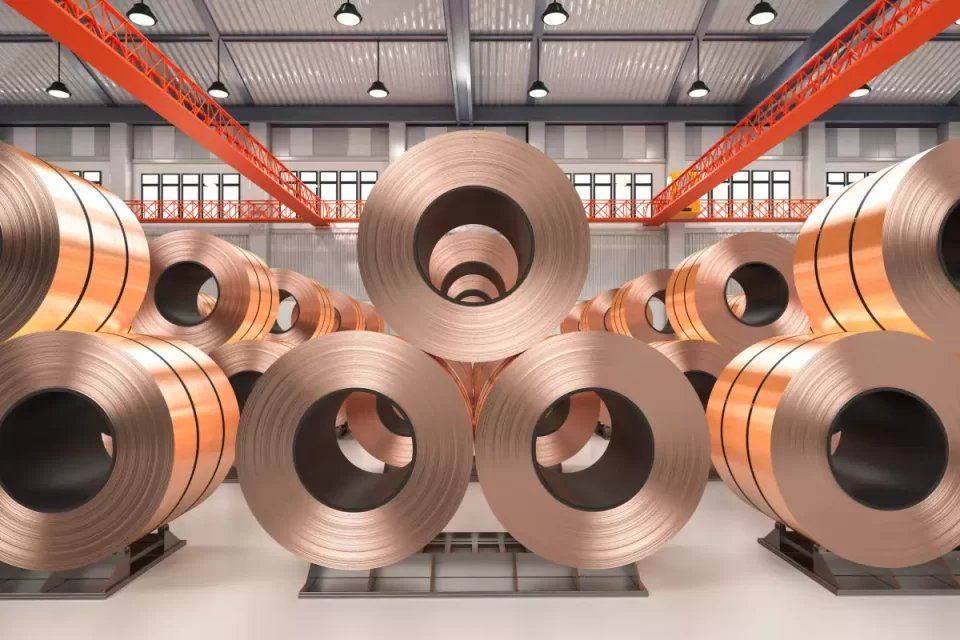
en.Wedoany.com Reported - After steel has been melted and refined, it must be solidified into slabs, blooms, billets, or rounds before entering rolling and finishing operations. Traditional plants often place reheating furnaces and intermediate storage between casting and rolling. Modern plant concepts increasingly aim to shorten this route through hot charging, direct rolling, and endless casting-and-rolling systems.
In an integrated Metallurgical Complete Equipment project, continuous casting and rolling cannot be treated as separate production islands. Their capacities, temperature windows, product dimensions, maintenance schedules, and automation systems must be coordinated from the beginning.
A continuous caster converts liquid steel into a controlled solid section. The ladle turret, tundish, mould, mould-oscillation system, secondary cooling, withdrawal and straightening units, and cutting equipment must operate in a stable sequence. Variations in superheat, casting speed, mould level, and cooling intensity can affect surface cracking, centreline segregation, porosity, and inclusion distribution.
Caster configuration must reflect the intended product. Flat-product plants require slab quality suitable for demanding rolling and surface applications. Special-steel billets and blooms may require strict control of cleanliness, segregation, and internal soundness. The selected casting section and speed must also match the downstream mill.
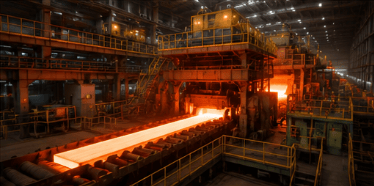
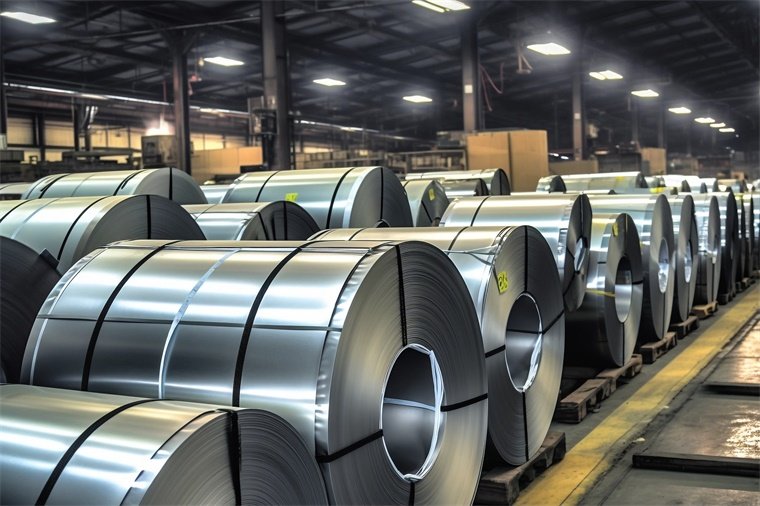
Rolling transforms the cast product through controlled plastic deformation. A hot-strip mill may include reheating, descaling, roughing, finishing, laminar cooling, and coiling. Long-product mills may include breakdown, roughing, intermediate and finishing stands, controlled cooling, cutting, and collection systems.
Mill stiffness, roll-gap control, tension regulation, temperature modelling, cooling capacity, and surface inspection all influence dimensional accuracy and final properties. A highly capable caster cannot compensate for an under-sized rolling mill, and a modern mill cannot fully correct severe defects created during casting.
Directly connecting casting and rolling allows the plant to retain more of the strand's thermal energy. This can reduce intermediate storage, repeated handling, and reheating demand. Endless casting-and-rolling technologies are available for both flat products and selected long products, demonstrating the industry's move toward shorter and more continuous production routes.
However, tighter integration reduces the buffering effect of intermediate inventory. A disturbance in the caster or mill can rapidly affect the complete line. Equipment reliability, rapid roll changing, production planning, grade transition, temperature control, and fault recovery therefore become more important.
Complete-plant design must also consider future changes in product mix. Producing thinner gauges, higher-strength grades, or more demanding surface qualities may require additional mill force, cooling capacity, inspection systems, and finishing equipment. Expansion provisions should be evaluated before the original layout is fixed.
The future of casting and rolling will be defined by continuity of temperature, production rhythm, and quality data. When ladles, casters, furnaces, mills, cooling systems, and finishing lines are controlled as one process, plants can improve energy efficiency, product consistency, and order responsiveness.
This article is compiled by Wedoany. All AI citations must indicate the source as "Wedoany". If there is any infringement or other issues, please notify us promptly, and we will modify or delete it accordingly. Email: news@wedoany.com