NASA Expands Satellite Data Procurement by $476 Million, Adds Eight Remote Sensing Companies
en.Wedoany.com Reported - The National Aeronautics and Space Administration (NASA) has expanded its commercial satellite data acquisition program, adding eight new remote sensing companies and updating data product streams for six existing providers. This initiative, through the expansion of a public-private orbital framework, streamlines the process for civilian agencies and research institutions to access commercial Earth observation data. The relevant contracts are executed under the Commercial Smallsat Data Acquisition (CSDA) Program's Indefinite Delivery/Indefinite Quantity (IDIQ) multiple-award contract, which is a fixed-price, indefinite delivery/indefinite quantity type with a maximum cumulative value of $476 million and an effective operational period through November 15, 2028.
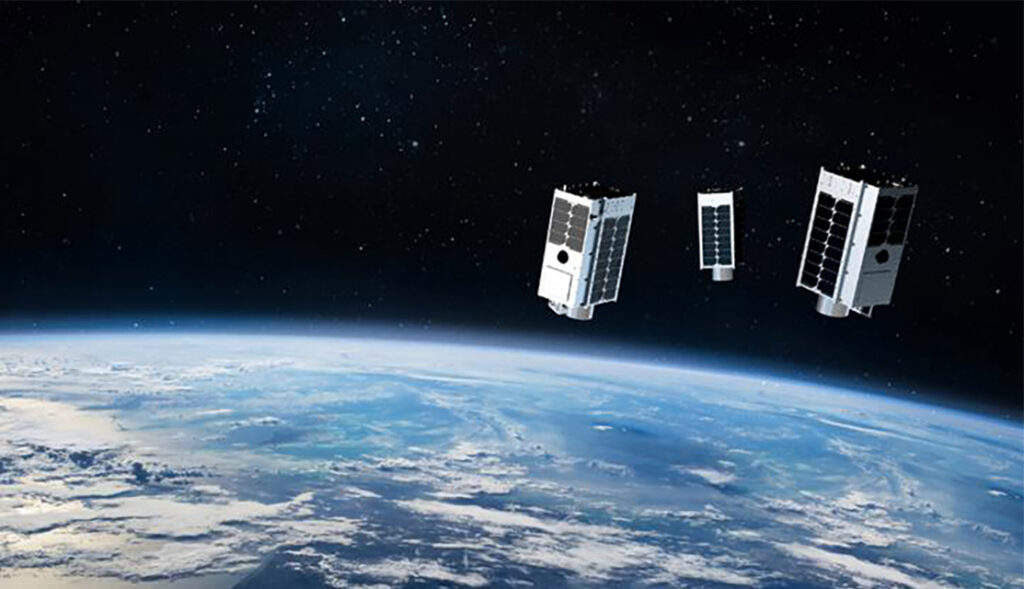
The way federal entities process space-based data is shifting, moving away from complete reliance on multi-billion dollar custom sovereign satellite flagships toward purchasing commercial observation streams to fill immediate gaps, thereby reducing capital costs. The contract employs a rolling access mechanism, allowing NASA to periodically reopen solicitations to integrate new commercial sensor technologies and constellation products. The 14 currently validated awardees include Airbus DS Geo, GHGSat, Hydrosat, ICEYE US, ImageSat International, Kuva US, Muon Space, Orbital Sidekick, OroraTech USA, Planet Labs Federal, PlanetIQ, SATLANTIS US, Tomorrow.io, and Wyvern.
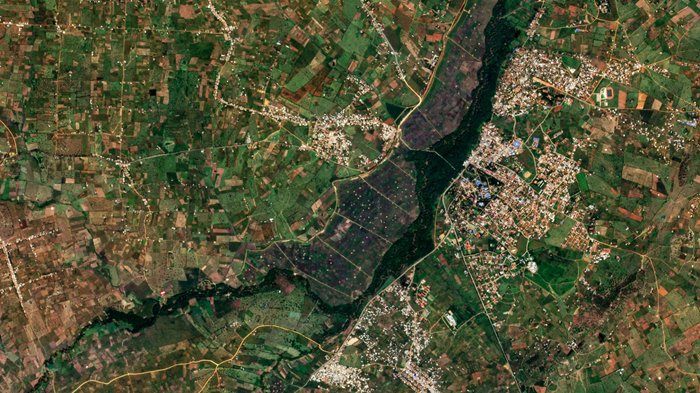
The newly added multispectral and radar assets introduce diverse spaceborne measurement capabilities to NASA, encompassing high-resolution synthetic aperture radar, greenhouse gas emission analysis, thermal infrared tracking, and high-frequency optical imaging. These commercial assets provide fine spatial resolution, higher global revisit frequencies, and fully taskable targeted observation data, complementing existing Earth observation satellite assets.
The core significance of the CSDA program lies in its infrastructure layout aligning with the trend of ground segment cloudification and IT convergence. Traditional methods rely on dedicated hardware and isolated regional tracking stations, whereas commercial data ingestion under the CSDA architecture transitions to a ground station-as-a-service model. Following formal validation, all newly procured data streams are directly ingested into the Satellite Data Explorer (SDX), NASA's centralized web-based data discovery and access system. This cloud-native hub unifies various data streams, enabling authorized scientists, cross-agency partners (such as the National Oceanic and Atmospheric Administration (NOAA), the U.S. Geological Survey (USGS), and the National Geospatial-Intelligence Agency (NGA)), and international collaborators (such as the European Space Agency (ESA)) to search, schedule, and download environmental intelligence through a single software portal.
By anchoring acquisition strategies to an interoperable, cloud-native clearinghouse, NASA reduces data delivery latency. The resulting data pipeline enables civil protection units to obtain high-resolution environmental intelligence more rapidly for real-time tactical modeling by disaster response teams addressing active wildfires, estimating crop yields, mapping flash floods, and assessing coastal land subsidence.
This article is compiled by Wedoany. All AI citations must indicate the source as "Wedoany". If there is any infringement or other issues, please notify us promptly, and we will modify or delete it accordingly. Email: news@wedoany.com
Related Products
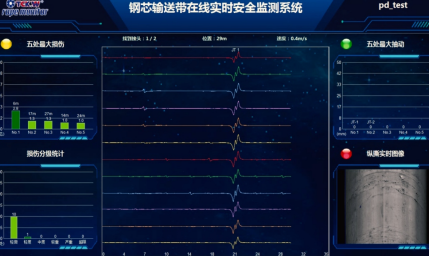

Conveyor Belt Intelligent Monitoring System
LUO YANG WIRE ROPE INSPECTION TECHNOLOGY CO., LTD.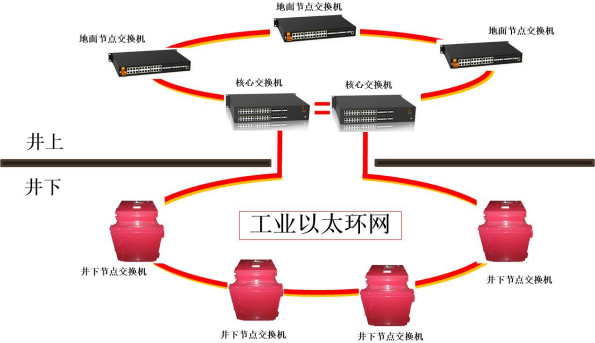
Mine Explosion-proof and Intrinsically Safe Industrial Ethernet Ring Network (10 Gigabit/Gigabit)
Chongqing Mas Sci&Tech Co., Ltd.


Industrial and Commercial Point-Type Gas Detector
Jinan Benan Technology Development Co., Ltd.
TWP16 P-Band Tropospheric Wind Profile Radar
China Huayun Meteorological Technology Group Co., Ltd.


MUX Series Communication Interface Device for Security and Stability Control System
Nanjing NR Electric Co., Ltd.