ExRobotics in the Netherlands Receives First UL 6260 Certification for Hazardous Environment Robots
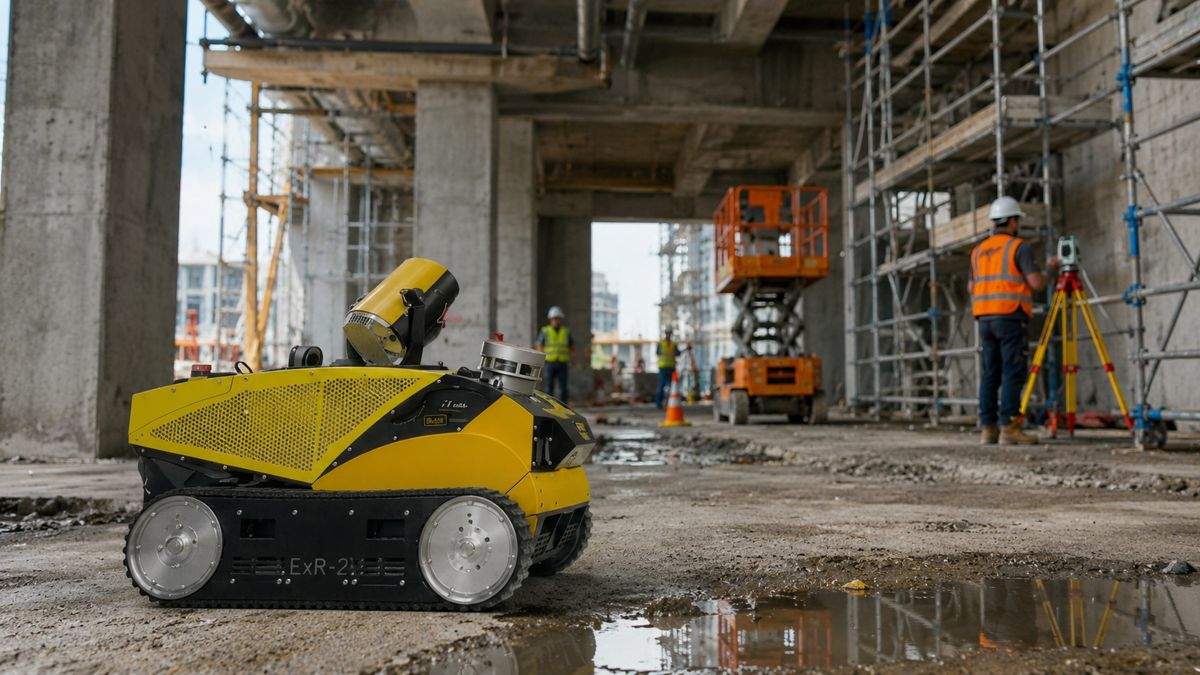
en.Wedoany.com Reported - UL Solutions has issued the first certification under UL 6260, a framework specifically developed for inspection and maintenance robots in industrial environments with explosive gases, vapors, or dust. The recipient is ExRobotics, a manufacturer based in Delft, Netherlands, whose tracked robot ExR-2.5 passed evaluation, addressing a core risk that has long hindered automation in these areas: the robot itself, intended to reduce hazards, could become an ignition source. This certification is not only a product milestone but also establishes an industry-recognized compliance pathway.
Previously, operators seeking to deploy robots in North American Class I, Division 1 hazardous locations lacked a single clear standard to assess equipment safety, forcing procurement teams, insurers, and safety engineers to cobble together ad hoc solutions around devices certified for narrower applications.
For refineries, petrochemical plants, liquefied natural gas terminals, offshore platforms, mines, grain silos, wastewater treatment facilities, and the rapidly expanding hydrogen and battery production sectors, asset inspection involves both commercial and safety concerns. Skilled inspection personnel are increasingly scarce, industrial facilities are aging, and the cost of unplanned downtime far exceeds that of inspections themselves. A certified robot that can walk a fixed route, read gauges, and detect leaks without exposing personnel to danger changes the cost-benefit calculation. Clear certification standards enable this calculation to be based on confidence rather than trust.
UL Solutions evaluated the ExR-2.5 for fire, explosion, electrical shock, and mechanical hazards, examining batteries, electrical systems, and mechanical components under both normal and fault conditions, including scenarios where explosive atmospheres may exist during routine operations. Mark Mildon, CEO of ExRobotics, stated that certified inspection robots are a core competency rather than a sideline, reflecting a market shift from whether robots can perform patrols to whether they can operate within a compliance framework accepted by safety cases and insurers.
The explosion-proof robot market is expected to grow at nearly 10% annually through the early 2030s, with oil and gas alone accounting for nearly two-fifths of current demand. Certification, rather than capability, has been the primary adoption barrier: hazardous area robots cost several times more than standard versions, approval cycles can take months, and testing for each model may run into six figures. A mobile robot costing $50,000 to $80,000 in standard form can reach $150,000 to $200,000 after explosive environment certification, not including integration, training, and specialized maintenance.
UL 6260, titled "Outline of Investigation for Remote Operated Inspection and Maintenance Equipment in Classified Hazardous Locations," serves as a framework for certification before formal consensus standards are completed. It references hazardous location definitions from the National Electrical Code, anchoring certification to the classification system already used by North American operators. ExRobotics is bringing the certified ExR-2.5 to the North American market through its exclusive partner MicroWatt and chose to launch it at the Houston Energy Drone and Robotics Summit.
ExRobotics reports having completed thousands of robot missions for operators including Shell, Repsol, and BP. The ExR-2.5 is equipped with sensors such as acoustic imaging to capture high-frequency signatures of gas leaks and mechanical faults. The construction of hydrogen production facilities, biomethane plants, battery gigafactories, LNG import terminals, and modern wastewater treatment plants is continuously creating new classified hazardous areas, while the inspection workforce is not expanding at the same pace, positioning certified robots to fill this gap.
The explosion-proof equipment market is expected to climb to approximately $135 billion by the early 2030s, and companies that view certification as a strategic asset are more likely to capture growth opportunities. Gaining a first-mover advantage under the new framework represents both a safety credential and a commercial position. UL 6260's existence as an outline of investigation reflects that technology has outpaced the consensus standards process. Infrastructure aging, specialized labor shortages, and uncompromising downtime costs are driving routine inspections in hazardous locations to be increasingly performed by machines that have earned the right to be present.
This article is compiled by Wedoany. All AI citations must indicate the source as "Wedoany". If there is any infringement or other issues, please notify us promptly, and we will modify or delete it accordingly. Email: news@wedoany.com