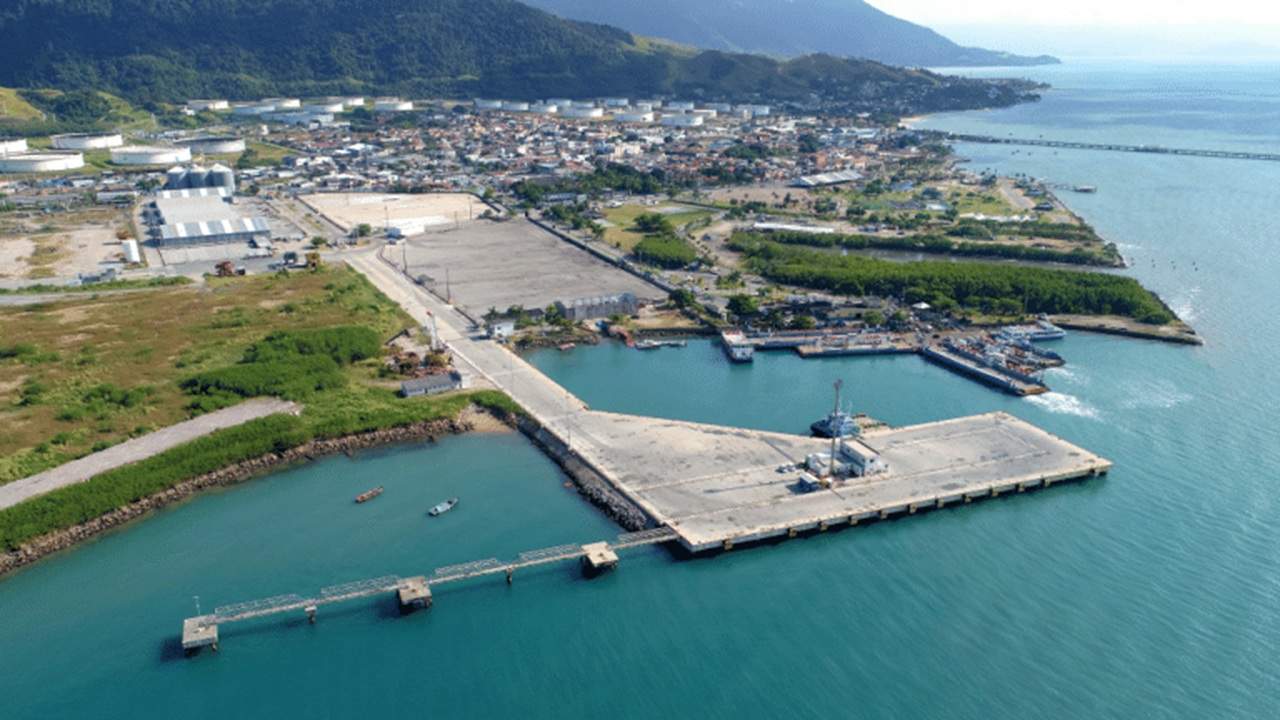
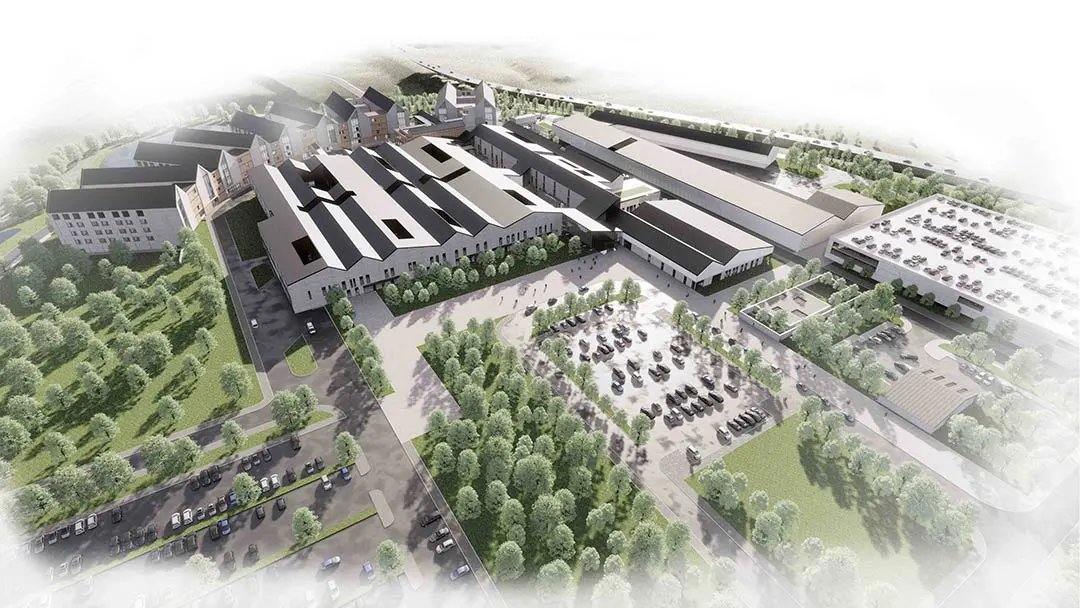
en.Wedoany.com Reported - The final leasing project for the ITJ01 container terminal at the Port of Itajaí (Santa Catarina State) is expected to attract approximately 2.6 billion BRL in investment over the 25-year contract period. The National Waterway Transportation Agency (ANTAQ) recommends that the tender should have broad participation, with restrictions only on consortia composed of companies that simultaneously own dedicated container handling facilities in the region and operate regular maritime shipping of such cargo.
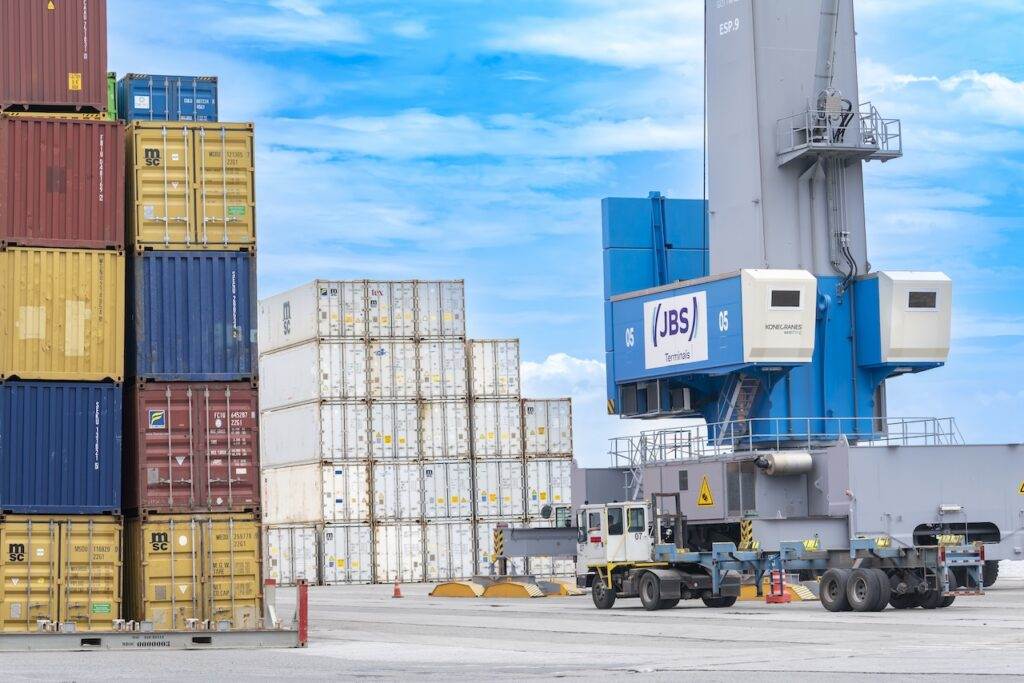
Regarding the preliminary version of the tender documents, which has been approved by the regulatory agency for public consultation, the study indicates that from a competition perspective, while the entry of a new operator is the best scenario "in the abstract," the victory of an existing company in the region would not lead to a terminal market concentration sufficient to exclude competition. Therefore, no restrictions are recommended for the participation of such groups in the tender. Since 2024, ITJ01 has been operating under a temporary lease regime, managed by JBS Terminals. The transitional contract was an emergency solution following the end of operations by the original operator, APM Terminals (a Maersk Group company), whose contract terminated in 2022. Due to delays in the new competitive process, container handling came to a complete halt in 2023.
The final tender process has been under discussion since 2021, with delays attributed to continuous requests for adjustments to the concession model from various bodies, including ANTAQ, the Federal Court of Accounts (TCU), and the Ministry of Ports and Airports (MPor). Changes in the project scope, which previously planned to concession the entire port, necessitated a new public consultation, followed by analysis by the regulatory agency and the audit court. The public comment period will be open for 45 days starting on the 29th of next month.
The investment plan involves infrastructure and equipment, with key measures including the installation of a second Ship-to-Shore (STS) crane rail track at berths 1 to 4, and the construction of mooring dolphins to support larger vessel operations. A new passenger terminal is also planned in the port's public area. The concessionaire will be required to pay a fixed monthly fee of 2.6 million BRL, plus variable fees based on handling volume. The timeline for the investment phases is linked to the terminal's throughput capacity growth and will be executed in stages. The first phase, which includes most of the initial equipment procurement and yard modifications, must be completed by the end of the third year of the contract; the second phase continues until the end of the sixth year; the third phase must be completed by the end of the ninth year of operation, marking the final deadline for the full completion of the yard area and ground systems.
Regarding minimum handling volume requirements, the contract sets annual targets that increase progressively for containerized cargo and stable targets for general cargo. For containers, the requirement is 176,000 TEUs in the first year, gradually increasing to 1.4 million TEUs annually between the 19th and 25th years. For general cargo, the minimum handling volume is fixed at 63,000 tons per year throughout the entire 25-year validity period.
The Port of Itajaí complex is highly specialized in container handling, which accounted for over 93% of the total local handling volume as of August 2025. The current market is primarily concentrated between the Itajaí Public Port and the Private Use Terminal (TUP) Portonave, which together account for approximately 97% of the complex's total handling volume. The study indicates that this terminal plays a central role in the reconfiguration of the regional market and in promoting competitive balance. A technical note prepared by the Secretariat for Tender and Contract Regulation (SELC) forecasts that ITJ01's share of port handling capacity will increase from 31.14% in 2027 to 45.99% from 2037 onwards. In this scenario, Portonave would hold 54.01%.
However, the competition analysis was not limited to the Port of Itajaí. ANTAQ considers the entire region, also encompassing the ports of Itapoá, São Francisco do Sul, Imbituba, and Paranaguá, as the relevant market. This regional market is classified as historically concentrated, primarily due to the dominance of the TCP terminal in Paranaguá and the Itapoá terminal. Nevertheless, the study concludes that there is no persistent structural dominance, precisely because of the sensitivity to supply shocks and the ability to redistribute cargo among different ports. In the scenario where the ITJ01 tender is won by a new entrant, the study indicates that the terminal would foster greater competitive balance within the first decade of full operation, a scenario considered most favorable as it increases the number of independent operators in the region.
Even if an existing operator ultimately wins, it is not considered a problem. Technicians evaluated different hypotheses involving Portonave, Itapoá, TCP, and Imbituba, and concluded that the impact on concentration indicators would be moderate. According to the report, changes in the Herfindahl-Hirschman Index (HHI) remain at levels consistent with the decision-making practices of the Economic Defense Administrative Council (Cade). For the Port of Santos terminals, a similar methodology was used for the Tecon Santos 10 project, but the conclusion was that if an existing operator won that terminal, market concentration would be too high, requiring some form of remedy, with related restrictions still under discussion.
In the analysis of vertical concentration between shipping companies and port operators, the study points out that such structures typically generate efficiency gains through coordinated investments, reduced transaction costs, and economies of scale. Technicians acknowledge the theoretical risk of market foreclosure, either by restricting competing shipping companies' access to the terminal or by exclusively directing cargo to own facilities. However, the assessment concludes that the current dynamics of the market in the southern part of the country do not substantiate these risks. In the scenario where a new independent operator wins, the competitive landscape would expand, particularly for shipping companies without their own terminals in the region, such as Cosco and Hapag-Lloyd. On the other hand, the study notes that this model also increases the commercial risk for the project, as the winner would need to secure sufficient cargo to meet contractual targets.
In the scenario where a vertically integrated group (such as MSC and Maersk) wins, the conclusion is that the risk of market foreclosure remains low. 2025 data shows that vertically integrated terminals like Portonave and Itapoá allocate over half of their vessel calls to competing shipping companies, indicating a reliance on external customers to maintain infrastructure utilization rates. Based on these diagnoses, ANTAQ sees no reason to impose ex-ante restrictions on operators already present in the market.
The technical department's understanding was endorsed by ANTAQ's Regulatory Director, José Renato Ribas Fialho. In his opinion, the Director noted the need to adjust the tender documents to consider SELC's concerns regarding competition during the bidding process. The department assessed that consortia between large vertically integrated groups could reduce competition for the concession, thereby diminishing the tender's competitiveness. Furthermore, the new design of the tender rules reduces the number of bidders directly entering the oral bidding phase from three to two, aiming to increase competitive pressure during the sealed bid phase and lower the risk of submitting undervalued bids.
This article is compiled by Wedoany. All AI citations must indicate the source as "Wedoany". If there is any infringement or other issues, please notify us promptly, and we will modify or delete it accordingly. Email: news@wedoany.com