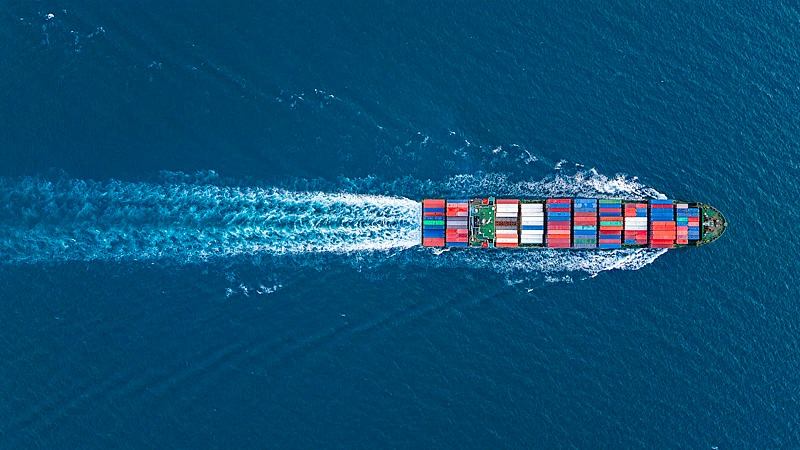
en.Wedoany.com Reported - Pacific International Lines (PIL) has reached a significant milestone in its fleet renewal program, holding a joint naming ceremony for its two latest 13,000 TEU LNG dual-fuel container vessels, "Kota Elok" and "Kota Elan." These ships will be deployed on routes connecting Asia and South America, which PIL considers key trade lanes to meet the growing cargo demand in the region, facilitate trade flows between the two areas, and optimize network operational efficiency.
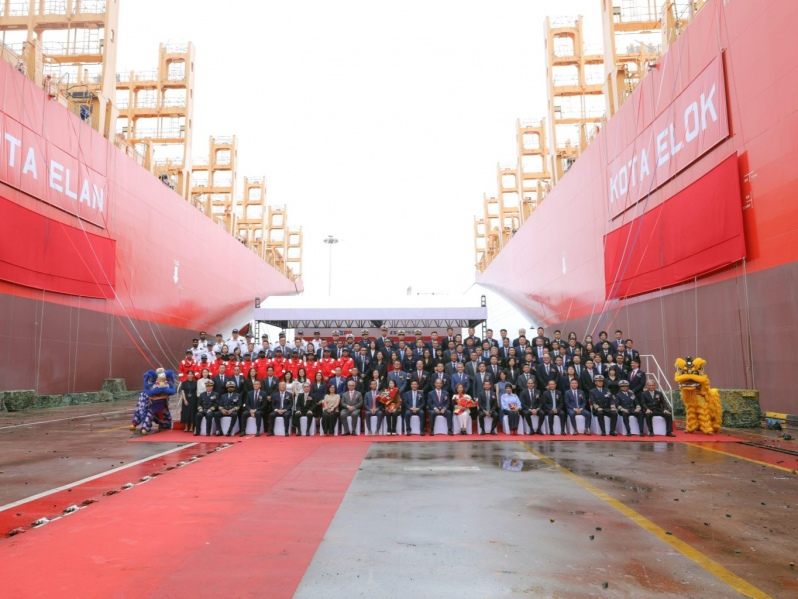
The two container ships were built by Hudong-Zhonghua Shipbuilding (Group) and are the first in a series of 13 new 13,000 TEU vessels ordered by PIL. This move is part of PIL's broader strategy to modernize its fleet, enhance competitiveness, expand transport capacity, while improving operational efficiency and sustainability.
Both "Kota Elok" and "Kota Elan" are designed to operate on liquefied natural gas (LNG) and low-sulfur fuel, enabling significant reductions in greenhouse gas emissions. PIL CEO Lars Kastrup stated that the naming of the two ships highlights the acceleration of the company's fleet modernization and strengthens its position on key trade routes. These vessels will enable the company to meet growing trade demand, expand capacity, and provide greater efficiency for customers. He added that the ships reflect the company's ongoing commitment to sustainability, taking concrete steps to reduce its carbon footprint and achieve net-zero emissions through investment in LNG dual-fuel technology and advanced ship design.
The new vessels incorporate several features aimed at enhancing energy and operational performance, including optimized hull designs for improved hydrodynamic performance, efficient energy systems, and special coatings that help reduce fuel consumption. Additionally, the ships are equipped with digital technologies based on artificial intelligence (AI) and the Internet of Things (IoT), designed to optimize operational performance and increase automation. "Kota Elok" is also fitted with an additional bow wind deflector to improve aerodynamic performance, contributing to better fuel efficiency and reduced emissions on long-haul voyages.
Beyond technological advancements, PIL emphasized that the two ships were designed with seafarer well-being in mind, providing a modern, safe, and comfortable working environment to support the health and quality of life of the crew.
This article is compiled by Wedoany. All AI citations must indicate the source as "Wedoany". If there is any infringement or other issues, please notify us promptly, and we will modify or delete it accordingly. Email: news@wedoany.com