CAICT Co-Approved to Establish "Beijing Key Laboratory of Space-Based Intelligent Computing Systems"
en.Wedoany.com Reported - Recently, the "Beijing Key Laboratory of Space-Based Intelligent Computing Systems," jointly declared by the China Academy of Information and Communications Technology (CAICT) along with RACO Defense, Beijing Institute of Technology, and North China University of Technology, was officially approved for establishment by the Beijing Municipal Science & Technology Commission and the Zhongguancun Management Committee.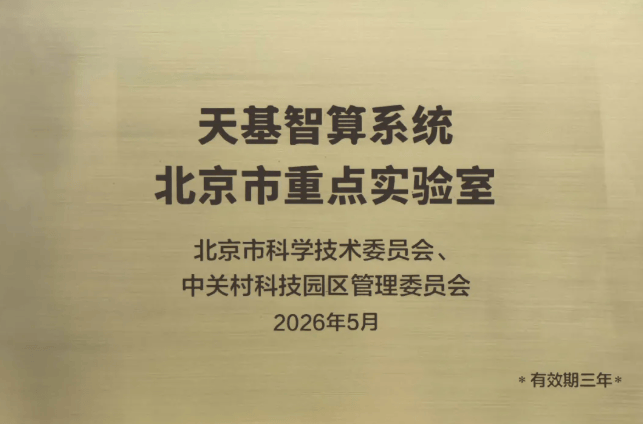
To seize the strategic opportunity of integrating space-air information with intelligent computing and accelerate the cultivation of the space computing industry ecosystem, in April 2026, CAICT led the establishment of China's first industry collaboration platform for space computing, the "Space Computing Professional Committee" (hereinafter referred to as the "Committee"). The Committee currently brings together academicians, leading enterprises, research institutes, and financial institutions across the industry chain. It has actively promoted the systematic development of space computing by strengthening strategic research and providing decision-making support, organizing key core technology breakthroughs, accelerating the pre-research and construction of standard systems, deepening the exploration and demonstration of application scenarios, and building an open and win-win industrial ecosystem. The "Beijing Key Laboratory of Space-Based Intelligent Computing Systems" is a crucial part of CAICT's efforts to advance the systematic work of space computing through the Committee, serving as key support for joint research on computing payloads and pilot verification.
As an important evolutionary direction for ground-space integrated computing collaboration, space computing aims to achieve real-time on-orbit data processing and intelligent applications by deploying high-performance AI computing systems in orbit. Currently, this field still faces core challenges such as the difficulty of distributed collaborative computing for on-orbit computing payloads, limited performance of processing chips, insufficient high-reliability general-purpose computing capabilities, challenges in engineering high-power-density energy heat dissipation, and difficulties in deploying intelligent algorithms on orbit. Addressing these pain points, the laboratory focuses on four major directions: overall architecture, processing chips, computing platforms, and intelligent algorithms. It adheres to collaborative innovation across the entire software and hardware chain, continuously breaks through key technologies, and ultimately forms a complete system for scalable engineering applications, promoting the on-orbit intelligent processing of multiple types of application data.
As a high-end professional think tank and industrial innovation development platform in China, CAICT will leverage the "Beijing Key Laboratory of Space-Based Intelligent Computing Systems" as an innovative vehicle to further capitalize on its technological verification and ecosystem advantages in the integration of space-air information and intelligent computing. It will promote research on key space computing technologies and the cultivation of the industrial ecosystem, continuously empowering the construction of a space power and Digital China.
This article is compiled by Wedoany. All AI citations must indicate the source as "Wedoany". If there is any infringement or other issues, please notify us promptly, and we will modify or delete it accordingly. Email: news@wedoany.com
Related Products


Automatic Aiming Laser Remote Obstacle Removal Robot
Pinggao Group Weihai High-Voltage Apparatus Co., Ltd.
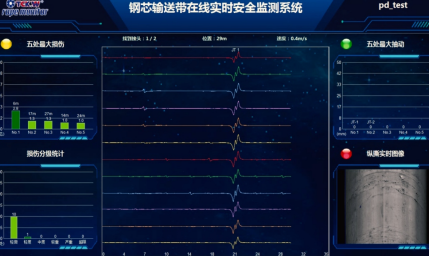
Conveyor Belt Intelligent Monitoring System
LUO YANG WIRE ROPE INSPECTION TECHNOLOGY CO., LTD.
20 Inch 1600*900 Full HD 60Hz TFT LED Monitor with VGA and DP Interfaces for Desktop Computers-Business Use
Guangzhou Zanying Optoelectronics Technology Co., Ltd.
JiuTian OneSky Pilot—Intelligent Management And Service Platform
China Times Prospect Science & Technology Co., Ltd.
Industrial and Commercial Point-Type Gas Detector
Jinan Benan Technology Development Co., Ltd.

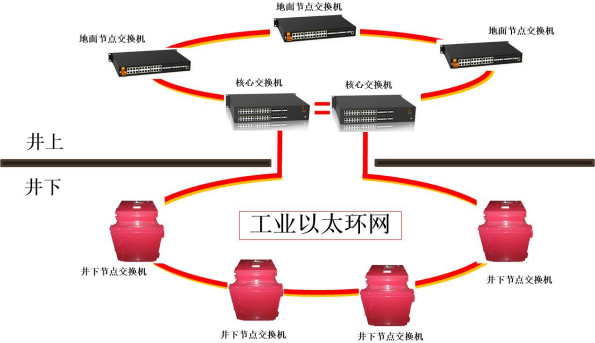
Mine Explosion-proof and Intrinsically Safe Industrial Ethernet Ring Network (10 Gigabit/Gigabit)
Chongqing Mas Sci&Tech Co., Ltd.