Why Stable Dust-Control Operation Depends on Pressure Drop, Cleaning, and Air-Leakage Control
en.Wedoany.com Reported - Meeting the outlet-emission limit after commissioning does not mean that dust-control equipment will operate stably for the long term. Pressure drop, cleaning, air leakage, hopper discharge, damaged filter bags, and fan condition all affect collection performance and the exhaust capacity of production equipment.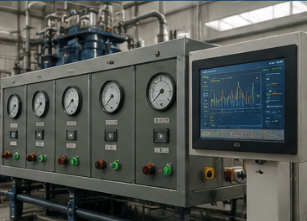
Fabric-filter pressure drop represents the resistance of gas passing through the bags and dust cake. A continuously rising pressure drop may indicate dust accumulation, bag blinding, condensation, or insufficient cleaning. An unusually low pressure drop may result from damaged bags, bypass leakage, or a measurement failure.
The cleaning intensity of Dust Removal Equipment must remain balanced. Insufficient cleaning increases resistance and reduces airflow, while excessive cleaning may damage the stable dust cake, accelerate mechanical fatigue of the bags, and increase compressed-air consumption.
When gas temperature falls below the dew point, moisture may condense on the filter material and form a sticky layer with the dust. If high-temperature gas exceeds the allowable filter range, the bags may shrink, lose strength, or burn.
Air leakage increases the volume handled by the system, lowers gas temperature, and changes oxygen concentration and dew point. Cold air entering a hot-gas system may increase condensation and corrosion while adding load to the fan and collector.
Ash hoppers must discharge dust continuously or at defined intervals. Excessive accumulation can block the lower section of filter bags, create secondary dust entrainment, and increase structural loading. Poor sealing at discharge valves can also create an air-leakage point.
Electrostatic precipitators require monitoring of secondary voltage, current, spark rate, rapping, and electrode dust accumulation. Abnormal electrical fields or excessive dust layers reduce particle charging and collection, while uneven gas distribution can create locally higher emissions.
Dust-system maintenance should analyse pressure drop, temperature, flow, emission concentration, cleaning frequency, and fan power together. Observing one parameter alone often cannot determine whether a problem comes from dust properties, equipment condition, or a process-load change.
This article is compiled by Wedoany. All AI citations must indicate the source as "Wedoany". If there is any infringement or other issues, please notify us promptly, and we will modify or delete it accordingly. Email: news@wedoany.com
Related Products

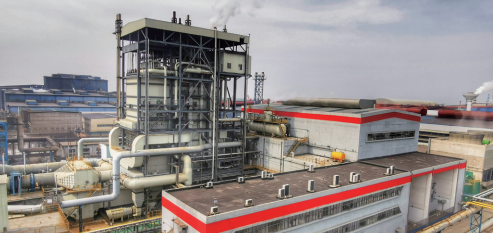
Jiujiang Pinggang 125MW Subcritical Gas Power Generation Project
Capital Engineering & Research Incorporation Limited
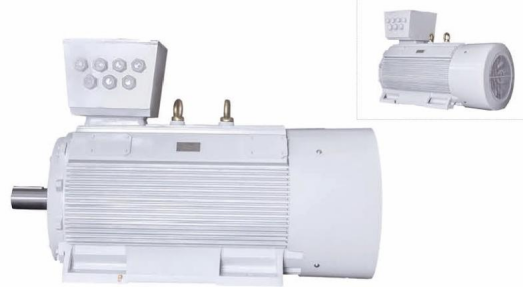
YE3 Series Low Voltage High Power Three-Phase Asynchronous Motor
Shandong Lijiu Electrical Machinery Co., Ltd.
HI-Pro Green Hydrogen High-efficiency Production System-HI-PRO-AEM
Hydrizon Technology (Beijing) Co., Ltd.
Optional Accessory - Auxiliary Sampling Module
Beijing Soaring Electric Technology Co., Ltd.
TAI Slew-drive Single-axis Independent 1P Tracking Bracket System
ANTAI TECHNOLOGY CO., LTD.
VEG-12/24/40.5 Series Vacuum Circuit Breaker
SHANGHAI PINGGAO TIANLING SWITCHGEAR CO., LTD.