China's Digital China subsidiary shortlisted for 717 million yuan smart computing Token factory project
en.Wedoany.com Reported - On July 1, China's Digital China announced that its wholly-owned subsidiary, Shanghai Digital China Co., Ltd., has become one of the bid candidates for the "Domestic Smart Computing Token Factory Project," with a bid price of 717 million yuan. The final outcome of winning the bid and project implementation is still subject to the official bid-winning notice and contract signing.
The appearance of "Smart Computing Token Factory" in the project name indicates that the focus is not merely on traditional IT equipment procurement, but rather on large model computing services, reasoning resource organization, and AI invocation capability building. Tokens are the basic measurement units for large models when processing text, code, image descriptions, and multimodal tasks. When enterprise customers use large models, model invocation, reasoning consumption, concurrent requests, response latency, and cost accounting are all related to token processing capabilities. Building "factory-style" capabilities around tokens typically involves integrating computing resources, model services, scheduling systems, metering and billing, interface services, data security, and operations management into a foundational platform capable of sustainably delivering AI service capabilities.
Shanghai Digital China is a wholly-owned subsidiary of Digital China. The bid price of 717 million yuan indicates a large-scale project, likely involving multiple tasks such as computing platform construction, software and hardware integration, and operational support.
For smart computing projects, delivery challenges often lie in system integration and long-term operation. Servers, accelerator cards, storage, network equipment, cabinets, power supplies, cooling systems, operating systems, AI frameworks, model deployment tools, and resource scheduling platforms must operate collaboratively within the same environment. Token services also require the platform to have stable concurrent processing capabilities, task distribution capabilities, invocation monitoring capabilities, and usage statistics capabilities. Digital China has long been engaged in IT distribution, cloud services, system integration, and enterprise digitalization businesses. If the project is ultimately realized, its role is more likely to focus on computing resource integration, platform construction, equipment delivery, system debugging, and subsequent service support.
Being "one of the bid candidates" does not equate to winning the bid. The announcement currently releases project shortlisting information, and subsequent processes such as public notification, confirmation, contract signing, and implementation arrangements still need to proceed.
Such smart computing Token projects reflect that large model applications are transitioning from point-based trials to platform-based supply. When using AI, industries such as government, manufacturing, finance, energy, transportation, and communications require not only model capabilities but also stable computing access points, unified invocation standards, traceable token consumption, permission management, data isolation, and operations and maintenance systems. If the project progresses smoothly, it will help transform AI invocation capabilities from scattered interfaces into manageable, measurable, and operable foundational services, providing underlying support for applications such as industry-specific large models, intelligent customer service, knowledge base Q&A, code generation, document processing, and business agents.
Digital China's shortlisting indicates its continued participation in large-value order competition in smart computing infrastructure and AI platform integration projects. The actual business impact will still depend on the official bid-winning result, contract amount confirmation, project construction timeline, and final delivery scope.
Related Products



20 Inch 1600*900 Full HD 60Hz TFT LED Monitor with VGA and DP Interfaces for Desktop Computers-Business Use
Guangzhou Zanying Optoelectronics Technology Co., Ltd.
Automatic Aiming Laser Remote Obstacle Removal Robot
Pinggao Group Weihai High-Voltage Apparatus Co., Ltd.
D12 Humanoid Robot
Automation Research Institute Co., Ltd. of China South Industries Group Corporation
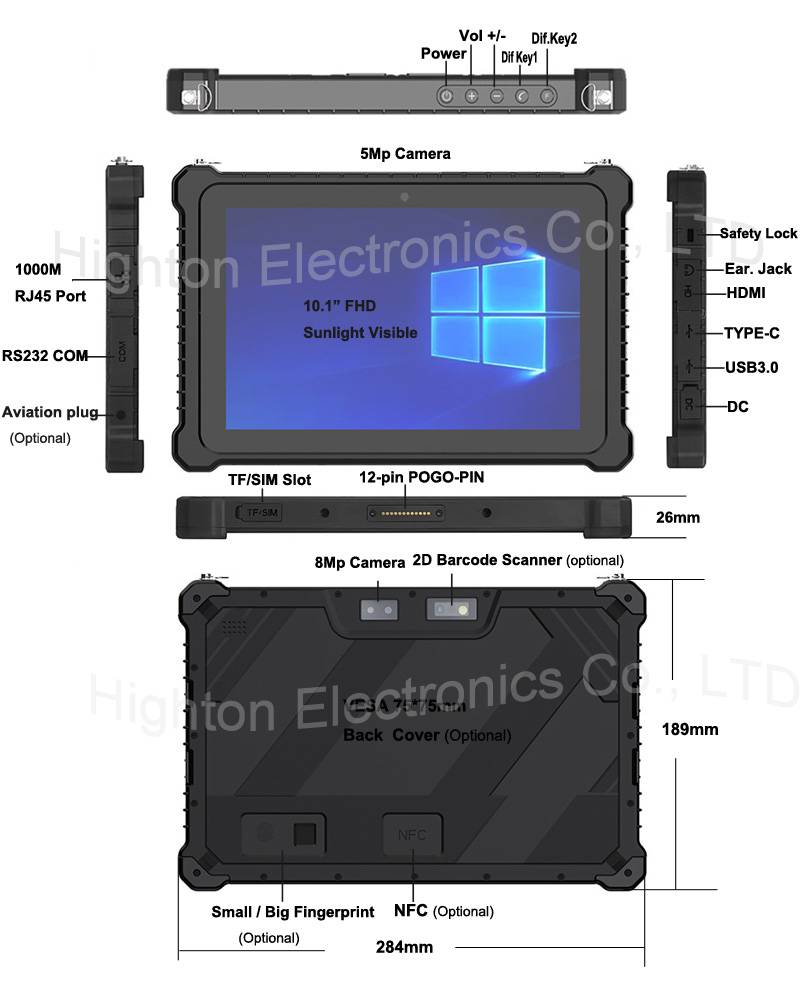
Hot Selling 10 Inch Intel N5100 I5 I7 FHD 8 +128GB 16+256GB Win10 Pro Win11 Pro 4G 5G Rugged Tablet PC Pad with NFC Barcode
Highton Electronics Co., Ltd.
KJD127(A) Mining Explosion-Proof and Intrinsically Safe Computer
Taiyuan Xiangming Intelligent Control Technology Co., Ltd.
Comprehensive Mining Automation Control System
Beijing Tianma Intelligent Control Technology Co., Ltd.