Global Clients Making "Reverse Business Trips" to China: From "Seeking Capacity" to "Seeking Answers"
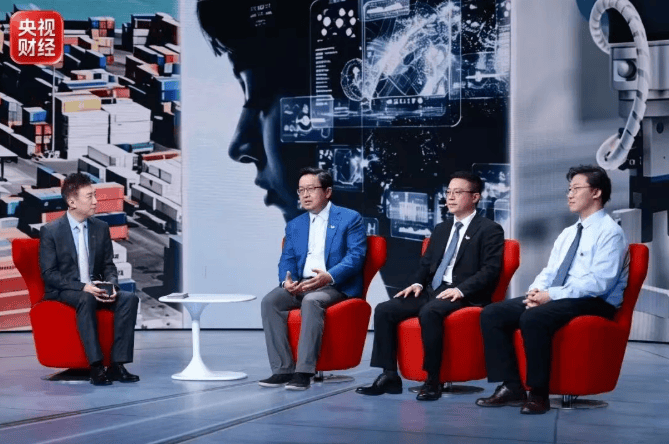
en.Wedoany.com Reported - On the CCTV Finance program Dialogue, host Chen Weihong and several founders of Chinese tech companies discussed an interesting shift: In the past, Chinese companies going global often meant flying around the world with samples and sales teams. Now, a reverse scenario is becoming increasingly common—overseas clients are taking the initiative to come to China on "business trips."
Data is confirming this trend:
At the 2nd International Humanoid Robot Exhibition held in Hangzhou in May, a total of 56 cooperation agreements and 237 cooperation intents were signed, with a combined value exceeding RMB 21.3 billion. A total of 3,178 overseas buyers flooded into the venue—not for a cursory look, but with specific needs in search of products.
In the same month, at the World Intelligence Industry Expo held in Tianjin, nearly 150 types of complete robots were showcased. Buyers from multiple countries moved through the halls, inquiring about prices, taking notes, and comparing repeatedly—looking not just at the exhibits, but at the supply chain capabilities behind them.
The innovative drug sector offers a broader perspective. In the first half of 2026, China's innovative drug out-licensing (BD) deals totaled 81 transactions, with a combined potential value of approximately USD 110 billion (including milestone payments at various stages, not actual amounts received in the current period)—already reaching 80% of the full-year 2025 figure. During the same period, among the top 10 global pharmaceutical BD deals by value, Chinese companies secured 8 spots, underscoring the global competitiveness of China's innovative drugs.
These changes point to a single signal: In the past, Chinese companies flew to the world in search of orders; now, global companies are coming to China in search of next-generation solutions.
I. What's Being Sought After Isn't Just a Robot
Why are overseas clients willing to travel halfway around the world to China?
First, the technology speaks for itself.
In August 2026, real-time ranking data from OpenRouter, a leading global AI model aggregation platform, showed that during the platform's statistical period, the top five AI large models globally were all developed by Chinese companies. During that period, for every 10 AI model calls made by developers worldwide, more than 6 used models developed in China, with Chinese models accounting for over 63% of total calls. Among them, a specific version of DeepSeek's large language model, while matching the performance of top-tier closed-source models globally, is priced on the platform at just 1/89 of overseas models, offering exceptional cost-performance advantages.
But what truly makes clients unable to sit still is the iteration speed demonstrated by Chinese companies.
On Dialogue, Chen Yilun, Founder and CEO of Tarsier, shared a detail: The R&D head of a Nordic automotive supply chain company visited his company three times within nine months. Each visit, roughly three months apart, revealed that ideas discussed previously had already become reality—some progress even exceeded expectations. On the third visit, the client went so far as to move their annual global innovation summit to Tarsier's laboratory.
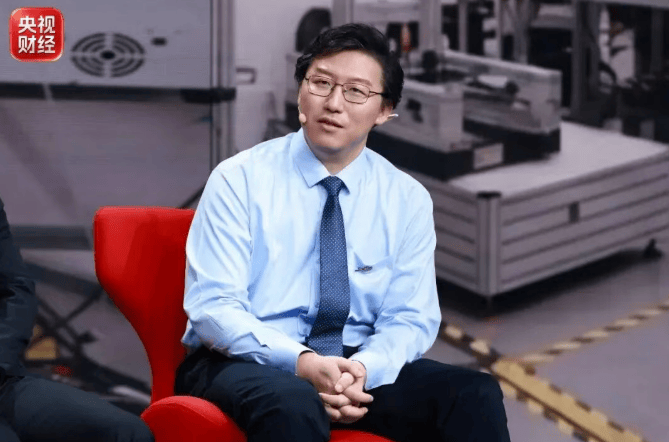
△Chen Yilun, Founder and CEO of Tarsier
Once a new solution is proposed, components can be quickly sourced in China, prototypes completed, production lines entered, and usage data fed back into the model—forming a high-frequency feedback loop between technology, supply chain, factories, and users.
When overseas clients come to China, they see not just a piece of equipment, but the ability to rapidly turn ideas into products.
II. China Is Becoming the "Innovation Site" for Global Companies
In the past, a common model in the global division of labor was: overseas companies handled product definition and technology R&D, while China handled manufacturing.
Today, this route is being rewritten.
At XtalPi's AI-driven autonomous experimentation platform, nearly 300 robotic experiment workstations operate unattended. This AI-powered drug discovery company counts 17 of the world's top 20 pharmaceutical companies among its clients. The manual labor scientists once had to perform—"messing with bottles and jars"—is now handled by robots, while AI handles thinking, design, and iteration. Experiment efficiency has increased 8-fold, and data volume has increased 50-fold.
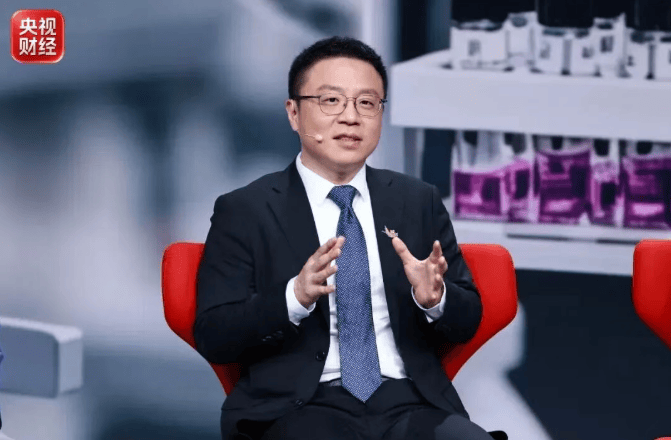
△Ma Jian, Co-founder and CEO of XtalPi
When CEOs and CSOs of major pharmaceutical companies walk into such laboratories, they see not an assembly line, but an entirely new R&D methodology—drug design proposed by AI, synthesis and testing handled by robots, with every step of both failure and success recorded and learned from.
Kunlun Tech is an AI content company serving the global market, with nearly 400 million monthly active users worldwide. Today, the production cost of an AI short drama has dropped to one-twentieth of a live-action short drama, at approximately RMB 100,000 per production; the cost of generating a fantasy scene "is around a few jiao (tenths of a yuan)." An AI short drama can be translated into 10 languages within half an hour, reaching nearly 6 billion potential viewers.
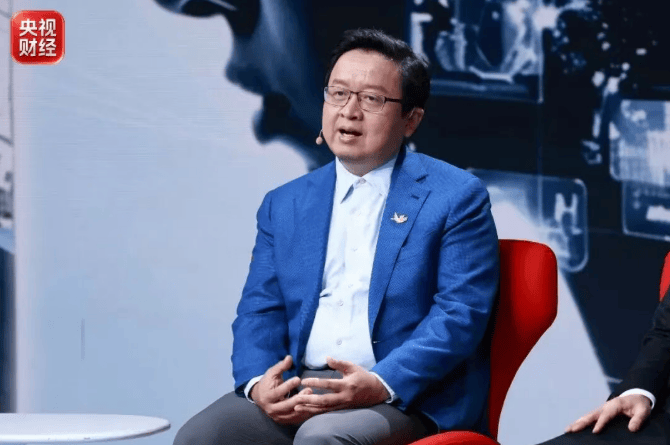
△Fang Han, Chairman and CEO of Kunlun Tech
Behind this lies a new model of value export: users pay per Token, electricity remains in China, and value is delivered across borders.
Chinese companies are no longer just executing solutions—they are involved in problem definition, product design, scenario validation, and continuous iteration.
Chen Yilun summarizes this shift as: moving from "Copy to China" to "Study from China, Copy to Global."
Finding solutions and building models in China first, then applying them to the global market. This may well be the true reason behind global clients' "reverse business trips."
III. The Secret of "China Speed" Isn't Just Speed
Why can Chinese innovation quickly translate into reality?
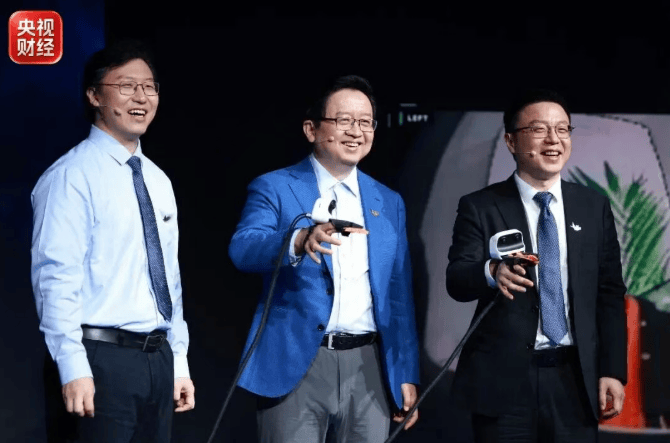
The answer lies in a dexterous robotic hand. Take it apart, and you'll find over a thousand components:
Micro motors benefit from the drone industry;
Flexible connections come from accumulated expertise in foldable screen technology;
Precision gears and sensors are continuously refined by industries such as automotive and consumer electronics.
Many innovations that seem to appear "suddenly" today are actually a recombination of capabilities accumulated across different industries over the past decades. In Unitree Robotics' supply chain, 90% of components can be sourced locally in the Yangtze River Delta, with core components achieving hour-level response times—"upstairs and downstairs are upstream and downstream."
When R&D personnel propose new requirements, suppliers are in the same city; when prototypes enter the factory, real-world data is quickly obtained. Problems identified in the morning are being fixed by the afternoon, and within months, products have gone through multiple iterations.
Chen Yilun noted that overseas, a hardware iteration cycle can take up to a year; in China, many processes can proceed in parallel. This ability to compress time is the true meaning of "speed."
The World Intellectual Property Organization (WIPO) Global Innovation Index 2025 report shows that China has entered the global top 10 for the first time, ranking fifth in the innovation output pillar. Among the world's top 100 innovation clusters, China accounts for 24, ranking first globally for the third consecutive year.
The significance of these clusters lies not just in the number of patents and papers, but in the high-frequency interaction among talent, supply chains, capital, and application scenarios within a relatively compact space.
So-called "China speed" is, in essence, the distance between innovation elements.
IV. From "Made in China" to "The China Method"
In a 2015 episode of Dialogue, the head of a domestic robotics company once did the math: For the same model of robotic arm, the Japanese selling price was lower than his own cost. At that time, of China's five to six hundred robotics companies, most could only build "iron frames"—assembling imported components without touching any core technology.
Ten years later, Gong Xiangfeng, General Manager of FAIR Robotics, said on Dialogue: "We've been at this for 20 years, and China has at least decades of such accumulation. You just happen to be seeing it begin to shine."
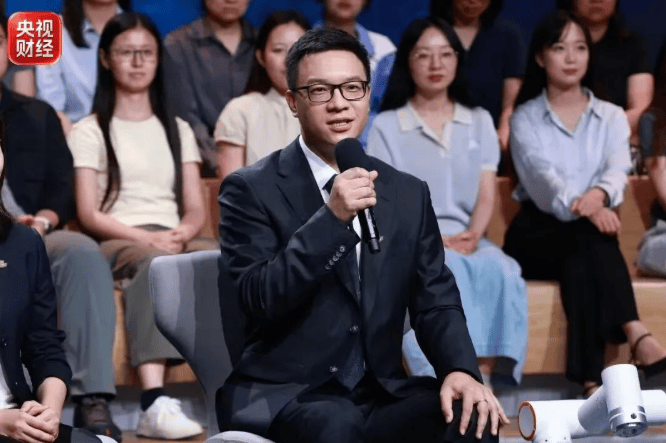
△Gong Xiangfeng, General Manager of FAIR Robotics
This accumulation is reshaping the global industry's perception of China's role. Fang Han calls it the "mass line"—Chinese AI developers open-source their achievements, learning from each other and growing together. According to Hugging Face's spring 2026 ecosystem report, downloads of Chinese open-source models account for 41% of the platform's global total, with cumulative downloads exceeding 10 billion, placing China's open-source ecosystem among the most active globally.
Ma Jian feels this even more deeply: "In the past, overseas clients saw China as the world's factory—we handled source innovation, and China handled manufacturing. But in recent years, as more and more people come to China, this perception is changing."
One overseas client told Chen Yilun: "Over the past decade, Chinese manufacturing has exceeded expectations in achieving its goals. When the next generation of technology arrives, we don't want to miss out."
V. From "Coming to See" to "Long-Term Belief"
Global clients coming to China is a signal of shifting attention, but it is not the finish line of competition.
A technology demonstration can impress, but to make robots work reliably in overseas factories, to have AI serve users from different cultural backgrounds, and to get innovative drugs through rigorous clinical and regulatory reviews, companies still face challenges such as data security, intellectual property, industry standards, and global services.
On Dialogue, Fang Han admitted: "The height of our technology has not yet fully translated into market share." Ma Jian believes that in international competition, "reaching the top 10 isn't success—in many fields, you must be in the top three, or even the most important one or two."
The fact that overseas clients are willing to come shows that old perceptions are loosening; whether they choose to stay depends on whether Chinese companies can build long-term trust.
Therefore, what deserves the most attention in the "reverse business trip" is not how many times someone visited China, but the fact that the collaboration routes and division-of-labor patterns of global innovation are being redrawn.
In the past, the world came to China mainly to seek production capacity. Today, more and more people come here to seek answers.
And the true test for this "world innovation laboratory" lies in: not just proposing new ideas, but repeatedly validating them in real-world scenarios; not just sending technology abroad, but ensuring innovation withstands the long-term scrutiny of different markets and rules.
From "Made in China" to "The China Method," this road has no end. As the closing of Dialogue put it, on this unyielding path, there will surely be more innovators forging ahead, generation after generation.
Related Products


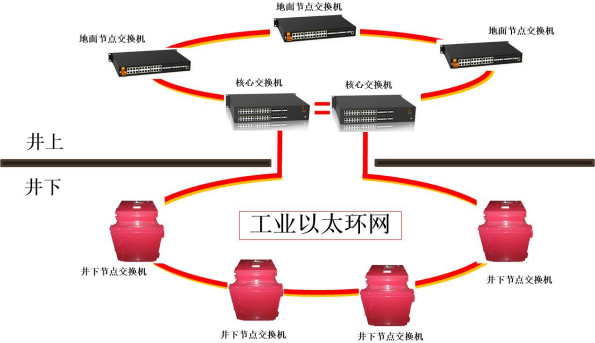
Mine Explosion-proof and Intrinsically Safe Industrial Ethernet Ring Network (10 Gigabit/Gigabit)
Chongqing Mas Sci&Tech Co., Ltd.
Flat Portable Satellite Terminal 0.35m Aperture Manual Portable Terminal
China Starwin Science & Technology Co., Ltd.
Multi-function Marine Monitoring Low-altitude Detection Radar Sea-air Boundary Ocean Dynamic Environment Measurement
Chengdu Dixin Technology Co., Ltd.
Automatic Aiming Laser Remote Obstacle Removal Robot
Pinggao Group Weihai High-Voltage Apparatus Co., Ltd.
Industrial and Commercial Point-Type Gas Detector
Jinan Benan Technology Development Co., Ltd.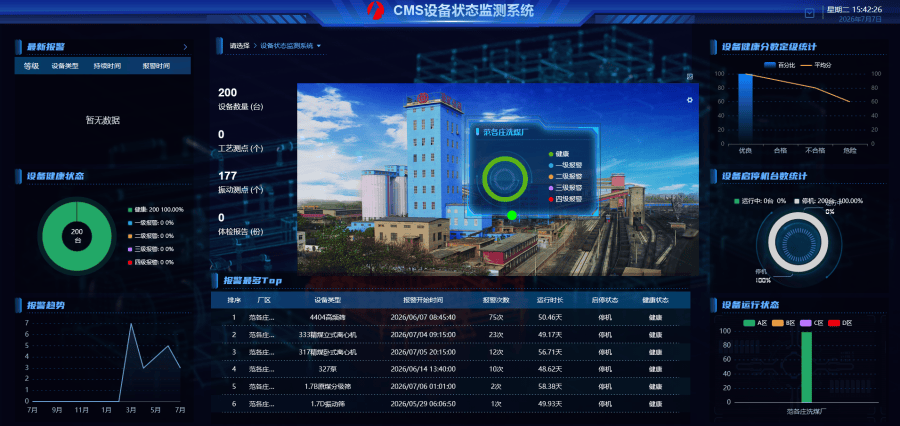
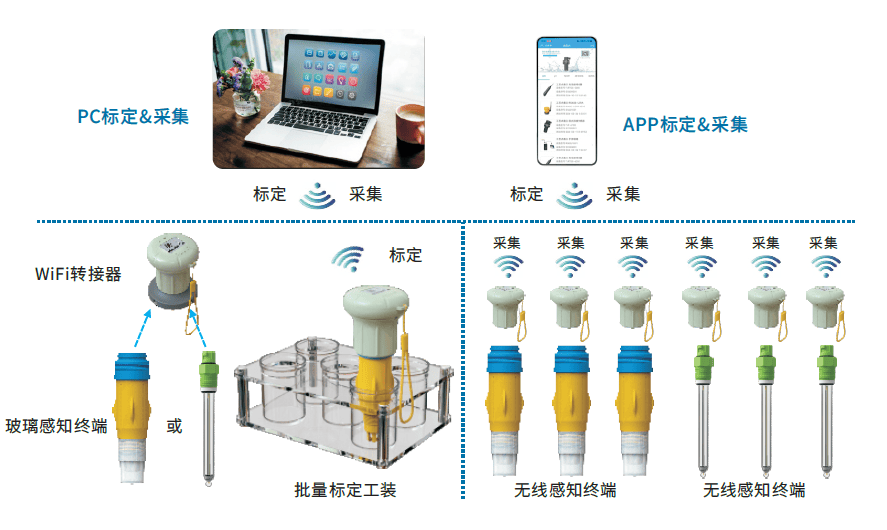


Comprehensive Mining Automation Control System
Beijing Tianma Intelligent Control Technology Co., Ltd.