Google Cloud Expands Spanner Database with Multi-Model and AI Support
en.Wedoany.com Reported - Google Cloud is expanding its cloud database Spanner, adding native support for graphs, vectors, key-value pairs, and full-text search, while extending this multi-model database capability to on-premises systems and other public cloud environments through Spanner Omni. This move aims to position Spanner at the core of Google's data and artificial intelligence portfolio, reflecting an industry trend among major technology vendors to reposition databases for generative AI and autonomous software agents.

Spanner's new graph model, built on Spanner Graph, allows users to natively represent data as a graph or overlay a graph structure on relational data, primarily targeting knowledge graph use cases to help software agents connect entities, roles, and events across datasets. The vector search capability supports K-nearest neighbor and approximate nearest neighbor methods, enabling indexes containing over 10 billion vectors. Full-text search is integrated within the same platform, supporting retrieval across structured and unstructured data, including synonym matching and spell correction. A built-in columnar engine supports analytical queries on real-time operational data, which Google claims can accelerate specific analytical workloads by up to 200 times without requiring data migration to a separate system.
In terms of customer cases, Palo Alto Networks uses Spanner Graph for access control workloads, avoiding the need for a standalone graph database. Legal intelligence company Inspira consolidated a 4.5 TB data pipeline into a single data store, employing full-text search and vector search for retrieval-augmented legal analysis. Fraud prevention enterprise Verisoul utilizes the columnar engine for high-volume transaction data analysis.
Interoperability is a key feature of this update. Developers can combine graph traversal, vector similarity, relational logic, and keyword search within a single SQL query, without needing to stitch together different database engines or move data between them. Spanner Omni, available as a downloadable containerized version running on Kubernetes without requiring dedicated hardware, enables customers to run the database on-premises, at the edge, or on public clouds including AWS and Microsoft Azure, meeting hybrid and multi-cloud deployment needs. Google notes that this strategy aims to address database fragmentation caused by enterprises accumulating multiple independent database systems, a challenge that has become particularly pronounced following the growth of AI projects.
In terms of market position, Google cites data from Gartner's 2025 "Critical Capabilities for Cloud Database Management Systems: Operational Use Cases" report, stating that Google Spanner ranked first for lightweight transaction use cases for the second consecutive year. Additionally, a Total Economic Impact study commissioned by Google Cloud from Forrester Consulting found that a composite organization achieved a 132% return on investment after deploying Spanner, with a payback period of nine months and total benefits of $7.74 million over three years. Google positions Spanner as the foundation of its Agentic Data Cloud strategy, aiming to more closely integrate real-time operational data with large-scale analytics. Its architecture relies on TrueTime, Paxos, dynamic sharding, and the ScaNN vector indexing method, reportedly providing distributed consistency and the ability to unify analytical queries with semantic retrieval. Spanner has also received the SIGMOD Systems Award.
Related Products



G.652.D Wavelength-extended Non-dispersion Shifted Single-mode Optical Fiber
HONGAN GROUP CO., LTD.
Hot Selling 10 Inch Intel N5100 I5 I7 FHD 8 +128GB 16+256GB Win10 Pro Win11 Pro 4G 5G Rugged Tablet PC Pad with NFC Barcode
Highton Electronics Co., Ltd.

MUX Series Communication Interface Device for Security and Stability Control System
Nanjing NR Electric Co., Ltd.
Mine Explosion-proof and Intrinsically Safe Industrial Ethernet Ring Network (10 Gigabit/Gigabit)
Chongqing Mas Sci&Tech Co., Ltd.

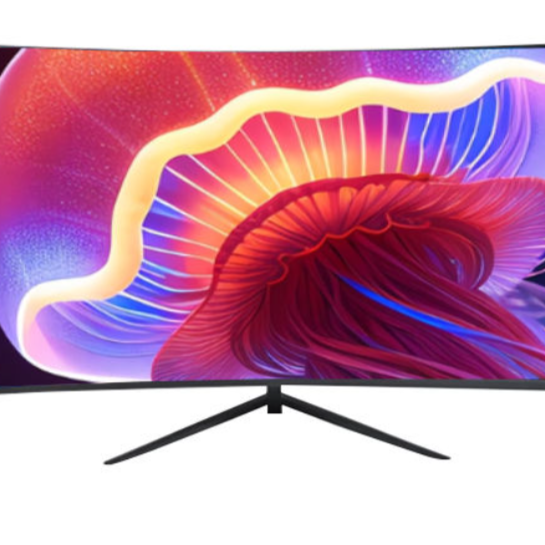
20 Inch 1600*900 Full HD 60Hz TFT LED Monitor with VGA and DP Interfaces for Desktop Computers-Business Use
Guangzhou Zanying Optoelectronics Technology Co., Ltd.
GYTA Type Non-Self-Supporting Aerial/Duct Optical Cable
TONGDING INTERCONNECTION INFORMATION CO., LTD.