VodafoneZiggo Netherlands Completes Deployment of Unified Fault Management Platform
en.Wedoany.com Reported - Comarch Communications has successfully delivered a unified fault management and integration platform for Dutch telecom operator VodafoneZiggo, integrating assurance processes across fixed and mobile domains to achieve unified assurance for the entire national network coverage in the Netherlands.
The project underwent extensive evaluation by VodafoneZiggo, which conducted a horizontal comparison of multiple top-tier market tools before selecting Comarch Communications. This decision was partly based on Comarch's track record among Vodafone partners, including deployments already in use in Vodafone Germany's mobile operations. This ecosystem continuity facilitates the modernization of the legacy assurance stack.

This modernization effort goes beyond replacing legacy tools; VodafoneZiggo aims to harmonize its entire IT assurance layer by merging previously separate mobile and fixed domain systems. In a converged architecture where DOCSIS, fiber, and 5G coexist, maintaining parallel fault management stacks can slow down engineering teams and create blind spots. Analysts note that over 70% of Tier 1 operators prioritize cross-domain assurance when deploying multi-technology networks, a finding consistent with Omdia research highlighting the increasing operational complexity faced by large communications service providers.
Following platform launch, the new fault management and integration platform provides VodafoneZiggo with a unified view across both network types. The deployment enables more consistent operations and reduces process overhead caused by separate systems. The project also introduces automation into daily workflows. According to Gartner, operators adopting advanced service assurance and integrated automation can reduce network operations costs by up to 25%. These estimates resonate with providers managing national infrastructure with millions of endpoints and strict service availability commitments.
From VodafoneZiggo's perspective, the deployment is strategically significant. The VodafoneZiggo Monitoring & Tools Technology Lead described this completed unification as a milestone that streamlines operations, supports faster response times, and empowers teams with full operational independence. Gaining a unified, end-to-end fault view reduces the time engineers spend correlating alarms and determining which domain is responsible for an issue.
Interest in greater autonomy for network operations continues to grow. The platform vendor notes that the new setup paves the way toward L3 and L4 autonomous network capabilities, including self-healing and intelligent decision support. Achieving these levels requires effort, and unifying data from different domains is a foundational step. Integrating fixed and mobile domains lays the groundwork for future automation enhancements.
Industry organizations such as the International Telecommunication Union (ITU) have consistently emphasized the important role of unified assurance in meeting next-generation reliability expectations. The ITU's guidelines on ultra-reliable low-latency communication scenarios outline availability targets above 99.999%, and achieving these targets requires cross-domain data correlation rather than isolated monitoring. Operators rely on integrated monitoring to manage the unpredictable nature of real-world networks.
Centralization of fault management is becoming increasingly critical for joint ventures like VodafoneZiggo. Analysys Mason tracks a rise in centralized network operations centers within European groups, driven by the need to simplify activities across national regions. This implementation in the Netherlands aligns with a broader continent-wide trend toward unified operations.
Similar vendors such as Netcracker, Nokia NetAct, and Ericsson Expert Analytics are actively engaged in the unified assurance space. Operators evaluate these platforms based on specific criteria: multi-domain visibility, integration options, automation depth, AI maturity, and alignment with standards like the TM Forum Open Digital Architecture. Frameworks such as AI for Operations also influence how these deployments scale and integrate with the broader OSS environment.
For VodafoneZiggo, the converged fault management environment for fixed and mobile domains is expected to support the full range of services offered over its national infrastructure. Established in 2017 as a joint venture between the Vodafone Group and Liberty Global, the organization provides mobile, internet, television, and fixed-line products to consumer and business markets. Operating at this scale makes unified assurance imperative, as customer experience depends on detecting and resolving issues before they cascade into large-scale outages.
Engineering teams view improved visibility as a direct benefit of unified assurance. When all alarms flow into a single platform rather than separate tools, correlation becomes faster and triage becomes more consistent. Although specific efficiency metrics for this deployment were not disclosed, accelerating alarm resolution in a national network with daily fluctuations in event volume delivers operational value.
The Chief Commercial Officer of the platform vendor emphasized the broader ambition of the project: enabling scalable services, reducing complexity, and moving toward more autonomous operations. Many operators are experimenting with autonomy, particularly in self-healing transport networks and predictive maintenance of wireless equipment. High-quality data from unified fault management underpins these initiatives.
Operators typically mitigate centralization risks of unified platforms through architectural assurance, redundancy, and integration with established standards such as the ITU-T M.3000 series. These frameworks describe fault, configuration, and performance management functions that maintain resilience in critical processes. In the converged Dutch network environment, architectural guardrails maintain stability as automation scales.
The completion of this modernization effort solidifies VodafoneZiggo's network assurance strategy. The unified environment enhances visibility, supports faster problem resolution, and prepares the operator for deeper automation across its national infrastructure. This implementation aligns with broader European telecom market trends, where demand for unified, AI-driven operations continues to accelerate.
Related Products


Multi-function Marine Monitoring Low-altitude Detection Radar Sea-air Boundary Ocean Dynamic Environment Measurement
Chengdu Dixin Technology Co., Ltd.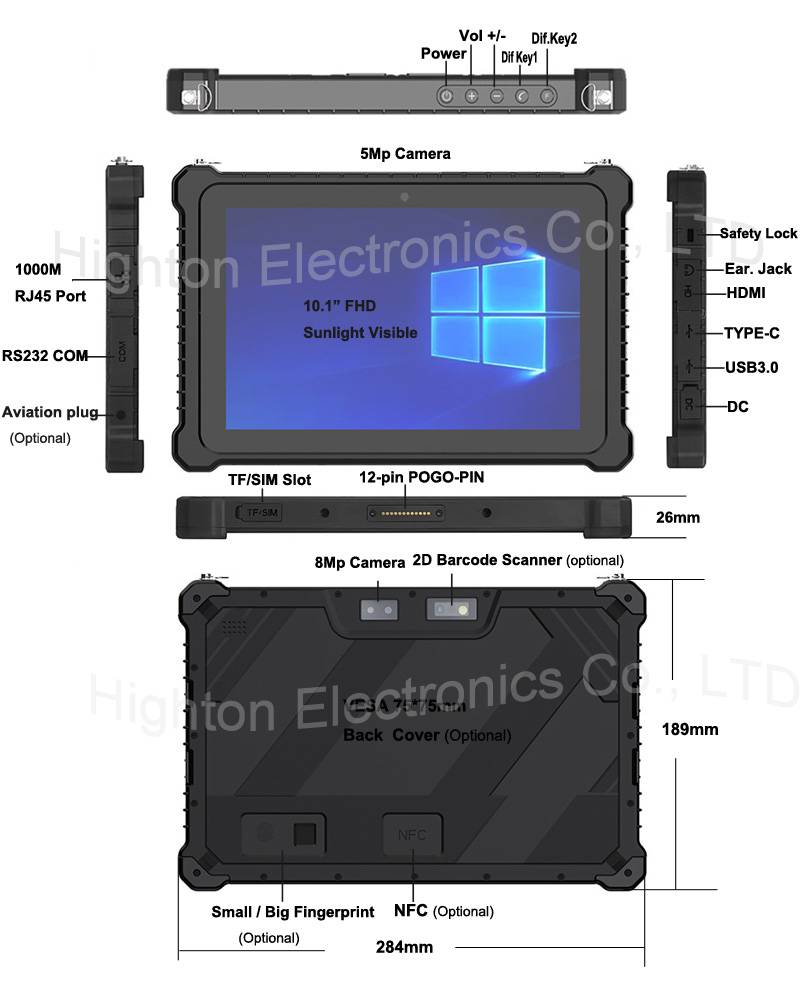
Hot Selling 10 Inch Intel N5100 I5 I7 FHD 8 +128GB 16+256GB Win10 Pro Win11 Pro 4G 5G Rugged Tablet PC Pad with NFC Barcode
Highton Electronics Co., Ltd.

Flat Portable Satellite Terminal 0.35m Aperture Manual Portable Terminal
China Starwin Science & Technology Co., Ltd.
TWP16 P-Band Tropospheric Wind Profile Radar
China Huayun Meteorological Technology Group Co., Ltd.


Conveyor Belt Intelligent Monitoring System
LUO YANG WIRE ROPE INSPECTION TECHNOLOGY CO., LTD.