NVIDIA Launches Industrial Vision AI Agent Blueprints
en.Wedoany.com Reported - NVIDIA has released a new set of software components and reusable workflows for vision AI agents, designed to support model development, simulation, and deployment at the edge and in the cloud.
This toolkit, called Metropolis Agent Skills and Blueprints, includes workflows for synthetic data generation, video data augmentation, model fine-tuning, and video search and summarization. Developers can combine these workflows with the Omniverse platform for simulation and digital twins based on OpenUSD, as well as the Metropolis platform for building and running video AI applications.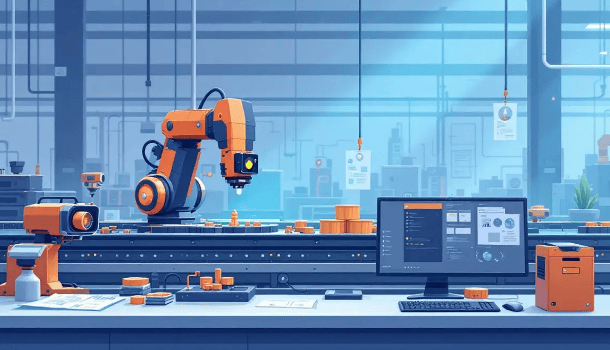
Vision AI agents are being deployed in factories, warehouses, transportation networks, and urban infrastructure, where operators aim to transform camera footage into automated alerts, reports, and process monitoring. NVIDIA positions this new software as a response to a common edge computing problem: large amounts of data are generated near cameras and sensors, but most of it never translates into actionable outcomes.
NVIDIA identifies three major obstacles organizations face when building such systems: a lack of representative training data, especially for rare defects or anomalous events; the specialized effort required to fine-tune models after performance gaps emerge; and the engineering work needed to integrate video pipelines, models, metadata, search, alerts, and system components into a working application.
In the manufacturing sector, synthetic data helps address the shortage of real defect images. NVIDIA highlights the work of Roboflow, which is integrating NVIDIA's defect image generation skills and Cosmos world foundation model into its platform to serve customers including Corning. According to NVIDIA, a benchmark test with Corning's fiber optic manufacturing engineering team found that a model trained using eight real defect images combined with synthetic data generated by the defect image generation skill achieved 95% average precision and perfect recall on the most difficult defect category. This model outperformed a baseline trained solely on real data and shortened a project originally expected to take multiple quarters to just a few days. This example underscores the primary business value of synthetic data in industrial inspection. Production lines capable of preventing most defects may struggle to collect enough failure instances to train next-generation inspection systems, resulting in weak model performance when detecting uncommon but critical anomalies.
In urban operations, NVIDIA points to a market opportunity for connected video workflows. Linker Vision is using NVIDIA's Metropolis video search and summarization blueprint to deploy video inference agents in urban infrastructure, while also using Omniverse digital twins based on OpenUSD to simulate traffic, weather, emergencies, and infrastructure changes. The system packages tasks such as search, summarization, alerts, reports, and stream management into agent-executable workflows. Linker Vision also uses NVIDIA Cosmos for video data augmentation and NVIDIA TAO for model fine-tuning. In Kaohsiung, NVIDIA states that Linker Vision reduced development effort by 85% and shortened event response time by up to 80% using the video search and summarization blueprint. The company adds that its newer AI-GRID extension includes the NemoClaw blueprint for safety agent AI in urban and traffic environments.
In factory operations, another example comes from industrial workflow monitoring. According to NVIDIA, DeepHow's real-time standard operating procedure verification agent deployed at Foxconn uses the Metropolis video search and summarization blueprint to search, summarize, and analyze video in operational environments. The goal is to assess whether work is being performed correctly, compare actions against standard procedures, and identify issues before defects propagate downstream. NVIDIA says Cosmos helps the system interpret sequences of human actions in context, including determining whether assembly steps are performed in the correct order. According to NVIDIA, on the NVIDIA GB300 server production line, the DeepHow system improved first-pass yield by 3%, achieved 99% task-level accuracy in understanding critical procedural steps, and reduced redundant work by identifying issues early in the process.
The broader market context for this release is the shift of AI processing to the edge, where data is generated rather than sent back to centralized infrastructure. NVIDIA cites Gartner's prediction that by 2028, more than two-thirds of enterprise-managed data will be created and processed outside data centers or the cloud, and by 2029, more than two-thirds of enterprises globally will deploy edge AI, compared to just 10% in 2025. Even so, more edge data does not automatically produce more useful insights. Models running near cameras and machines must operate under constraints of latency, power, cost, and connectivity, while also adapting to conditions at each site. OpenUSD is central to NVIDIA's approach because it provides a common way to describe and reuse 3D scenes. The Omniverse library helps teams build simulation, synthetic data, and digital twin workflows, enabling testing across a wide range of conditions including lighting, weather, traffic patterns, camera angles, occlusions, and rare events.
The new suite includes defect image generation skills, video data augmentation skills, TAO skills for model fine-tuning, and video search and summarization skills for alerts, reports, and stream management. The goal is to free developers from rebuilding every part of a workflow from scratch for each deployment. These reusable workflows are designed to help developers generate data, improve models, and deploy vision AI agents in industrial, transportation, and urban operations.
Related Products


Mine Explosion-proof and Intrinsically Safe Industrial Ethernet Ring Network (10 Gigabit/Gigabit)
Chongqing Mas Sci&Tech Co., Ltd.

GYTA Type Non-Self-Supporting Aerial/Duct Optical Cable
TONGDING INTERCONNECTION INFORMATION CO., LTD.
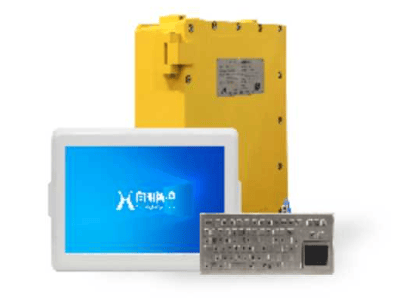
KJD127(A) Mining Explosion-Proof and Intrinsically Safe Computer
Taiyuan Xiangming Intelligent Control Technology Co., Ltd.