China's Huawei to Launch AI Chips and Servers in South Korea in Q4
en.Wedoany.com Reported - Huawei plans to launch its AI accelerator chip series, Ascend, and the computing system Atlas 950 Superpod equipped with these chips in the South Korean market in the fourth quarter of 2026. It is reported that the company has signed a master distribution contract responsible for distribution in South Korea and is currently preparing for business operations, including technical training and pricing policy formulation. It has also selected two partners (including SK shields) as sales channels and is exploring localized brand names.
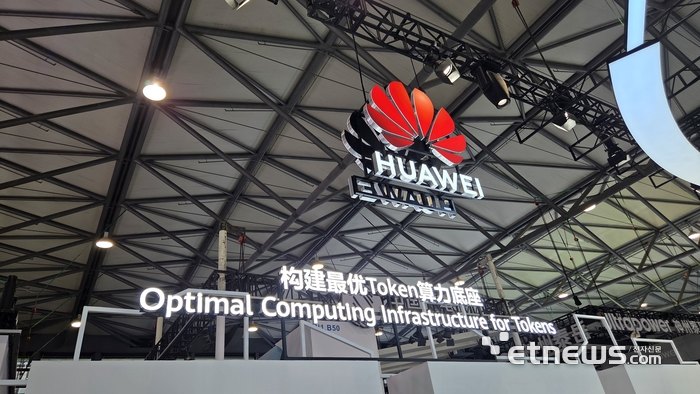
The Ascend series is Huawei's self-developed neural network processor (NPU). Following the Ascend 910C, the Ascend 950PR entered mass production in April 2026, and the company plans to launch the Ascend 950DT, dedicated to AI training, in the fourth quarter. This chip features self-developed high-bandwidth memory (HBM) and is regarded as a milestone for China's semiconductor industry amid the U.S. policy of isolating China. The Atlas 950 Superpod can accommodate up to 8,192 Ascend chips, forming an AI computing infrastructure.
Huawei South Korea is expected to pursue a "de-NVIDIA" marketing strategy based on performance and price competitiveness. Huawei claims that the Ascend 950PR offers approximately 2.87 times the computing performance of NVIDIA's H20 in inference tasks, at about one-quarter of the price. While its performance falls short compared to NVIDIA's H200, this can be compensated for through multi-chip clusters. The Ascend 950PR has already been adopted by major tech companies such as DeepSeek-V4. Huawei has improved the compatibility of its self-developed networking technology with NVIDIA's programming language CUDA, aiming to position itself as an alternative for the South Korean AI infrastructure market to reduce reliance on NVIDIA.
Industry insiders suggest that South Korea's sensitivity to Chinese technology and power consumption issues caused by heat generation could pose obstacles to Huawei's development in the South Korean AI market. Huawei South Korea declined to comment on the product launch.
Related Products
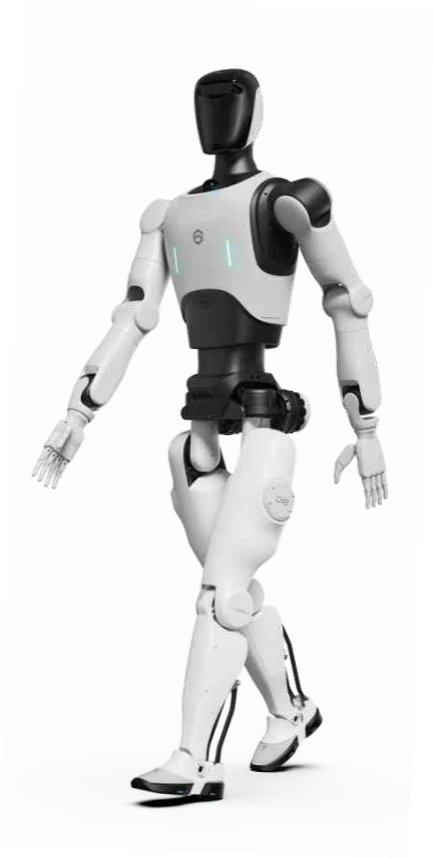

D12 Humanoid Robot
Automation Research Institute Co., Ltd. of China South Industries Group Corporation
Multi-function Marine Monitoring Low-altitude Detection Radar Sea-air Boundary Ocean Dynamic Environment Measurement
Chengdu Dixin Technology Co., Ltd.
Industrial and Commercial Point-Type Gas Detector
Jinan Benan Technology Development Co., Ltd.

G.652.D Wavelength-extended Non-dispersion Shifted Single-mode Optical Fiber
HONGAN GROUP CO., LTD.

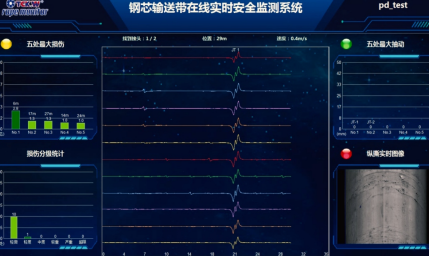
Conveyor Belt Intelligent Monitoring System
LUO YANG WIRE ROPE INSPECTION TECHNOLOGY CO., LTD.
Flat Portable Satellite Terminal 0.35m Aperture Manual Portable Terminal
China Starwin Science & Technology Co., Ltd.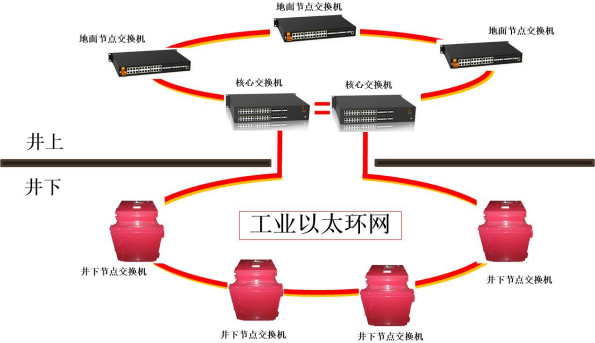
Mine Explosion-proof and Intrinsically Safe Industrial Ethernet Ring Network (10 Gigabit/Gigabit)
Chongqing Mas Sci&Tech Co., Ltd.