AMD Launches Ryzen AI Halo Workstation
en.Wedoany.com Reported - AMD has launched the Ryzen AI Halo, a compact AI workstation with a starting price slightly under $4,000. It features a large 128GB memory capacity and a pre-installed AI software ecosystem, offering a local AI deployment solution for developers and machine learning enthusiasts.
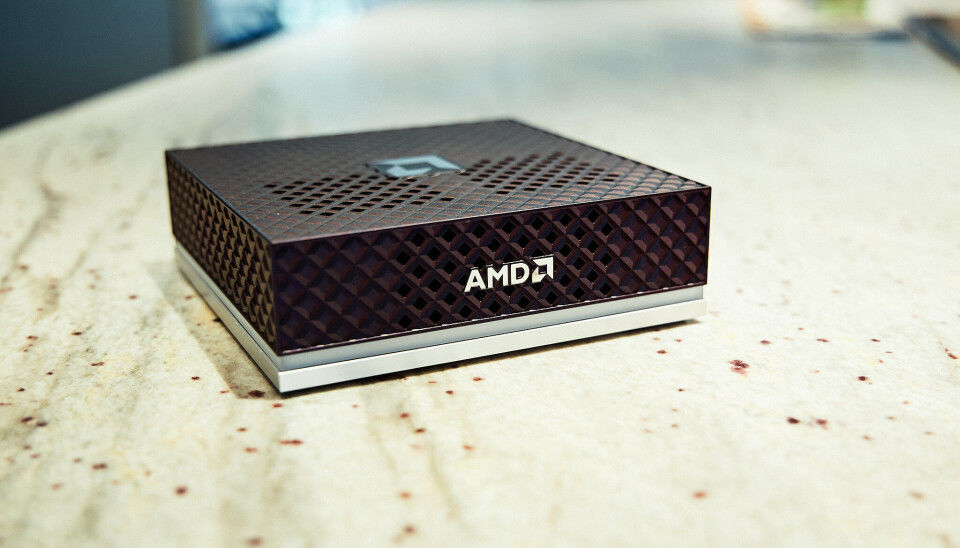
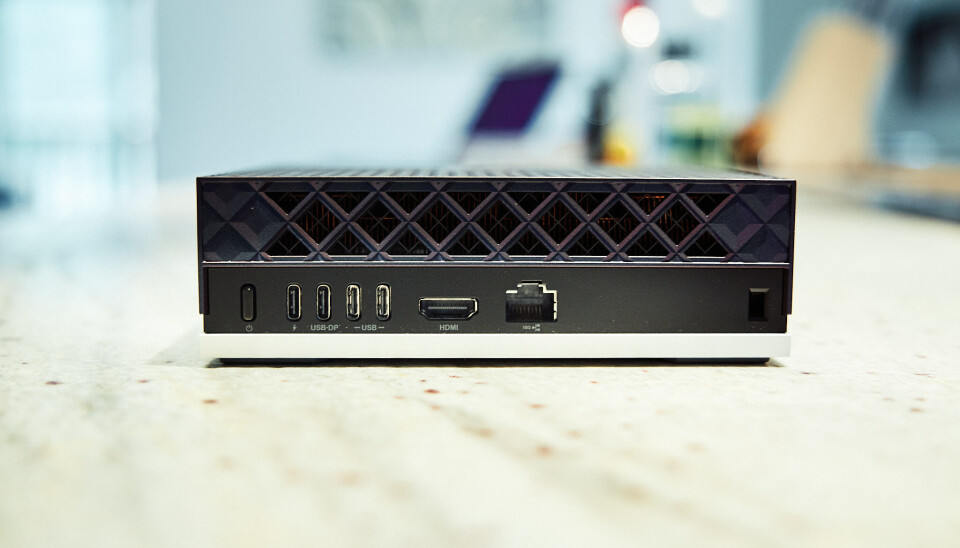
The Ryzen AI Halo measures 5.9 x 5.9 x 1.79 inches, with a black and silver chassis, a textured top cover featuring the logo and a surrounding LED light strip. Air intake is at the front, with exhaust at the rear. The back panel offers four USB-C ports (one for power delivery, the rest being one USB 3.2 and two USB 4.0), supports HDMI 2.1b display output, and includes a 10 Gbps RJ45 network port and an onboard WiFi 7 wireless module. Unlike the Nvidia DGX Spark, which features a 200 Gbps ConnectX-7 SmartNIC, the AI Halo lacks a high-speed QSFP network port on the back.
At its core, the system uses the AMD Ryzen AI 395+ (codenamed Strix Halo), a SoC that has been on the market for over a year. This chip integrates 16 Zen 5 cores with a maximum frequency of 5.2 GHz, and an RDNA 3.5 GPU with 40 compute units, capable of delivering approximately 56 teraflops of dense FP16 performance under ideal conditions. The AI Halo comes standard with 128 GB of LPDDR5X memory, connected to the SoC via a 256-bit bus, offering a bandwidth of approximately 256 GB/s. The system can allocate up to 75% (approximately 96 GB) of its memory to the GPU, which can be extended to nearly the full system capacity on Linux. This memory capacity is sufficient to run models with up to 200 billion parameters at 4-bit precision, or perform full fine-tuning of models with up to 70 billion parameters.
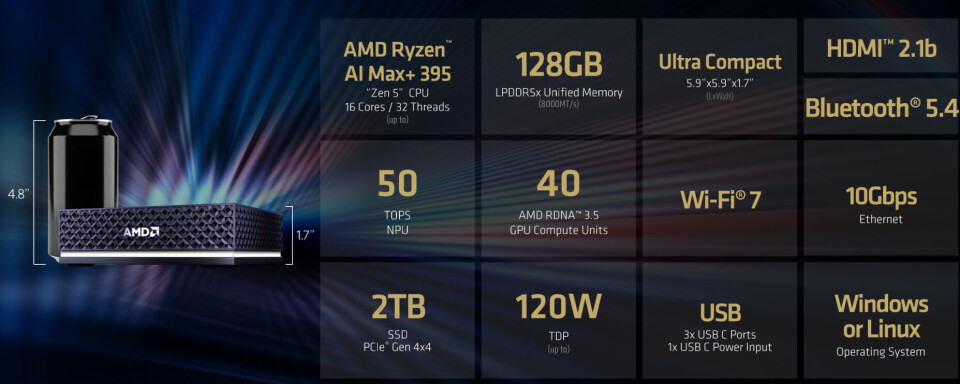
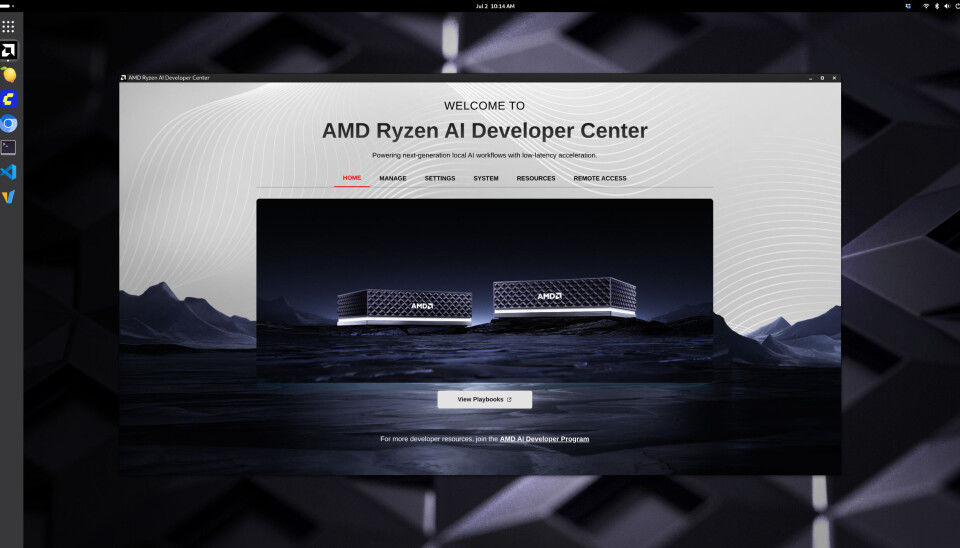
The AI Halo ships with a choice of Linux or Windows 11. The review unit came with a lightly modified version of Debian, using the 6.18 Linux kernel and the Gnome desktop environment, pre-installed with ROCm 7.13 and applications and frameworks like ComfyUI and vLLM. Upon startup, a wizard guides the user through initial setup. After logging in, the AMD Ryzen AI Developer Center launches automatically, providing quick access to resources and system settings. As of this writing, AMD's developer documentation includes 19 cookbooks covering topics such as LLM and image model inference, fine-tuning, and building agents with OpenClaw. The system also comes pre-installed with Lemonade Server, offering an experience similar to LM Studio or Ollama, specifically optimized for AMD hardware. It supports model runners like vLLM, Llama.cpp, Whisper.cpp, and Stable Diffusion.cpp, and runs a limited selection of models on the system's NPU.
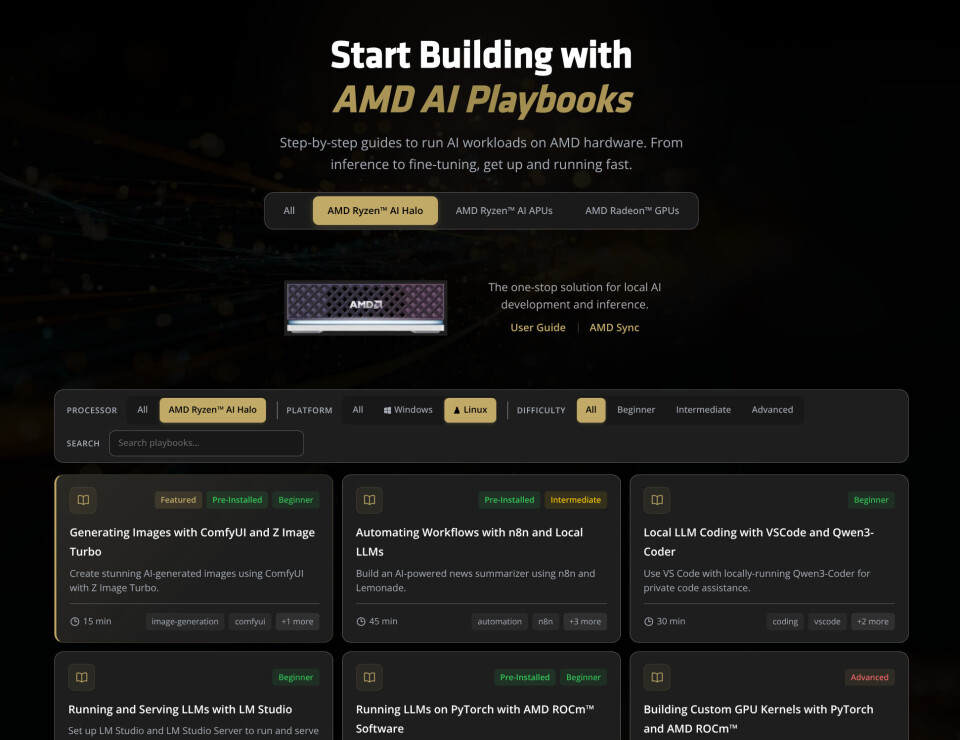
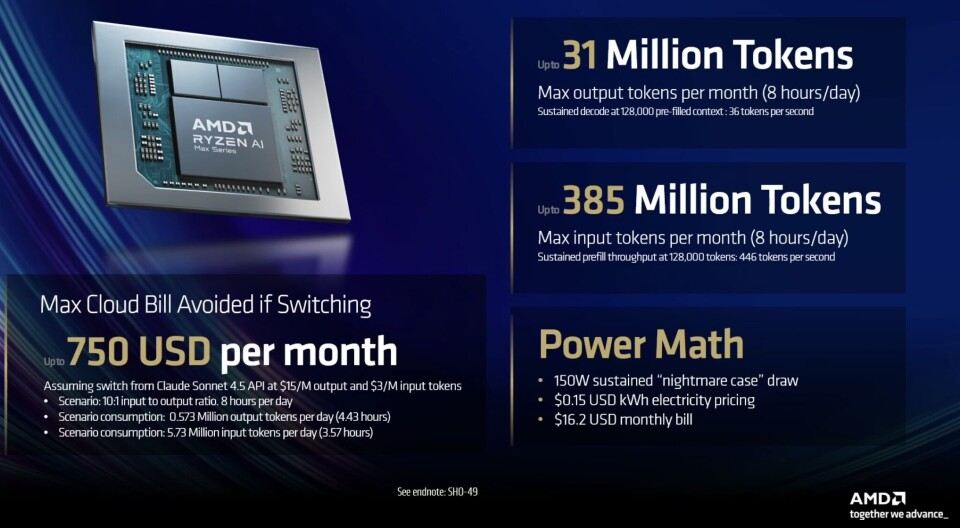
One of the system's most compelling use cases is as a host for AI agents. AMD emphasizes that small local models like Qwen 3.6-35B-A3B are already sufficient to replace larger proprietary models in many coding workflows. AMD claims that for a full-time software developer, the system could save up to $750 per month in cloud API fees by using local models for vibe coding. Given the significant security implications of software, running it locally with container isolation may be the safest option.
In terms of performance, the Ryzen AI Halo matches, and in some cases slightly exceeds, the Nvidia DGX Spark in memory-bound applications like LLM inference. However, the gap widens significantly in compute-bound workloads such as fine-tuning, image generation, or batch processing. Depending on the workload and precision, the DGX Spark's GB10 APU can be 2 to 3 times faster than the AI Halo in compute-bound AI workloads. This is because the Strix Halo's RDNA 3.5 GPU lacks support for floating-point precisions lower than FP/BF16; INT8 is only achievable through upcasting to FP16, meaning reduced precision does not yield a performance benefit.
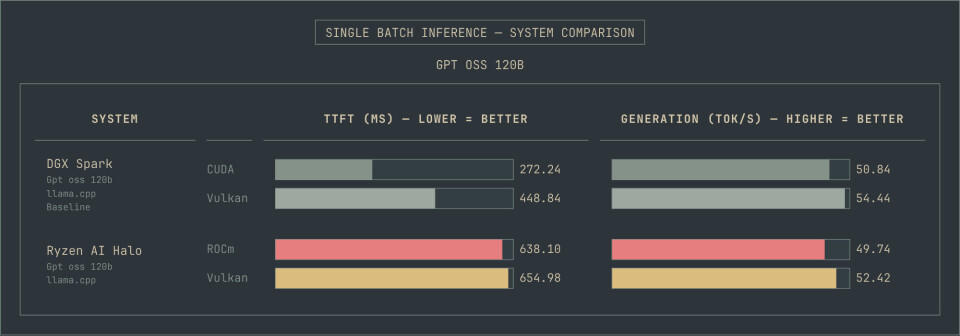
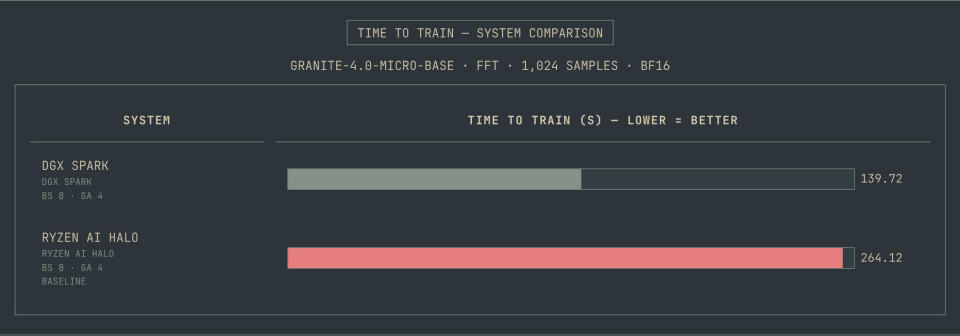
In terms of pricing, the starting price of $4,000 is lower than the Nvidia DGX Spark's suggested retail price of $4,699. Compared to similar hardware that could be purchased for around $2,000 before the recent memory crisis, the current price is higher. However, the system remains one of the most cost-effective options for users who need more than the 32 GB of VRAM found on consumer graphics cards. On a per-GB basis, the AI Halo is significantly cheaper than workstation GPUs from AMD or Nvidia (e.g., the 96 GB RTX Pro 6000 with a suggested retail price of $13,250). For buyers who prefer not to configure their own system, the AI Halo offers the convenience of pre-installed software and documentation; for enthusiasts willing to tinker, purchasing an OEM Strix Halo box and configuring it themselves could save money. Additionally, AMD is launching an updated version with 192 GB of LPDDR5X memory and slightly higher clock speeds.
Related Products





Flat Portable Satellite Terminal 0.35m Aperture Manual Portable Terminal
China Starwin Science & Technology Co., Ltd.

20 Inch 1600*900 Full HD 60Hz TFT LED Monitor with VGA and DP Interfaces for Desktop Computers-Business Use
Guangzhou Zanying Optoelectronics Technology Co., Ltd.
Multi-function Marine Monitoring Low-altitude Detection Radar Sea-air Boundary Ocean Dynamic Environment Measurement
Chengdu Dixin Technology Co., Ltd.