Apptronik Opens Newly Expanded Robot Park Facility in the U.S. to Train Humanoid Robots
en.Wedoany.com Reported - AI-powered robotics company Apptronik has opened its newly expanded Robot Park facility in Austin, Texas, a flagship humanoid robot data collection and training center.
The facility serves as the central hub of a global Robot Park network deployed at customer and partner sites worldwide. Apptronik plans to open new Robot Park locations in more cities in the near future.
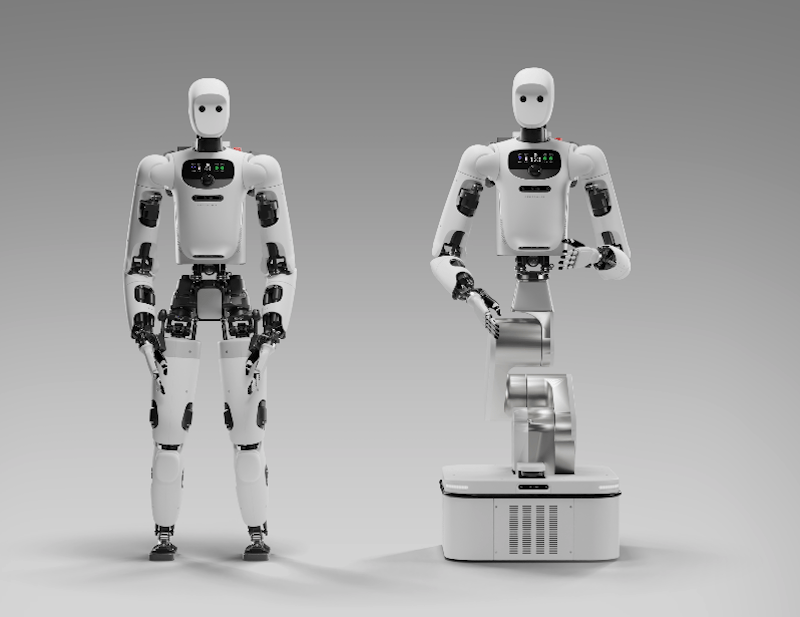
Apptronik also released the current version of its humanoid robot platform, Apollo 2, which offers both bipedal and wheeled chassis configurations. Apollo 2 is designed to learn real-world operational scenarios through large-scale data collection, enabling Apptronik to gather diverse data covering a wide range of tasks and environments.
As part of the research collaboration between Apptronik and Google DeepMind, high-quality data collected by Apollo 2 helps advance Gemini Robotics, Google DeepMind's foundational AI model for robotics. Robot Park, Apollo 2, and the collaborative research with Google DeepMind together form an integrated system aimed at rapidly developing and deploying humanoid robot intelligence.
With a fleet of Apollo 2 robots already actively operating at Robot Park and key customer and partner sites globally, Apptronik is accelerating the deployment of humanoid robots at scale in real-world environments.
"The industry has spent years showing what robots can do in a demo, and we're focused on what they can do every day on the job," said Jeff Cardenas, CEO and co-founder of Apptronik. "We're building a continuous learning loop with the Google DeepMind robotics team: robots work, collect data, and improve with each cycle on real tasks in real environments. Robot Park fuels this process with data collection, and Apollo 2 is the machine that makes it happen. This is the path from early prototypes to truly deployable humanoid robots."
Humanoid robots require vast amounts of real-world data to train embodied AI models, enabling autonomous operation. In this nearly 90,000-square-foot facility in Austin, Apollo 2 robots in both bipedal and wheeled configurations learn across a wide range of customer use cases, performing tasks in logistics, manufacturing, retail, and other customer-driven activities. Similar data collection workflows are deployed across the expanding Robot Park network, including at research partner Google DeepMind and customer sites such as Mercedes-Benz and GXO, a global leader in high-tech, high-volume logistics. Through a combination of teleoperation and autonomous execution, Apollo 2 robots continuously generate large volumes of high-quality training data. This dataset is used to train and refine Gemini Robotics AI models, which will prepare Apptronik's commercial fleet for real-world deployment.
While Robot Park provides the physical experience foundation, Apptronik's platform is designed to adapt as Gemini Robotics and embodied AI science evolve. Currently, the company captures high-quality data through a state-of-the-art teleoperation stack and high-fidelity physical simulation, accelerating hardware design and algorithm development. This multimodal approach enables robots to learn from a broad range of experiences, ensuring the platform scales in tandem with AI advancements.
Apollo 2 is a modular, AI-driven humanoid robot that has been the workhorse behind Robot Park for over a year. As a data collection and training platform, Apollo 2 achieves continuous learning through deployment at Robot Park sites as well as customer and partner locations. By offering modular configurations of Apollo, Apptronik can optimize data collection across various operational environments. The wheeled chassis configuration is designed to comply with existing industrial mobile robot safety standards, making it easy to integrate into current customer operations. The bipedal configuration provides maximum adaptability for complex environments, allowing Apptronik to continuously refine the safety and reliability of its walking platform in real-world scenarios.
"For humanoid robots to be truly useful, safety and reliability must advance alongside capability," said Barry Phillips, Chief Commercial Officer of Apptronik. Apollo's modular design directly responds to customer demand for adaptable automation. "By developing Apollo as a modular platform, we can deploy the same core humanoid technology in different configurations, including wheeled robots that meet current industrial safety standards and bipedal robots with maximum adaptability. This approach helps us build better robots for customers today while laying the groundwork for large-scale adoption of future humanoid systems."
Everything Apptronik validates and learns through the Apollo 2 platform is directly driving the development of its next-generation commercial product, Apollo 3. By leveraging the massive data streams generated today by Apollo 2 in collaboration with Google DeepMind, the upcoming commercial fleet will debut with unprecedented out-of-the-box embodied intelligence.
Related Products

G.652.D Wavelength-extended Non-dispersion Shifted Single-mode Optical Fiber
HONGAN GROUP CO., LTD.
Multi-function Marine Monitoring Low-altitude Detection Radar Sea-air Boundary Ocean Dynamic Environment Measurement
Chengdu Dixin Technology Co., Ltd.

20 Inch 1600*900 Full HD 60Hz TFT LED Monitor with VGA and DP Interfaces for Desktop Computers-Business Use
Guangzhou Zanying Optoelectronics Technology Co., Ltd.

Industrial and Commercial Point-Type Gas Detector
Jinan Benan Technology Development Co., Ltd.

TWP16 P-Band Tropospheric Wind Profile Radar
China Huayun Meteorological Technology Group Co., Ltd.