HPE Expands Quantum Ecosystem, Partners with Multiple Companies to Advance Hybrid Quantum Computing
en.Wedoany.com Reported - Hewlett Packard Enterprise (HPE) announced at HPE Discover 2026 in Las Vegas the expansion of its quantum ecosystem, partnering with companies including Intel, IQM, Qblox, Quantinuum, QuEra Computing, Quantum Machines, Rigetti, and Riverlane to build practical hybrid quantum-classical computing platforms.
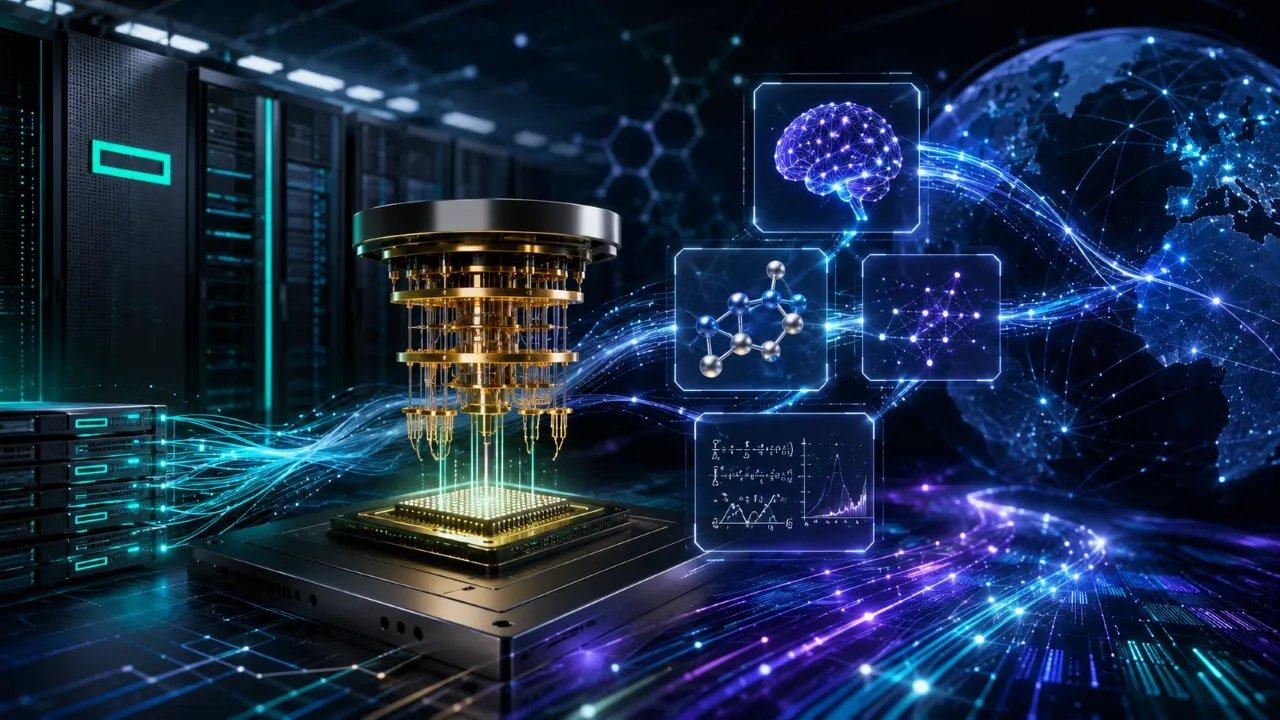
The collaboration focuses on integrating quantum computing with high-performance computing (HPC), artificial intelligence (AI), and networking technologies. Trish Damkroger, Senior Vice President and General Manager of HPC & AI Infrastructure Solutions at HPE, stated that integrating supercomputing and quantum technologies into a hybrid platform can accelerate the transition from research to practical applications, with the goal of making quantum computing accessible, scalable, and operational.
A notable feature of HPE's announcement is its architecture-agnostic strategy. Rather than betting on a single qubit technology, the company is working across multiple quantum modalities, including superconducting, trapped ion, neutral atom, and silicon spin qubits. The collaboration also integrates quantum control systems and quantum error correction technologies, enabling researchers to evaluate architectural trade-offs when building integrated hybrid platforms. These partnerships aim to support integrated testbeds for hybrid algorithm co-design, software interoperability, and system-level performance benchmarking, allowing developers to validate hybrid workflows before practical large-scale quantum systems become commercially available.
Kirk Bresniker, HPE Fellow, Vice President, and Chief Architect at Hewlett Packard Labs, said in an interview during the event that the industry focuses too much on individual hardware metrics rather than business outcomes. He believes organizations should first identify scientific or industrial problems that require quantum mechanics, then determine which combination of quantum and classical technologies can solve them, rather than asking which qubit architecture will ultimately dominate.
This announcement also aligns with HPE's broader AI infrastructure vision. President and CEO Antonio Neri described AI as one of the largest technology platform shifts in history during his keynote, arguing that success depends on a strong architectural foundation spanning networking, cloud, and computing. From this perspective, HPE's quantum strategy is an extension of its AI infrastructure roadmap, with early hybrid systems expected to combine quantum processors with HPC and AI, enabling quantum systems to generate specialized scientific data for machine learning models to scale and analyze. Bresniker also anticipates that AI will accelerate quantum engineering itself, from chip design and calibration to manufacturing optimization and scientific discovery.
The convergence of AI, HPC, and quantum computing places higher demands on networking. Rami Rahim, Executive Vice President and General Manager of Networking at HPE, noted that the pace of AI innovation can only be as fast as the network allows. The same requirement applies to hybrid quantum computing, where future quantum systems will rely on continuous data movement between quantum processors, AI models, and supercomputers. Therefore, HPE views networking, alongside HPC, as a foundational element of practical quantum computing.
Although practical fault-tolerant quantum computers are still years away, HPE believes organizations should begin preparing critical infrastructure now, with one urgent priority being post-quantum cryptography. Bresniker argues that upgrading hardware-based security infrastructure takes far longer than updating software, and long-life edge devices, embedded systems, and industrial infrastructure may require years to migrate securely. Through this initiative, HPE aims to position hybrid quantum computing as the next evolution of enterprise infrastructure by combining classical supercomputing with emerging quantum technologies, with the goal of creating integrated platforms to address complex scientific and industrial challenges.
Related Products

KJD127(A) Mining Explosion-Proof and Intrinsically Safe Computer
Taiyuan Xiangming Intelligent Control Technology Co., Ltd.


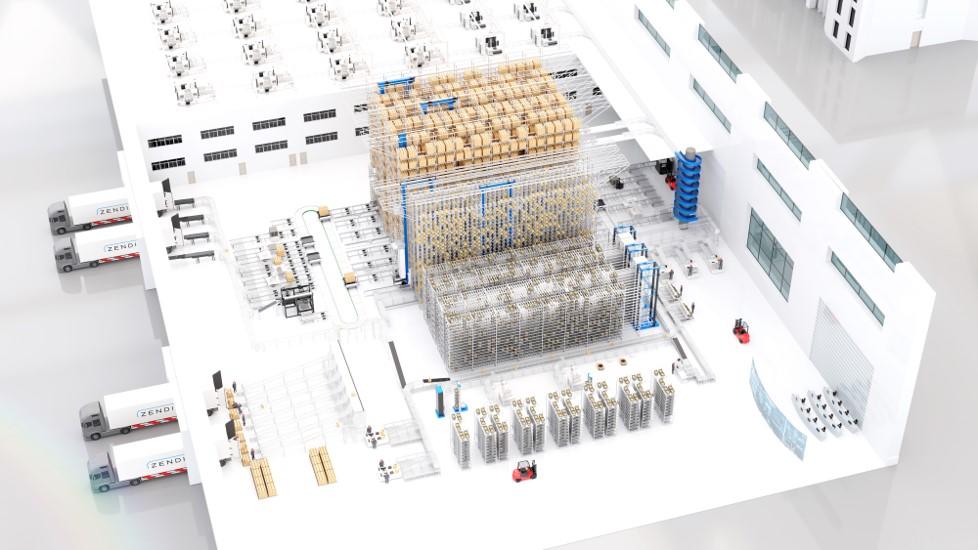
One-Stop Steward Service for the Entire Logistics System Integration Chain
Zhongding Intelligent (Wuxi) Technology Co., Ltd.
Automatic Aiming Laser Remote Obstacle Removal Robot
Pinggao Group Weihai High-Voltage Apparatus Co., Ltd.
Industrial and Commercial Point-Type Gas Detector
Jinan Benan Technology Development Co., Ltd.
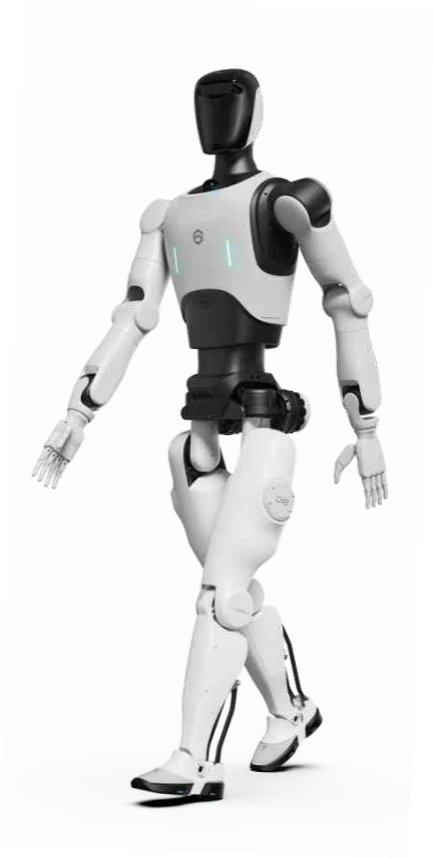
D12 Humanoid Robot
Automation Research Institute Co., Ltd. of China South Industries Group Corporation
Mine Explosion-proof and Intrinsically Safe Industrial Ethernet Ring Network (10 Gigabit/Gigabit)
Chongqing Mas Sci&Tech Co., Ltd.