Yin Hao, Academician of the Chinese Academy of Sciences: Computing-Network Integration Empowers the Token Economy
en.Wedoany.com Reported - At the 2026 China Internet Conference, Yin Hao, an academician of the Chinese Academy of Sciences, pointed out that the explosive growth of large models is driving the artificial intelligence industry from a "technology-driven" phase to a "value-driven" phase. Tokens, as the fundamental unit of the new intelligent economy, are redefining the logic of AI service production, circulation, and transaction. Yin Hao stated that the large-scale implementation of the Token economy must rely on a new type of infrastructure integrating computing and networks, thereby constructing a complete value loop from energy to commercial monetization.
Yin Hao analyzed that in the era of large models, Tokens are no longer merely the smallest discrete units for multimodal information encoding, computation, and output. They have transcended the limitations of traditional technical parameters and are transforming into core value anchors that link model capabilities, computing power consumption, service delivery, and commercial settlement. The five core attributes of Tokens—quantifiable, priceable, traceable, circulable, and iterable—cover the entire chain from pre-training to real-time interaction, making them the underlying foundation for value measurement and commercial operation in the AI industry.
However, current digital infrastructure is fragmented across computing, networking, storage, and data, forming a "siloed" landscape. Computing power silos make it difficult to abstract model capabilities and accurately quantify services; resource mismatches manifest as coarse inference patterns and a lack of management standards; network barriers lead to ambiguous data flows, difficulties in rights confirmation, and high barriers to cross-domain circulation; and fragmented industry chains hinder the coordination of various resources. Yin Hao believes that this architecture cannot support the business requirements of large-scale pre-training, high-concurrency inference, low-latency interaction, and full-chain traceability, impeding the standardized production, global circulation, and value realization of Tokens.
Yin Hao elaborated on the path to breaking through the "Token economy," involving a five-layer progressive design: building a production base with Tokens as the smallest intelligent unit to achieve precise measurement; creating a complete circulation chain to implement data rights confirmation and compliant governance; establishing a unified commercial system to provide standardized pricing anchors, supporting billing by volume, quality, and scenario; improving the industrial ecosystem to make Tokens a standardized asset for cross-platform and cross-domain circulation; and reshaping industry development paradigms to establish a standardized transaction and settlement system, promoting multi-party collaborative construction.
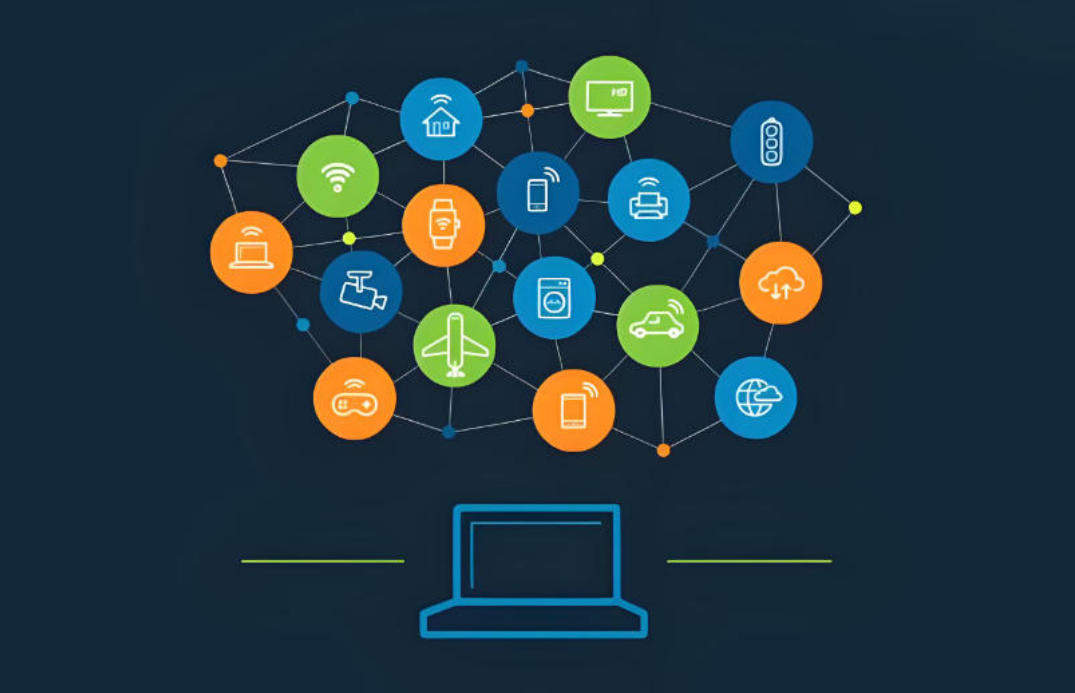
Yin Hao emphasized that the large-scale implementation of the Token economy requires a fundamental transformation of the underlying infrastructure, namely "computing-network integration." Computing-network integration takes computing power as the core and the network as the link, enabling unified perception and collaborative optimization of diverse resources such as computing, networking, storage, data, and models, to achieve on-demand, on-request, and trustworthy intelligent service provision. Its five core advantages include: integrated perception of global resources for unified cross-regional and cross-layer management; intelligent collaborative scheduling for coordinated optimization of computing, networking, storage, data, and models; integrated supply of diverse capabilities for comprehensive intelligent services; elastic and trustworthy guarantees for a secure and reliable service foundation; and on-demand service models for flexible customization across various scenarios.
Yin Hao pointed out that computing-network integration and the Token economy form a mutually coupled and co-evolutionary relationship. Computing-network integration provides an efficient, elastic, and trustworthy underlying foundation for the Token economy, supporting large-scale Token production and global circulation through unified global computing scheduling, intelligent network transmission, distributed storage, and on-demand model distribution. Simultaneously, the Token economy generates traction from the value scenario side, with its demands for large-scale low-cost production, cross-domain circulation and trading, and fine-grained billing driving the computing-network system to optimize resource allocation and business model innovation.
In terms of technical implementation, Yin Hao proposed four directions: optimizing network architecture by leveraging intelligent routing, dynamic bandwidth adjustment, and low-latency transmission to provide a stable foundation for cross-link Token flow; upgrading computing scheduling by implementing cloud-edge collaboration, unified management of heterogeneous computing power, and elastic supply mechanisms; achieving data-computing-network collaborative empowerment by linking energy and computing power for coordinated matching, building a sustainable commercial monetization loop; and establishing a security system covering rights confirmation and traceability, privacy protection, and hierarchical permission management.
Yin Hao stated that on top of the integrated computing-network infrastructure, a complete full-chain value loop of "energy—computing power—network—Token—scenario value—commercial monetization" can be constructed. Relying on deep collaboration among data, computing, networking, and storage, the entire lifecycle of a Token can be monitored, measured, traced, and evaluated. The value flow chain starts from energy supply with consumption awareness, flows to the heterogeneous computing layer, passes through network transmission, enters model inference and Token generation, lands in various industry applications and real-time interaction scenarios, and finally completes commercial monetization through standardized measurement and transaction settlement.
Yin Hao believes that value feedback generated from the commercial end can flow back to the energy and computing power foundation, driving the re-optimization and scheduling of global resources, forming a cyclical iteration mechanism. The feedback process includes collecting full-chain resource consumption data, evaluating service indicators, measuring scenario commercial output, and aggregating data into a trusted ledger to ensure full-process traceability and auditability. Key technologies supporting this include multi-source data collection technology, computing-network resource orchestration technology, model service governance technology, Token trusted ledger and traceability technology, and energy-value joint optimization technology.
Yin Hao stated that this system will improve the overall resource utilization of the infrastructure, reduce the comprehensive production cost per Token, manage service latency and reliability, and ensure transparency in the commercial settlement process. He called on the industry to collaboratively advance the construction of computing-network integration and the Token economy system, paving a scalable, sustainable, and trustworthy development path for the AI era.
Related Products




MUX Series Communication Interface Device for Security and Stability Control System
Nanjing NR Electric Co., Ltd.
Hot Selling 10 Inch Intel N5100 I5 I7 FHD 8 +128GB 16+256GB Win10 Pro Win11 Pro 4G 5G Rugged Tablet PC Pad with NFC Barcode
Highton Electronics Co., Ltd.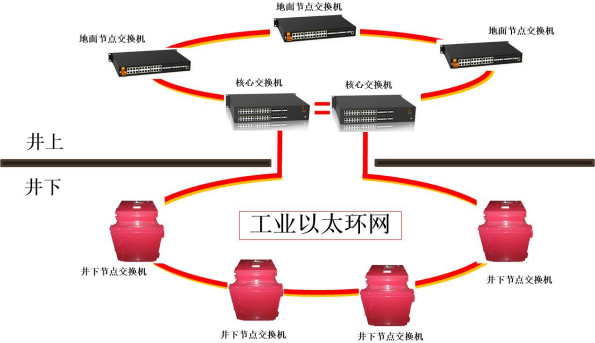
Mine Explosion-proof and Intrinsically Safe Industrial Ethernet Ring Network (10 Gigabit/Gigabit)
Chongqing Mas Sci&Tech Co., Ltd.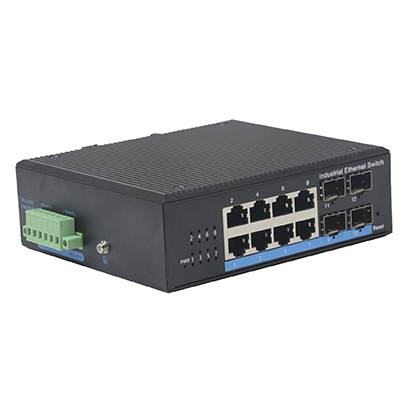





Conveyor Belt Intelligent Monitoring System
LUO YANG WIRE ROPE INSPECTION TECHNOLOGY CO., LTD.